
Report a Child Not in a Car Seat: How-To Guide & Safety Tips
This post contains affiliate links. As an Amazon Associate, we earn from qualifying purchases.
To report a child not in a car seat, you must contact your state’s child welfare agency or child abuse hotline. In most states, this is the Department of Child Protective Services (CPS) or a similar division within the Department of Family and Children Services. You do not need proof, but you must be prepared to provide specific details: the child’s approximate age and size, the vehicle’s description and license plate, the location, and the time you observed the violation.
This obligation exists because preventable injuries are the leading cause of death for children ages 1-19. A crash without proper restraint turns a minor fender-bender into a fatal event. The call you make is a direct intervention into a documented public health crisis.
What follows is the map: who to call, the exact details they need, what happens next, and the critical alternative path of education over enforcement when the situation allows for it.
Key Takeaways
- The immediate line for reporting a child in danger is your state’s child abuse and neglect hotline, not 911, unless the vehicle is currently moving unsafely.
- Your report needs four concrete details: child description, vehicle description, location, and time. Vague reports get screened out.
- Mandatory reporters (teachers, doctors, nurses) have a legal duty to report; for everyone else, it’s a moral one backed by law in many states.
- The goal of Child Protective Services is family preservation, not removal. The most common outcome is a safety plan and a referral for a free car seat and education.
- If no immediate danger exists, contacting a local Child Passenger Safety Technician (CPST) or non-profit like the Center for Childhood Safety can provide free seats and instruction without state intervention.
Why Reporting Isn’t Just “Tattling”
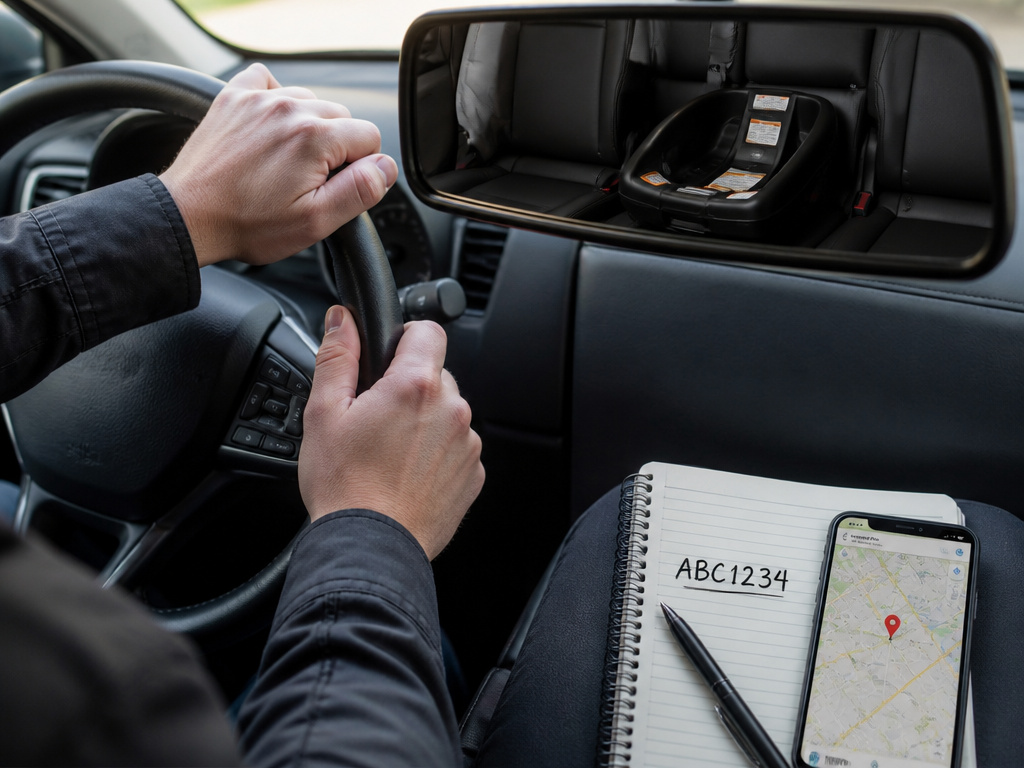
Sixty percent of all deaths in children ages 1-19 are due to injury. That statistic, from the Center for Childhood Safety resources, reframes the entire conversation. A child unrestrained in a moving vehicle is a predictable, measurable health risk with a known outcome.
The law treats it that way. In every state, driving without a car seat where one is required by a child’s age, weight, and height meets the legal definition of child endangerment. This is a child welfare issue. The distinction matters because it changes who responds and what tools they have.A police officer can write a citation. A child welfare worker can connect a family to resources that permanently solve the problem.
The part nobody mentions: A vague report like “I saw a kid without a car seat” gets screened out by the hotline operator within 90 seconds. They need specifics to open a case. No license plate, no address, no approximate child age? The call ends with a log entry and no follow-up.
The system is overloaded with genuine emergencies. To move the needle, your information must be actionable. Think of it as a diagnostic tool. You are providing the symptoms so the professionals can diagnose the cause, is it a lack of knowledge, a lack of resources, or a pattern of neglect?
The Official Reporting Process: A Step-by-Step Guide
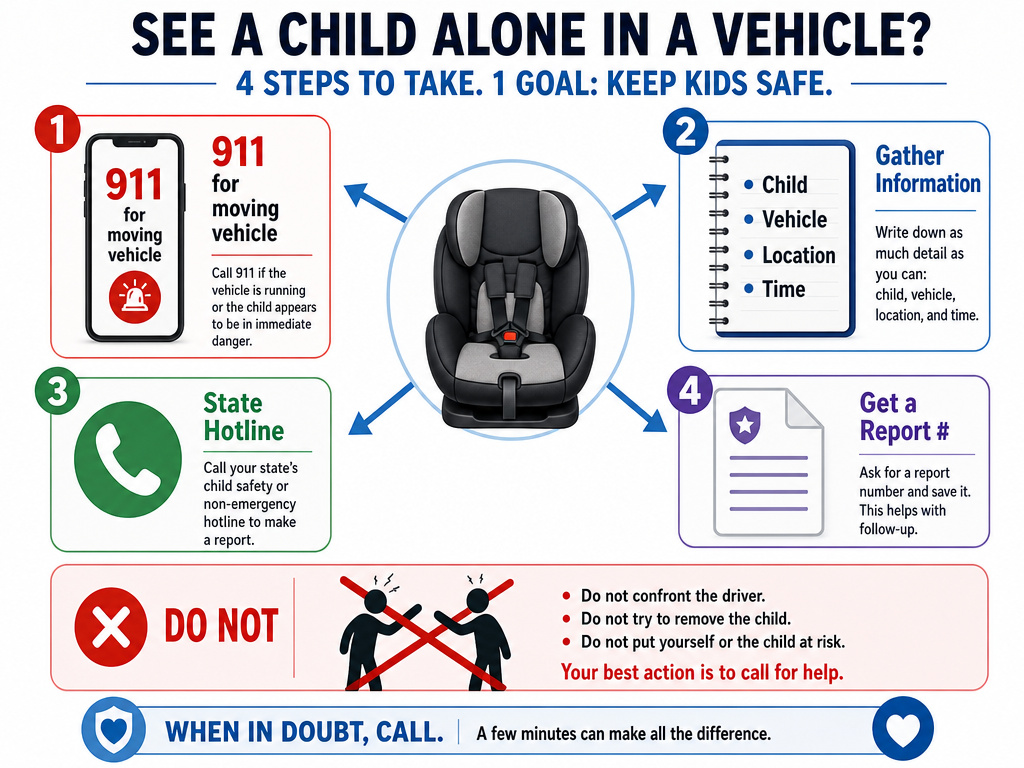
This is the sequence for when you witness a child in clear, immediate danger, unrestrained in a moving vehicle, or repeatedly transported without a seat.
Step 1: Determine Immediate Danger. Is the vehicle currently being driven unsafely? If yes, call 911. Give the dispatcher the vehicle description, plate number, location, and direction of travel. State clearly: “I am reporting a moving vehicle with an unrestrained child passenger.” This is an emergency police matter.
Step 2: For All Other Reports, Find Your State Hotline. If the vehicle is parked or the danger is observed but not imminent, you contact the state’s child abuse reporting line. A quick web search for “[Your State] child abuse hotline” will find it. For example, in Georgia, you would follow the Georgia child welfare agency guidelines to locate their specific reporting portal or phone number.
Step 3: Prepare Your Details Before You Call. Write this down:
* Child: Approximate age, size (toddler, school-age), and what they were wearing.
* Vehicle: Color, make, model, and most importantly, the license plate number and state.
* Location: Exact address or intersection, and the name of a business if parked at one.
* Time & Date: When you observed it. If it’s a pattern (e.g., “every weekday at 3:30 PM”), note that.
Step 4: Make the Call. Be calm and factual. The operator will ask a scripted series of questions. Your job is to deliver your prepared details. They will ask if you know the family. Unless you do, say no. You are a concerned bystander. They will ask about immediate danger. Answer based on your observation in Step 1.
Step 5: Understand the Outcome. You will get a report number. Write it down. The operator cannot tell you what action will be taken due to confidentiality laws. Your role is now complete.
| What You Should Do | What You Should NOT Do | Why It Matters |
|---|---|---|
| Call the state child welfare hotline | Confront the driver or caregiver directly | Confrontation can escalate risk to the child and put you in physical or legal danger. |
| Provide specific, written details | Report based on a vague suspicion or memory | Actionable reports get assigned. Vague reports are closed, and the child remains at risk. |
| Follow up if you see a repeated pattern | Call 911 for a parked, non-emergency situation | 911 is for imminent danger. Misuse ties up emergency lines and delays a welfare response. |
The operator’s primary goal is triage. They are assessing whether this meets the threshold for an investigation. Your concrete details are the evidence that pushes it over that line.
What Happens After You Call
The image of a child being immediately removed from a home is television drama. It is the rarest outcome. The core mission of Child Protective Services is family preservation and support. When a report for an unrestrained child is screened in, here is the typical cascade.
First, a caseworker assesses the report’s urgency. Most car seat reports are classified as “lower urgency” unless other glaring risks are noted. They have a mandated timeframe to make contact, often within 72 hours to 10 days. The caseworker’s visit is an assessment. They will want to see the vehicle, the car seat if one exists, and understand the family’s routine.
The most frequent resolution is a safety plan. This is a written agreement. The caregiver agrees not to transport the child without a proper restraint. The caseworker then connects them with a local resource to fulfill that agreement. This is where non-profits and certified experts become the solution.
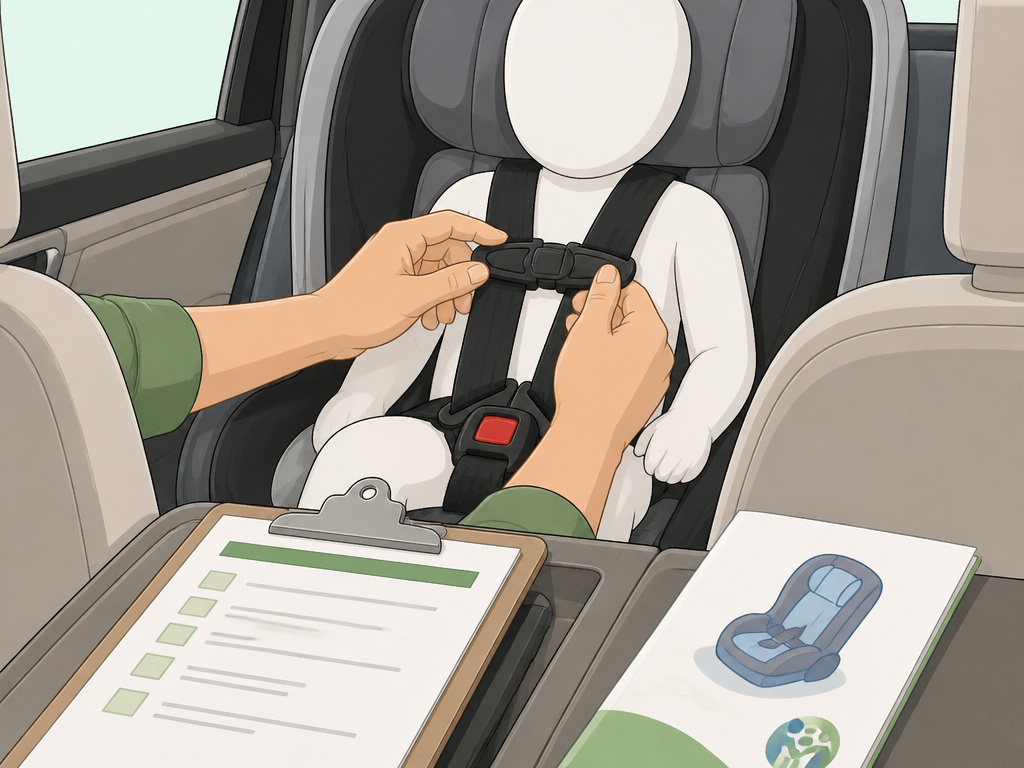
A caseworker’s most powerful tool is a referral to a free car seat distribution program and a certified installation check. It solves the immediate problem, educates the caregiver, and closes the case with a positive outcome.
Organizations like the Center for Childhood Safety exist for this exact pivot. Founded in 1991, their model is injury prevention through education and access. A caseworker can refer a family to them for a free, brand-new car seat and a 30-minute installation lesson with a Child Passenger Safety Technician (CPST). This turns a punitive interaction into a supportive one. The Pupil Transportation Safety Institute provides similar training frameworks and resources on a national scale, ensuring those educational standards are met.
If the family refuses the safety plan or the neglect is part of a broader, severe pattern, then legal steps may begin. But for the vast majority of reports stemming from a lack of a car seat, the path ends with education, a new seat, and a follow-up visit to ensure it’s used.
When Education Is the Better First Step
Not every observation requires a report. Distinguishing between ignorance and neglect is a critical judgment call. If you know the family, a neighbor, a friend, a relative, and you sense the issue is knowledge or money, you have a more effective, less traumatic path.
Scenario: The Well-Meaning but Misinformed Caregiver. They are using a second-hand car seat of unknown history, or they have incorrectly transitioned a child to a booster seat too early. The risk is high, but the intent is not malicious. Here, you become the connector.
Reach out directly, but frame it as help. “Hey, I noticed your little one is in a backless booster. I was just reading about the new weight guidelines and found a free car seat check event this weekend. Want to go together?” This approach works because it assumes good intent and offers a concrete solution.
You can direct them to our guide on how to know if a car seat is safe or the factors for choosing a car seat. If installation is the worry, suggest they visit a certified installation location or follow our proper installation guide.
Scenario: The Family That Cannot Afford a Seat. This is where community resources shine. Search for “free car seat program [your city]” or contact local fire departments, hospitals, or WIC offices. Many have partnerships with non-profits. The goal is to remove the financial barrier so the safety barrier can be erected.
Taking this educational path first can prevent the entire formal reporting machinery from engaging. It protects the child faster and preserves family dignity. Reserve the hotline for when this approach fails, or when the risk is too immediate to allow for a gentle intervention.
Your Legal and Ethical Responsibilities
The law draws a bright line for certain professionals. Mandatory reporters, teachers, doctors, nurses, childcare providers, law enforcement, are legally required to report suspected neglect, which includes a child’s repeated lack of proper restraint. Failure to report can result in fines, loss of professional license, and in some states, misdemeanor charges.
For everyone else, you are a “permissive reporter.” You have the right to make a report in good faith, and you are granted immunity from civil or criminal liability as long as you are not making a knowingly false report. Your ethical duty, however, is defined by the child’s inability to protect themselves.
Where this goes sideways: People assume someone else will call. It’s called the bystander effect. In matters of child safety, assume you are the only one who sees it and the only one who will act.
Your report is an act of protection, not betrayal. The system is designed to investigate, not to punish. By providing clear details, you enable that system to function as intended: to assess risk, provide resources, and ensure the child’s basic safety needs are met. The alternative is silence, and the data from the Center for Childhood Safety tells us exactly what silence costs.
Frequently Asked Questions
Should I call the police or child services?
Call 911 only if the child is in immediate, moving danger. For all other situations, a parked car, a pattern of behavior, use your state’s child abuse and neglect hotline. Police respond to crimes; child services assesses risk and provides solutions.
Can I report anonymously?
Yes, every state hotline accepts anonymous reports. However, providing your name can give the report more weight and allows the caseworker to call you back if they need clarification, which can be critical for the investigation.
What if I’m wrong and the child was in a seat?
You are protected by law for reports made in good faith. The hotline operator will ask screening questions to assess the report’s validity. It is better to err on the side of the child’s safety. A screened-out report has no consequence for the family.
What information will they ask for?
Be ready to provide: the child’s approximate age/size, the vehicle’s make/model/color/license plate, the exact location where you saw it, and the date and time. The more specific, the better.
What is the punishment for not using a car seat?
For a caregiver, it varies by state but typically involves fines, points on a driver’s license, and mandatory attendance at a child passenger safety course. In severe or repeated cases, it can be charged as a misdemeanor contributing to the delinquency of a minor or child endangerment, which carries heavier penalties.
I’m a mandatory reporter. What’s my specific duty?
If, in your professional capacity, you have reasonable cause to suspect a child is being neglected by being transported without proper restraint, you must report it to the hotline immediately. Document the date and time of your call and your report number. Your employer likely has a specific protocol, follow it.
Before You Go
The decision to report sits in an uncomfortable place. It feels like overstepping. The data reframes it: you are stepping in. The mechanism is a phone call, but the action is a direct intervention into the leading cause of childhood death.
When in doubt, follow the sequence. Assess immediate danger. Gather specific details. Call the correct hotline. If the situation allows, lead with education and a connection to resources like a free car seat check. Your voice is the one that moves a child from a statistic back into a safety seat. That’s the only metric that matters.
