
Can You Put Any Car Seat in a Stroller? What to Know First
This post contains affiliate links. As an Amazon Associate, we earn from qualifying purchases.
No, you cannot put any car seat in a stroller. Strollers are engineered to lock only with specific infant car seat models, almost always from the same brand. Using an incompatible seat creates a gap between the stroller frame and the seat’s base that a simple adapter can’t bridge. That gap lets the seat rock, tilt, or detach during a jolt, and every major manufacturer’s manual warns this can cause serious injury or death.
The manual warnings are not legal boilerplate. They are a direct result of crash-test failures and liability cases where a third-party seat came loose. The latch, the seat’s base shape, and the stroller’s frame geometry must match exactly. A universal adapter claims to solve this, but it adds another point of potential failure and voids the warranty on both pieces of gear.
What follows: the three physical parts that must align, how to decode your own product’s manual, and what to do if your car seat and stroller are from different brands.
Key Takeaways
- Stroller and car seat compatibility is not a suggestion, it’s a crash-tested engineering requirement. Using a seat not listed in your stroller’s manual risks the seat detaching during a bump or tip-over.
- The connection relies on three matching parts: the stroller’s adapter latches, the specific contour of the car seat’s base, and the geometry of the stroller frame itself. A universal adapter tries to bridge these gaps but introduces play.
- Always perform a pull-test. After clicking the seat into the stroller, lift the seat by its carry handle. If it shifts more than a quarter-inch or makes a second click, it’s not secure.
- Travel systems exist for a reason. Brands like Evenflo, Chicco, and Cybex design their strollers and infant seats as a matched pair. Buying a travel system guarantees the fit.
- If your gear doesn’t match, your only safe options are to use the stroller’s toddler seat (if the child meets the age/size requirements) or carry the infant seat separately. Never force a fit.
The 3-Part Lock That Makes Universal Fit Impossible
A car seat clicking into a stroller looks simple. It isn’t. That click is the end result of three components aligning within a tolerance of a few millimeters.
First, the adapter latches on the stroller frame are not generic. They are shaped to receive a specific hook or bar on one brand’s car seat base. The Evenflo Pivot frame has latches that only accept the protrusions on a SafeMax or LiteMax seat base. The Chicco Corso LE requires its proprietary Infant Car Seat Adapter, which only clicks with Chicco seat bases.
Second, the car seat base contour must sit flush against the stroller’s frame or child tray. A base designed for one stroller will have recesses or curves that match the stroller’s crossbars. A mismatched base will rest on only two points, creating a pivot.
The Evenflo Advanced Epic 4 manual is explicit: “The SafeMax or LiteMax infant car seat MUST be facing the parent when installed.” That’s not just about view, it’s because the seat base has an asymmetrical contour that only fits flush in one orientation.
Third, the stroller frame geometry dictates the seat’s center of gravity. A seat that sits too high or too far forward can make the stroller tippy, even if the latches seem to hold. This is why some manuals, like the Cybex Eos, specify the infant car seat can be installed parent-facing or forward-facing, the frame is designed to handle both weight distributions safely.
When these three parts don’t match, you get a gap. The seat can wobble side-to-side or front-to-back. On a smooth sidewalk, it might seem fine. Hit a curb, and the lateral force can pop a latch. That’s the “serious injury” the manuals are talking about.
How to Know If Your Car Seat Will Actually Fit
Don’t guess. The answer is in the product’s safety manual, usually in the first few pages under “Warnings.”
Open the manual for your stroller. Look for the section titled “Using Your Stroller With [Brand] Infant Car Seat” or similar. It will list the exact car seat models by name. If your seat isn’t on that list, the manufacturer is telling you it’s not compatible.
For example, the Evenflo Princeton manual states: “Only use the Evenflo Serenade™ infant car seat with this stroller.” The Chicco Corso LE manual warns: “Do not attempt to attach any infant car seat to the stroller other than the Chicco infant car seat.”
This isn’t marketing. It’s a liability disclaimer based on the physical dimensions they tested. If you use an unlisted seat and it fails, the manufacturer has no obligation, and you have no legal recourse.
| Stroller Model | Compatible Infant Car Seats (Per Manual) | Critical Installation Note |
|---|---|---|
| Evenflo Pivot Travel System | Evenflo SafeMax™, LiteMax™ | Blanket/boot accessory must be removed before attachment. |
| Cybex Eos Travel System | CYBEX infant car seats only | Seat can be installed parent-facing or forward-facing. |
| Evenflo HPIVOT | Evenflo Litemax™, LiteMax™ NXT, Revolve180™ LiteMax™ NXT, Shyft™ DualRide™ | Maximum basket load: 20 lbs. |
| Evenflo Advanced Epic 4 | Evenflo SafeMax™, LiteMax™ | Seat must face parent when installed. |
| Evenflo Princeton | Evenflo Serenade™ only | Requires armbar to be securely attached on both sides first. |
| Chicco Corso LE | Chicco infant car seats only | Requires separate Infant Car Seat Adapter. |
What “Universal Adapters” Actually Do (And Where They Fail)
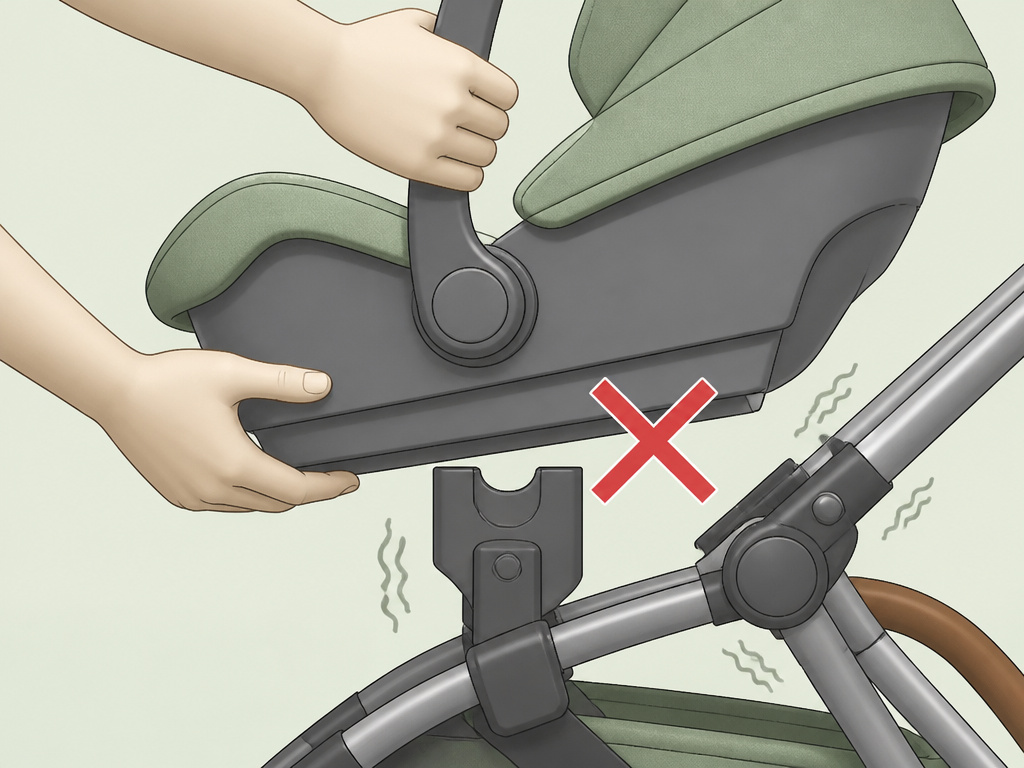
The market sells universal car seat adapters. They are plastic or metal frames that clamp onto your stroller, promising to let you click in a seat from another brand. The pitch is convenience. The reality is a compromise on safety.
An adapter works by creating a new set of latch points that your car seat can hook into. The problem is twofold. First, it adds another joint between the seat and the stroller, a place for flex and play to develop. Second, it raises the seat’s height, moving the baby’s weight higher and making the stroller less stable.
Where this goes sideways: A universal adapter that isn’t certified by both the stroller and car seat manufacturers voids the warranty on both products. If anything fails, you’re on your own.
More critically, these adapters can’t change the base contour or frame geometry. They only address the latch mechanism. If the seat base doesn’t sit flush, the adapter just holds a wobbly seat a few inches higher. That extra leverage magnifies any rocking motion.
Some strollers, like many from UPPAbaby, offer brand-specific adapters sold by the stroller maker. These are different. They are engineered and crash-tested for that specific stroller frame and a short list of other-brand seats. Always check your stroller manufacturer’s website for an official adapter list, don’t assume a third-party “universal” one is safe.
The Secure Click Test Every Parent Should Do

You’ve read the manual. The seat is on the compatible list. You’ve clicked it in. Now, verify the fit.
Place the infant seat onto the stroller or adapter until you hear a click. Then, perform the pull-test. Grasp the carry handle of the car seat and lift upward firmly. Do not jerk it. Apply steady pressure.
A properly secured seat will not detach. It shouldn’t shift more than a quarter-inch. You should not hear a second, deeper click. If the seat releases, lifts out, or rocks significantly, it’s not locked. Try re-seating it, ensuring no fabric or harness straps are caught in the latch.
The Cybex Eos manual instructs: “ALWAYS make sure the toddler seat or car seat is securely attached into the Seat Mounts on both sides of the stroller before placing child in the seat.” This means checking both sides independently. Push down on each side of the seat near the latch. Neither side should depress further.
If you cannot get a secure fit, stop. The manual for the Evenflo Advanced Epic 4 says: “If unable to securely attach SafeMax or LiteMax infant car seat to this stroller, remove the car seat and contact Evenflo ParentLink.” Do not use the setup.
The One Step Nobody Skips (And Shouldn’t)
Before you even lift the seat, clear the attachment points. Many infant seats come with infant inserts, head supports, or “boot” accessories that extend past the base. The Evenflo Pivot manual notes: “Some Evenflo SafeMax™ and LiteMax™ infant car seats have a blanket/boot option that must be removed for proper attachment to the stroller.”
That extra padding can sit between the seat base and the stroller latches, creating a false sense of security. The seat clicks, but it’s compressing the boot, not engaging the metal latch. The first good bump compresses it further, and the seat pops free. Always remove any add-ons that interfere with the hard plastic of the seat base making direct contact.
Your Real-World Options When Gear Doesn’t Match

So your stroller and car seat are from different brands, and there’s no manufacturer-approved adapter. You have three paths, only two of which are safe.
Option 1: Use the stroller’s toddler seat. Most travel system strollers include a toddler seat that clicks onto the same frame. If your child meets the minimum requirements, usually able to sit upright unassisted, typically over 6 months old, this is the safest, intended use. You’ll carry the infant seat separately.
Option 2: Carry the infant seat. It’s less convenient, but it’s safe. An infant car seat is a carrier. You can lift it from the car, carry it to your destination, and set it down. This is the fallback for the first few months before the baby can use the stroller seat.
Option 3: Buy a travel system. This is the costliest but most seamless solution. A travel system is a stroller and infant car seat sold as a designed pair, like the Chicco Bravo or the Graco Modes. The fit is guaranteed, and you often save money versus buying each piece separately. When choosing a car seat and stroller, starting with a matched system eliminates this entire compatibility puzzle.
Skip this if: You’re considering a used, third-party adapter from an online marketplace. The risk of unknown wear, missing parts, or a design that never passed any safety test is too high.
What about a convertible car seat? These larger, rear-to-forward-facing seats are never designed to attach to a stroller. They stay installed in the car.
Stroller Safety Beyond the Car Seat Click
A secure latch is just the start. The combined weight of the stroller, seat, and child changes the center of gravity.
Watch the load limits. The Chicco Corso LE manual warns not to place more than 10 lbs (4.5 kg) in the storage basket and only 1 lb (0.5 kg) in the seat back pocket. The Evenflo HPIVOT limits its basket to 20 lbs. Overloading the basket, especially with a heavy infant seat attached, makes a tip-over far more likely.
Always set the brake on any incline, even a slight driveway slope. The Cybex manual is blunt: “NEVER leave stroller on a hill or incline, even with Brakes set. Stroller may tip, injuring the child.”
Never hang bags from the handlebar. It seems convenient, but that weight behind the axle acts like a lever. It can pull the stroller backward onto the child. The same goes for placing a heavy diaper bag on the canopy.
These rules feel obvious until you’re juggling a coffee, a diaper bag, and a phone. That’s when the one-handed bag hang happens. The manuals list these warnings because they’ve happened in real-world testing.
Frequently Asked Questions
Can I use a Graco car seat with a Chicco stroller?
Only if Chicco sells an official adapter specifically for your Graco seat model. Do not use a third-party universal adapter. Check the “Compatible Car Seats” section on the Chicco website for your specific stroller model. If Graco isn’t listed, the answer is no.
What happens if I use an incompatible car seat?
The seat may not lock securely. It can rock, detach, or make the stroller unstable. In a tip-over, an unsecured seat offers no protection and can eject the child. Manufacturer warranties are void, and you assume all liability for any injury.
Are all car seats from the same brand compatible with all strollers from that brand?
No. Brands have multiple product lines with different latch systems. An Evenflo LiteMax seat is designed for the Pivot and HPIVOT strollers, but it is not compatible with the Evenflo Princeton, which only works with the Serenade seat. Always check your specific stroller’s manual.
My car seat clicked in. Is it safe now?
Not necessarily. The click is only the first step. You must perform the pull-test, lift the seat by its handle to ensure it doesn’t release. Also check that the seat is resting evenly on the frame with no gap and that no accessory padding is trapped under the base.
What’s the difference between a travel system and a stroller with an adapter?
travel system is a single purchase where the car seat and stroller are engineered as a pair. An adapter is an aftermarket piece trying to connect two products not designed together. The travel system is the simpler, guaranteed-safe choice. An adapter is a workaround with inherent risk.
Before You Go
The manuals are not being overly cautious. They are the result of engineering tests that show exactly how and when a mismatched seat can fail. That warning in all-caps about “serious injury or death” is there because in a lab, with sensors and high-speed cameras, they’ve seen it happen.
Your safest path is to use only the car seats listed in your stroller’s manual. If your gear doesn’t match, use the stroller’s toddler seat when your child is ready, or carry the infant seat. The few months of extra hassle are not worth the lifetime of what-if.
When you’re selecting a compatible car seat and stroller for a new baby, start with a travel system. It removes the guesswork and the risk. You get one box, one set of instructions, and one guarantee that the pieces fit. For an infant’s safety, that’s the only answer that clicks every time.
