
How to Store Infant Car Seat: Essential Safety Protocols
This post contains affiliate links. As an Amazon Associate, we earn from qualifying purchases.
Store an infant car seat by first verifying its expiration date, then thoroughly cleaning and drying all components. Keep it in a climate-controlled indoor space (ideally 20–25°C / 68–77°F), upright and protected from dust, sunlight, and pressure. Never store it long-term in a vehicle, basement, or attic.
That expiration date is a hard stop based on material fatigue and safety regulation changes. A seat stored past its date is a liability, not an asset.
What follows: the cleaning sequence that stops mold, the exact storage specs from manufacturer manuals, and the one common storage mistake that voids safety certifications before the seat even comes out of the box.
Key Takeaways
- Check the expiration or “Do Not Use After” date first, most infant seats expire 6 years from manufacture.
- Clean straps with mild soap and water only; chemical cleaners degrade the nylon webbing.
- Store in a stable indoor environment between 20–25°C (68–77°F) to prevent plastic from becoming brittle or softening.
- Never stack items on top of a stored car seat, the constant pressure can deform the energy-absorbing foam.
- Register your seat with the manufacturer and check the NHTSA car seat safety guidelines for recall status before storing it away.
The First Step Everyone Forgets: The Expiration Audit
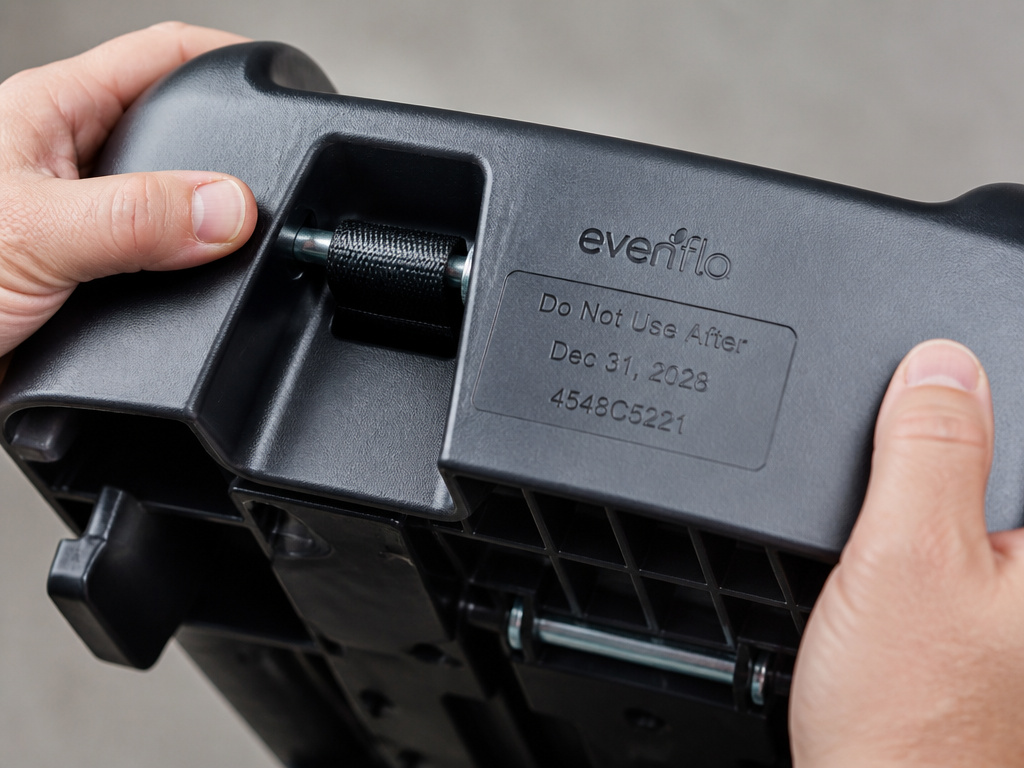
Pull the seat out and flip it over. The expiration or “Do Not Use After” date is molded into the plastic shell or on a sewn-in label. This is non-negotiable.
The Chicco KeyFit Max manual states, “DO NOT use this Child Restraint if it is more than 6 years old.” Transport Canada lists useful life periods by brand, noting seats like the Harmony Defender last 10 years, while Mifold boosters are 7 years.
The countdown starts from the manufacture date, not the day you bought it. If the seat is within 6 months of expiring, storing it for a future child is a gamble. Plastic degrades under UV light and temperature swings, and harness webbing loses tensile strength. Regulations also evolve. A seat made in 2018 may not meet 2025 standards.
This is a safety and legal line. In Canada, using a seat past its expiry date can mean you’re breaking provincial law. The seat becomes waste, not a hand-me-down.
TL;DR: Find the date. If it’s within a year of expiry, retire the seat permanently. Storage is for seats with a clear future.
The 5-Step Pre-Storage Clean-Out
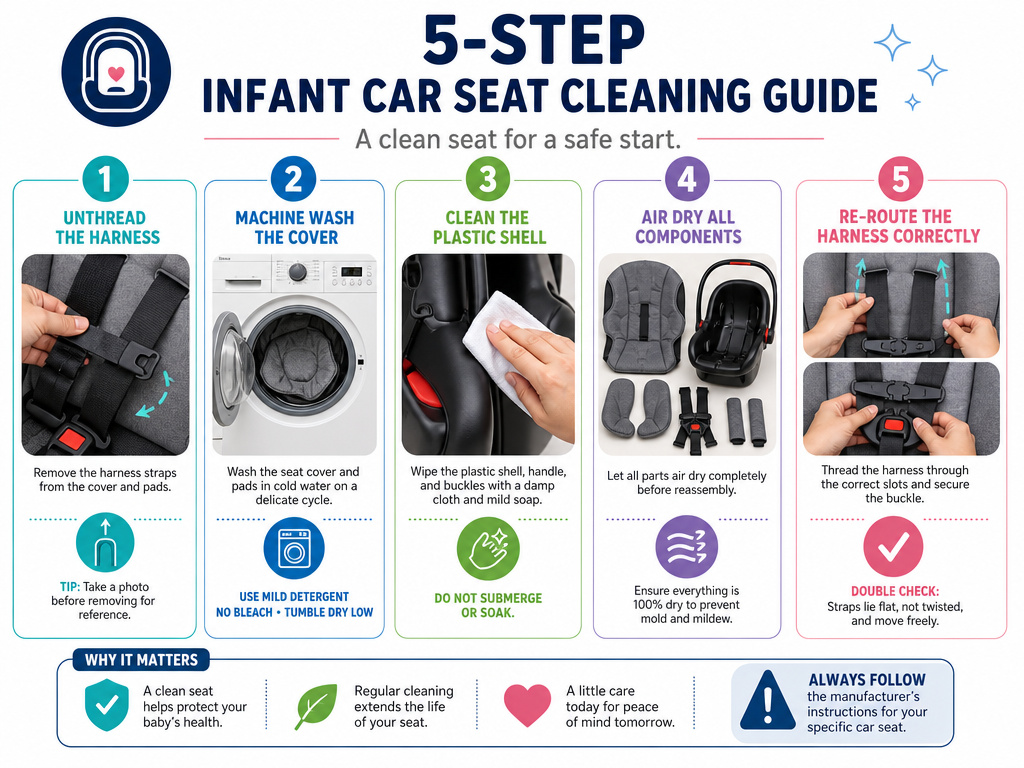
You cannot store a dirty seat. Food crumbs, milk spills, and general grime attract pests and lead to mold or mildew, which destroys fabric and straps.
- Remove the cover and harness straps. Consult your manual; most seats allow you to unthread the harness. For cleaning car seat straps, use a damp cloth with a drop of mild dish soap. Never soak them or use bleach, vinegar, or harsh chemicals, these break down the nylon fibers.
- Wash the fabric cover according to the manual’s instructions. Usually, it’s a cold, gentle machine cycle. Air-dry it completely. Putting a damp cover into storage is asking for mildew.
- Wipe down the plastic shell and base with the same mild soapy water. Pay attention to crevices where crumbs hide.
- Air-dry every component thoroughly. This is the step people rush. Assemble the seat while it’s still damp, and you’ve created a perfect environment for mold. Let everything dry for 24-48 hours in a well-ventilated room.
- Reassemble the seat correctly. A misrouted harness is a dangerous harness. Follow your manual to the letter.
Skipping the dry-down invites a musty smell you cannot remove. The mold spores that cause it can also trigger allergies for the next child.
Where to Store (and Where to Avoid)
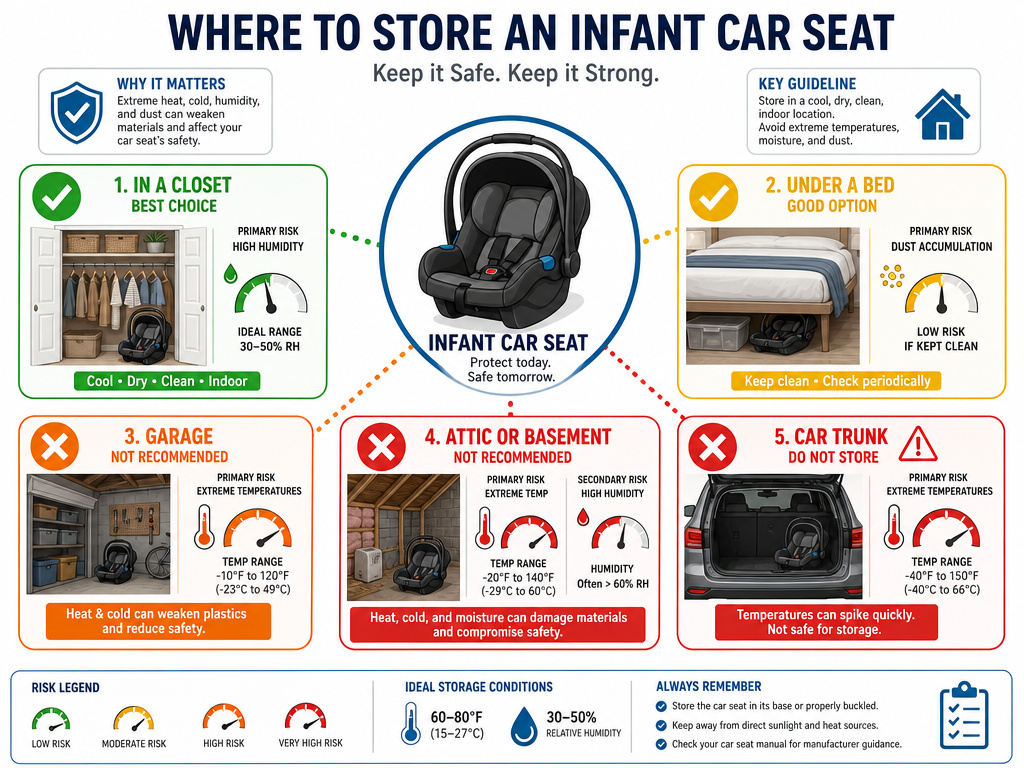
Storage location decides whether the seat remains safe. The goal is a stable, indoor, climate-controlled space.
| Location | Why It Works (or Doesn’t) | Risk If Chosen |
|---|---|---|
| Interior Closet (Best) | Stable temperature, no sunlight, low dust. | Almost none if kept upright. |
| Under a Bed (Good) | Dark and stable, but can be dusty. | Dust infiltration; ensure it’s in a bag. |
| Garage (Poor) | Temperature extremes are guaranteed. | Plastic becomes brittle in cold or soft in heat. |
| Attic/Basement (Bad) | Extreme temps and high humidity. | Mold, mildew, and material degradation. |
| Car Trunk (Worst) | Constant vibration, wild temperature swings. | Accelerated aging and hidden stress cracks. |
The BRITAX RÖMER manual specifies a storage temperature “between 20 and 25 °C” and warns against placing the seat near heat sources or in direct sunlight.
Your house’s living space is the target. A garage, even an attached one, fails the stability test. Summer heat in a garage can exceed 60°C (140°F), which can warp plastic. Winter cold makes it brittle. A basement often has high humidity, which leads to rust on metal parts and mold on fabric.
Long-term traveling with a car seat in a vehicle is different from storage, but the principle is the same: the trunk is a harsh environment. Store the seat indoors.
How to Pack and Protect the Seat
Once clean and dry, you need to shield the seat from dust, sunlight, and pressure.
- Use the original box if you have it. It’s designed for the seat’s shape and provides good crush protection.
- A large plastic storage bin with a lid is an excellent alternative. It seals out dust and pests.
- A breathable cotton sheet or pillowcase works as a dust cover if using a closet shelf. Do not use a plastic trash bag, it traps any residual moisture and creates a greenhouse effect.
- Never use a car seat travel bag designed for airline check-in for long-term storage. These bags are for impact protection during transit, not for breathability over months.
Place the seat upright, as it would sit in a car. Do not lay it on its side or back, and never stack anything on top of it.
Common mistake: Storing winter coats or other gear on top of the car seat. Constant pressure compresses the energy-absorbing foam in the seat back and base. This foam may not rebound, reducing its effectiveness in a crash.
Think of it like a bicycle helmet, you wouldn’t store weights on it.
The Recall and Registration Check
Storage is the perfect time to verify your seat’s safety status. If a recall was issued while the seat was in use, you must address it before storing it for future use.
- Find your model number and manufacture date. These are on the same label as the expiration date.
- Check for recalls. Visit the NHTSA car seat safety guidelines site and use their recall lookup tool. You can also call the manufacturer.
- Register your seat. If you haven’t already, do it now. Registration is how the manufacturer contacts you directly if a recall is announced. The Cybex Cloud T manual, for example, directs owners to their website for registration.
This bureaucracy is your direct line to the company if a safety defect is found. A stored seat with an unresolved recall is useless.
When Storage Leads to the Next Seat
Sometimes, proper storage is the bridge to your child’s next stage. If you’re storing an infant seat because your child has outgrown it, you need a plan for what car seat comes after an infant car seat.
The storage principles for a convertible seat are identical: clean, dry, climate-controlled. The stakes are the same. A well-stored infant seat can be a reliable backup or a safe start for a new sibling, but only if you follow the rules that keep its materials intact.
Frequently Asked Questions
Can I store my infant car seat in the garage if it’s in a box?
No. A box does not provide insulation against temperature extremes. The plastic shell and metal components will still be subjected to summer heat and winter cold, which accelerates material degradation. The garage fails the climate-control requirement.
How do I find the expiration date if the label is faded?
Contact the manufacturer directly with your model number and serial number. They can tell you the manufacture date and calculate the expiration. If you cannot provide this information and the label is illegible, the seat is not safe to store or use.
Is it okay to wash the harness straps in the washing machine?
Almost never. Most manufacturers explicitly warn against machine washing harness straps. The agitation can fray and weaken the internal fibers. It also can twist the webbing, affecting its performance. Hand-wash only with mild soap and water.
What should I do with an expired car seat?
You must render it unusable to prevent someone else from using it unsafely. Cut the harness straps, remove the fabric cover, and write “EXPIRED” or “DO NOT USE” in permanent marker on the plastic shell. Then, dispose of it according to your local recycling or waste guidelines. Do not donate it.
The Bottom Line
Storing an infant car seat is about preserving a life-saving device. The process hinges on three verifiable facts: the expiration date, a complete and dry clean-out, and a stable indoor environment.Skip any one, and you’re storing a liability. Follow them, and you’ve secured a critical piece of safety gear for the next journey, whether that’s for a new baby or as a vetted backup. Check the date, clean it right, and keep it indoors. That’s the whole job.
