
What Is the Lightest Infant Car Seat? Our Top 7-Pound Picks
This post contains affiliate links. As an Amazon Associate, we earn from qualifying purchases.
The lightest infant car seat on the market today weighs just over 7 pounds for the carrier alone. The Maxi-Cosi Ambra and the Kinderkraft I-LITE are the top contenders, with the Ambra at 7 lbs and the I-LITE at 7.05 lbs. Weight this low comes from advanced materials like recycled fabrics and reinforced ribbed shells, but it must not compromise core safety structures like the seat shell and harness system.
That 7-pound figure is a real, manufacturer-stated spec. It’s not an estimate or a marketing claim rounded down. You can find it printed in the Maxi-Cosi product manual and on the Kinderkraft spec sheet. This matters because a seat advertised as “ultra-lightweight” at 9 or 10 pounds is in a different category entirely for a parent hauling it through an airport.
What follows is a breakdown of those verified lightweight champions, the engineering trade-offs behind their weight, and a decision framework that matches the right light seat to your actual travel habits, be it daily subway commutes, cross-country flights, or just quick trips to the grocery store.
Key Takeaways
- The Maxi-Cosi Ambra and Kinderkraft I-LITE hold the verified title for lightest, both around 7 pounds for the carrier.
- A seat under 8 pounds often achieves its weight through fabric and liner choices, not by cutting the safety shell, never sacrifice shell integrity for weight.
- For frequent flyers or urban dwellers without a car, a lightweight car seat with easy seatbelt installation (no base required) is non-negotiable.
- Load legs and anti-rebound bars add stability and weight; decide if your primary vehicle can accommodate them before choosing.
- All major brands must meet the same FMVSS 213 federal safety standard; a lighter seat from a reputable brand isn’t inherently less safe.
The 7-Pound Champions & Why Weight Isn’t Everything
The race to the bottom of the scale has two clear winners. The Maxi-Cosi Ambra clocks in at 7 pounds for the seat shell, with the canopy and inserts adding about another pound. The Kinderkraft I-LITE is its European counterpart at 3.2 kg, which translates to 7.05 pounds. Both weights are pulled directly from the brands’ official product specifications, making them the benchmark.
A 2026 Consumer Reports evaluation of infant car seats was based on almost 1,000 individual installations and nearly 130 crash tests. Their findings show that ease of use and proper fit in your vehicle are just as critical to safety as crash-test performance.
These are not flimsy shells. The Ambra uses a fabric called EcoCare, made from 100% recycled plastic bottles, and omits added fire-retardant chemicals to cut weight. The I-LITE employs a “reinforced ribbed shell” that the manufacturer says enhances durability while promoting air circulation. The weight saving is in the materials science, not in thinning the plastic that forms the protective cocoon.
Where this goes sideways: Choosing a seat solely because it’s the lightest option. A seat that’s difficult to install correctly in your specific car is infinitely more dangerous than a slightly heavier seat you can secure perfectly every time. Your first filter should always be compatibility with your vehicle and lifestyle.
How a Light Seat Actually Works (And Where It Fails)
A lightweight design works by strategic material substitution and smart engineering. It is not a uniform shaving of plastic. The seat shell itself, the hard, structural bucket, remains robust to meet FMVSS 213 standards. The savings come from elsewhere: lightweight fabrics, minimalist cushioning, simplified adjustment mechanisms, and the removal of integrated steel reinforcement bars that some heavier seats use.
The harness system is a non-negotiable weight. A five-point harness with sturdy buckles and reinforced webbing is a fixed cost. You cannot make it lighter without compromising its single most important job: restraining the child. This is why two seats can have the same shell weight but feel different, the heft is in the harness hardware and the comfort padding.
Common mistake: Assuming a lighter seat is less safe. The federal standard is a pass/fail threshold for crash protection. A seat from Maxi-Cosi, Cybex, or Graco that passes has met that threshold. The real risk with a light seat is user error, fumbling a complicated install because you’re tired from carrying it, or skipping the base because it’s too heavy to lug, leading to an improper seatbelt installation.
The failure mode of a poorly designed lightweight seat isn’t that it shatters. It’s that it can be harder to get a tight, correct install. A very light shell can sometimes “bounce” or shift more during installation if you’re not careful to apply weight while tightening the belt. This is where features like a load leg (a pole that extends from the base to the car floor) become a trade-off. It adds stability and weight, but it also simplifies a correct install by preventing rotation.
The Specs That Matter More Than the Number on the Scale
When you’re comparing lightest infant car seat options, the weight is your starting point, not your finish line. Three other specifications will dictate whether a seat works for your life.
| Specification | What It Means | Why It Matters for a Light Seat |
|---|---|---|
| Height/Weight Limit | The maximum size child the seat is certified to hold. | A seat with a 30-inch/30-lb limit may be outgrown faster than one with a 32-inch/35-lb limit, forcing an earlier (and costly) transition. |
| Base Compatibility | Whether the seat can be used securely without its dedicated base. | For taxi, Uber, or airplane travel, a seat that installs safely with just a seatbelt is essential. Not all lightweight seats have this. |
| Stroller Compatibility | The range of stroller frames the seat can click into. | A light seat is meant to be carried, but a full travel system is a back-saver. Check adapter lists before you buy. |
The harness adjustment mechanism is a hidden weight-saver with big usability impact. Some lightweight seats use a “no-rethread” harness, where the headrest and straps move together with one hand. Others require you to manually rethread the straps through different slots as the child grows. The no-rethread design is slightly more complex (and can add a few ounces) but it eliminates a major installation error point for years of use.
The canopy and handle are other areas where grams add up. A large, multi-position canopy with UV protection is heavier than a simple sunshade. A handle with multiple carry positions and a soft grip adds weight over a basic plastic arc. You need to decide if these comfort features are worth the extra half-pound on your arm.
Matching the Lightest Seat to Your Travel Reality
Your daily routine decides which lightweight seat is best. The needs of a parent who drives everywhere differ from those of a city dweller who uses public transit.
For the Urban Dweller (Taxis, Subways, Walk-ups):
Your primary concern is seatbelt installation and portability. The seat will rarely live in a single car. Prioritize a model known for easy, secure seatbelt installs without its base. Look for clear belt paths and indicators. The Cybex CLOUD T is a strong contender here, as its manual emphasizes its certification for use in aircraft and with vehicle lap/shoulder belts. The minimal base is something you might leave at home.
For the Frequent Flyer:
Airplane use is the key. The seat must be FAA-approved (virtually all infant seats are) and you need a carrying strategy. A light seat is pointless if it’s awkward to carry. Look for integrated travel straps or a design that balances well in the crook of your arm. The ability to click it onto a lightweight travel stroller frame like the Baby Jogger City Tour 2 or GB Pockit is a game-changer for navigating terminals.
For the Multi-Vehicle Family (Grandparents, Sitters, Two Cars):
You might buy multiple bases. Here, a seat with a simple, foolproof base installation system is worth its weight. Features like rigid LATCH connectors or clear visual indicators (like Maxi-Cosi’s TensionFix green-red gauge) prevent loose installations. A slightly heavier seat with a rock-solid base system you can install in 60 seconds is better than the absolute lightest seat with a finicky base you dread moving.
The 3-Step Travel Decision
- Count the carries. How many times a week will you be lifting the seat in and out of a vehicle versus leaving it installed? If it’s more than three, prioritize the lightest carrier weight.
- Identify the hardest install. Is it the grandparents’ sedan with deep seat cracks? The airline seatbelt? The city cab with no LATCH? Choose a seat that excels in that specific challenging scenario.
- Plan the exit. Your child will outgrow this seat by height or weight, often around 12-18 months. Have a plan for the next car seat stage, whether that’s a convertible seat or an all-in-one model. Don’t get so focused on infant portability that you’re unprepared for the transitioning car seats phase.
Safety First: What Lightweight Engineering Cannot Change
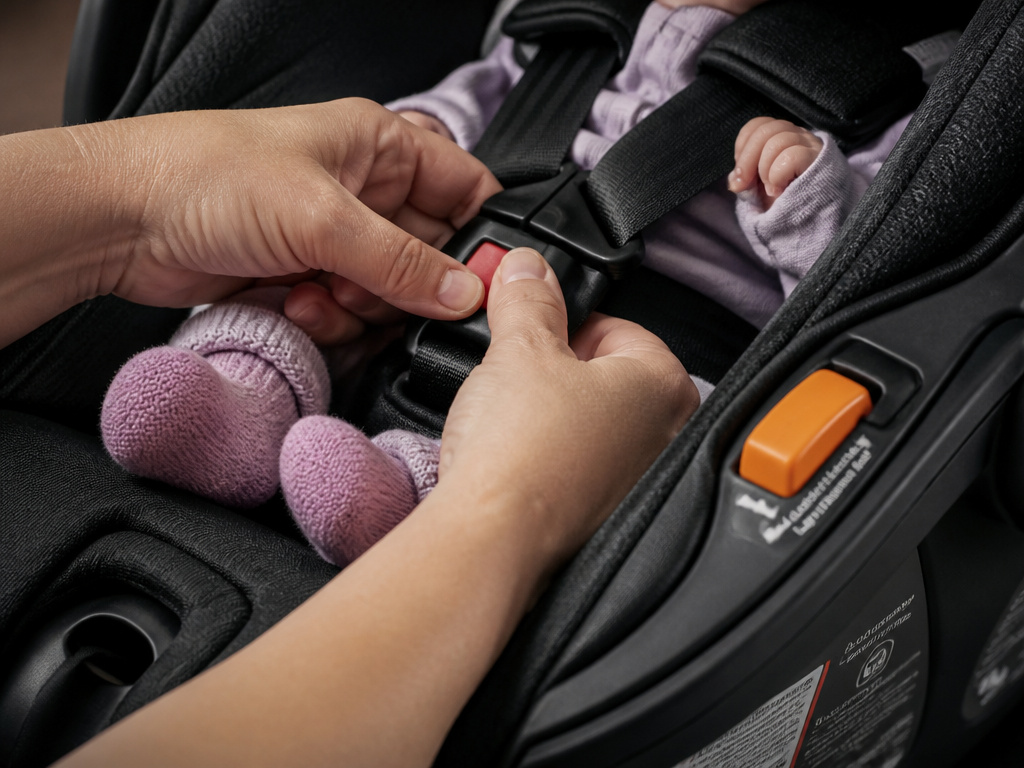
The American Academy of Pediatrics has specific guidelines for premature infants. The Cybex manuals state that for infants born earlier than 37 weeks or weighing less than 5 lbs, an observation period in the seat is required before travel. This is because their respiratory systems are at risk in a semi-reclined position. No amount of seat weight changes this medical reality. Always consult your pediatrician.
All car seats sold in the U.S. Must meet Federal Motor Vehicle Safety Standard (FMVSS) 213. This is the baseline. Reputable third-party testing from organizations like Consumer Reports or the European ADAC test goes further, simulating more severe or varied crash conditions. A lightweight seat that scores well in these independent tests offers a verified margin of safety beyond the government minimum.
Worth knowing before you start: A car seat involved in a moderate or severe crash must be replaced, even if it looks fine. The stress can cause microscopic cracks in the shell that compromise its integrity in a subsequent crash. Most manufacturers and insurance policies have replacement programs.
The safest car seat is the one that fits your child, fits your vehicle, and that you will use correctly every single time. For many parents, a lighter seat removes a barrier to that correct use. It means you’re less likely to leave the seat improperly installed because you’re exhausted from carrying it, or to skip using it on a short trip because it’s too cumbersome.
Frequently Asked Questions
Are lightweight car seats safe for newborns?
Yes, provided the seat is rated for a child as small as 4 or 5 pounds and you use all necessary infant inserts. The key for newborns, especially preemies, is the recline angle to keep their airways open. Always follow the manufacturer’s instructions for newborn positioning and consult your doctor if your baby was premature.
What is the trade-off for a lighter car seat?
The primary trade-offs are often in premium comfort features and extra stability technology. A lighter seat may have less plush padding, a simpler canopy, or lack a load leg or anti-rebound bar. It is not a trade-off in fundamental shell strength or harness safety, assuming you’re comparing seats from major, reputable brands.
Can I use a lightweight infant seat without the base?
Only if the manufacturer’s manual explicitly states that the seat is certified for seatbelt-only installation. Many are, and this is a crucial feature for travel. Never assume a seat is safe without its base, check the manual. Proper installation is the non-negotiable step.
How long can my child use a lightweight infant seat?
Until they reach the seat’s maximum height or weight limit, whichever comes first. For most lightweight seats, this is between 30 and 35 pounds, and typically 30 to 32 inches tall. Most children outgrow them by height before weight, often between 12 and 18 months. This is your cue to switch from an infant seat to a rear-facing convertible seat.
Is it worth buying a travel system for a lightweight seat?
Absolutely. This is where the value of a light seat multiplies. A compatible travel system means you click the seat onto a stroller frame instead of carrying it. For errands, airport travel, or walks, this saves your back and makes the lightest car seats truly practical. Always verify compatibility before purchasing.
The Bottom Line
The lightest infant car seat is a tool for a specific job: making life easier for parents on the move. The Maxi-Cosi Ambra and Kinderkraft I-LITE are the verified weight champions at the 7-pound mark. But the best seat for you is the lightest one that also installs securely in your car, fits your child until they’re ready to transition, and integrates smoothly into your daily routine, whether that’s via a car seat stroller combo or a simple seatbelt.
Don’t chase ounces at the expense of confidence. A seat that’s easy to install correctly every time is the ultimate safety feature. Choose the lightest seat that lets you do that, and you’ve made the right choice.
