Know When to Move Your Child to a High Back Booster Seat
This post contains affiliate links. As an Amazon Associate, we earn from qualifying purchases.
Move your child from a car seat to a high back booster seat when they meet three strict requirements: they exceed their forward-facing car seat’s height or weight limit, they pass a 5-step seat belt fit test in the booster, and they demonstrate the maturity to keep the seat belt positioned correctly for the entire ride.
The weight and height limits are printed on a label on your car seat. For most models, that’s between 40 and 65 pounds. The Chicco KidFit Zip Plus Booster starts at 30 pounds in high-back mode, and the Graco TurboBooster LX requires a minimum of 40 pounds and 4 years old. Those numbers are the floor, not the goal. The real gate is the seat belt itself — if it doesn’t fit your child’s hips and shoulders precisely, the booster isn’t safe yet.
This guide walks through the three-part check: the hard numbers from your car seat’s label, the physical test of the vehicle belt, and the behavioral readiness most parents miss. By the end, you’ll know exactly when your child is ready, what to buy, and the one mistake that voids a booster’s protection.
Key Takeaways
- Your car seat’s forward-facing harness has a maximum height or weight limit printed on its label; exceeding it is the first legal requirement to move to a booster.
- The seat belt must lie flat across the child’s upper thighs (not stomach) and cross the shoulder midway between neck and arm — if it rides up on the neck or off the shoulder, they need the harness longer.
- A child must be mature enough to sit upright and not reposition the seat belt behind their back or under their arm for the entire trip; fidgeting that moves the belt is an automatic fail.
- High-back boosters are non-negotiable in vehicles without headrests or where the vehicle seat back is below the child’s ears; a backless booster in that scenario offers zero head protection in a side-impact crash.
- Combination seats like the Graco Tranzitions or Evenflo EveryKid can function as a harnessed seat now and convert to a high-back booster later, but they often have lower booster-mode minimums than dedicated boosters.
The Forward-Facing Harness Limit Is Your Starting Line
You don’t decide when to switch; the car seat’s label does. Every forward-facing car seat with a five-point harness has a maximum height or weight limit stamped on its side or in the manual. This isn’t a suggestion. It’s the certified limit of the restraint system.
Federal and Canadian transport authorities state that children should remain in a forward-facing car seat with a harness until they reach the top height or weight limit allowed by the car seat’s manufacturer.
Once a child exceeds that limit, the harness is no longer tested or certified for their size. The forces in a crash could overload the straps, the buckle, or the seat shell itself. The transition to a booster seat begins here, but it doesn’t automatically end here. Meeting the maximum is the permission to start looking, not the green light to switch.
Reading Your Car Seat’s Label
Find the sticker on the side of the seat shell or woven into the fabric near the child’s legs. It will list the forward-facing mode limits. Common limits are 40, 50, 65, or even 70 pounds, with a height limit often around 49 inches. The height limit is usually the first one kids hit.
- Weight Limit: The scale doesn’t lie. If the label says “Forward-facing: 22-40 lbs,” and your child is 41 pounds in their pajamas, they have outgrown it.
- Height Limit: This is about the top of the child’s head relative to the top of the seat shell. The rule is simple: when the child’s shoulders go above the top harness slot, or the top of their head is less than one inch from the top of the seat shell, they have outgrown it by height.
If your child is nowhere near these limits, stop reading about boosters. They need the full containment of the five-point harness. A booster seat relies on the child’s skeleton and the vehicle belt to manage crash forces, which is a job for older, bigger kids.
The 5-Step Seat Belt Fit Test
A high back booster seat’s only job is to position the adult seat belt correctly on a child’s body. If the belt doesn’t fit right without the booster, it won’t fit right with it. This test is what the NHTSA car seat safety guidelines call the “seat belt fit test.”
Have your child sit in the booster seat, which should be installed in the back seat of your vehicle. Buckle them in. Now, run through this checklist. Every point must pass.
- Back Against the Seat: Is the child sitting all the way back, with their spine against the booster’s backrest?
- Knees Bent: Do their knees bend comfortably at the edge of the vehicle seat cushion?
- Lap Belt Low: Does the lap belt portion lie snugly across the upper thighs, touching the hips? It must not ride up onto the soft part of the abdomen.
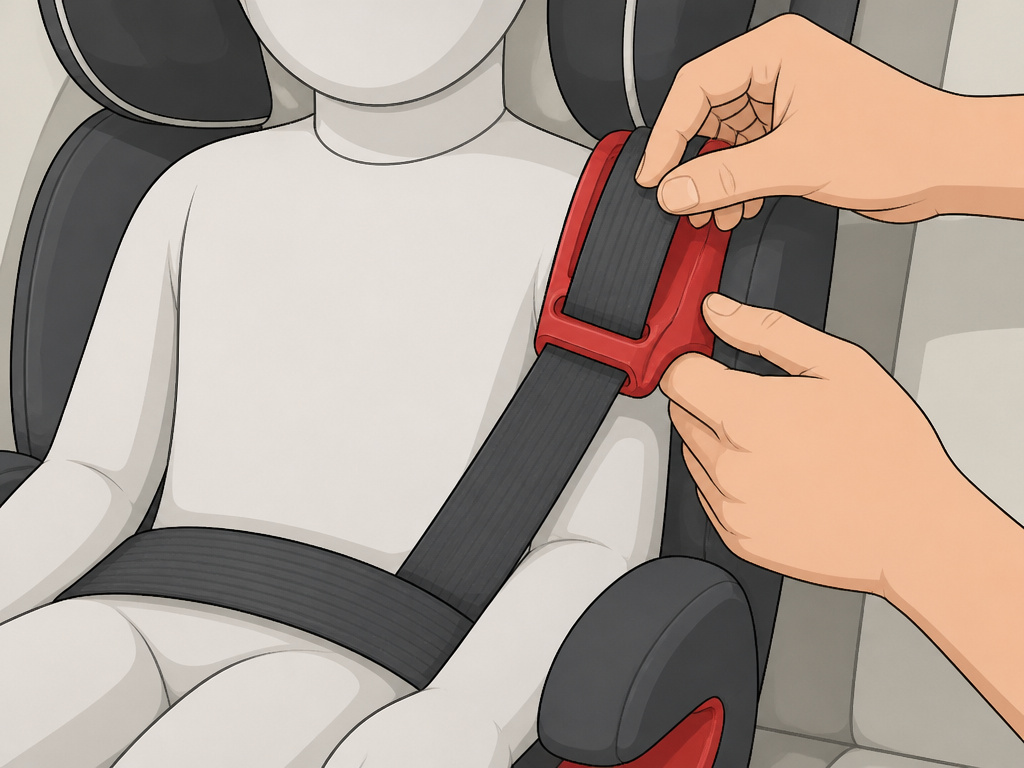
- Shoulder Belt Mid-Shoulder: Does the shoulder belt cross the chest and rest snugly on the shoulder, midway between the neck and the edge of the shoulder? It must not cut across the neck or face, nor fall off the shoulder onto the arm.
- Stay Put: Can the child maintain this position for the duration of a car ride without slouching, leaning, or putting the belt behind their back?
If you answer “no” to any of these, your child is not ready for a booster seat. The most common failure points are the lap belt riding up on the belly and the shoulder belt cutting across the neck. A high-back booster with an adjustable shoulder belt guide can often solve the shoulder belt issue, but nothing fixes a lap belt that is too high on an immature pelvis.
| Test Point | Pass Condition | Fail Consequence |
|---|---|---|
| Lap Belt Position | Snug on upper thighs/hips | In a crash, the belt loads the soft abdominal organs, risking severe internal injury. |
| Shoulder Belt Position | Crosses mid-shoulder/chest | Belt on neck can cause choking or neck injury; belt off shoulder offers no upper-body restraint. |
| Child’s Posture | Sits back, knees bent at seat edge | Slouching creates slack in the belt system, increasing forward travel in a crash. |
| Belt Behavior | Remains correctly positioned entire trip | Child removing belt from guide or placing it behind back nullifies all protection. |
The Maturity Factor: The Silent Gatekeeper
This is the part the sticker can’t tell you. A child can be tall enough and heavy enough but still be years away from booster readiness. The Graco TurboBooster LX manual states it clearly: the child must be “mature enough to sit in the booster seat and not put the belts under their arm or behind their back.”
Where this goes sideways: Moving a child who fidgets with the seat belt into a booster. They will tuck the shoulder belt behind them because it’s uncomfortable on their neck, or they’ll sit on the lap belt to slacken it. In a crash, that child is essentially unrestrained.
Maturity means they understand the belt must stay put. It means they can sit upright for a trip to the grocery store without constantly squirming out of position. It means they won’t unbuckle themselves the moment you look away. If you have doubts, wait. There is no award for graduating early from a five-point harness. The harness is the safer restraint for any child who cannot yet sit properly.
High-Back vs. Backless: It’s About Your Car, Not Convenience
A backless booster is smaller and cheaper. A high-back booster looks bulkier. The choice between them isn’t about preference; it’s about your vehicle’s back seat and your child’s size.
You need a high-back booster if:
- Your vehicle seat has low seat backs or no headrests.
- The vehicle seat back is lower than your child’s ears.
- The shoulder belt naturally routes across your child’s neck without a guide.
The high back provides critical head and neck support in side-impact crashes and offers an integrated shoulder belt guide to route the belt correctly. The Chicco KidFit Zip Plus Booster manual explicitly warns that its backless mode is only for children whose ears are below the vehicle seat back. If the car seat doesn’t support the child’s head, the high-back is mandatory.
A dedicated high-back booster like the Chicco KidFit or Graco TurboBooster tends to have more substantial side wings and deeper head support than the booster mode of a combination seat. If side-impact protection is a top concern, a dedicated model is often the better pick over a convertible seat’s booster function.
Making the Switch: A Step-by-Step Guide
 When all three lights are green — outgrown harness, passes belt test, demonstrates maturity — you can proceed.
- Choose the Right Seat. Decide between a dedicated high-back booster or a combination seat. Dedicated boosters like the Britax Highpoint often have better side-impact protection. Combination seats like the Graco Tranzitions are more versatile.
- Install the Booster. Place it in the back seat of your vehicle. For high-back mode, ensure the vehicle’s headrest does not push the booster’s headrest forward. If it does, remove the vehicle headrest if possible.
- Thread the Seat Belt. Follow the booster’s manual exactly. The lap belt must lie flat, and the shoulder belt must thread through the built-in guide (usually a red plastic clip or channel on the high-back).
- Perform the Fit Test. With your child in the seat, buckle up and go through the 5-step test again. The belt should now pass every check.
- Teach the Rules. Explain to your child that the belt must stay on the shoulder and lap. No putting it behind their back, ever. Make it a non-negotiable car rule.
Common mistake: Using a booster seat with only a lap belt. This is explicitly warned against in every manual, including the Evenflo EveryKid guide. A lap-only belt provides no upper body restraint, allowing severe head and spinal injuries in a frontal crash.
Frequently Asked Questions
What is the youngest age for a high-back booster?
Four years old is the absolute minimum age recommended by most manufacturers, including Graco, and is the law in many states and provinces. Age is a poor solo metric, though. A small four-year-old likely still needs a five-point harness. The combination of age, size, and maturity is what matters.
Can I use a high-back booster as the next step after an infant car seat?
No. The progression is rear-facing infant seat → forward-facing convertible seat with harness → booster seat. A child must first outgrow the rear-facing limits, then the forward-facing harness limits, before a booster is ever considered. Skipping the forward-facing harness stage is dangerous.
My child meets the weight requirement but not the height. Can I switch?
No. You must meet both the minimums and pass the seat belt fit test. If the shoulder belt cuts across their neck even in the booster’s guide, they are not tall enough. The booster seat transition is governed by the “and” rule, not the “or” rule.
Are combination seats (harness to booster) as good as dedicated boosters?
They are convenient and economical, but check the specs. Many combination seats have lower height limits in booster mode than dedicated high-back booster seats. Your child may outgrow the harness only to find they are still too small for the booster function of that same seat. Always read the booster-mode minimums on the label.
How long should a child stay in a high-back booster?
Until they pass the 5-step seat belt fit test without the booster, usually between 8 and 12 years old and around 4 feet 9 inches tall. The NHTSA car seat safety guidelines advise keeping kids in the back seat at least through age 12.
The Bottom Line
The move from a car seat to a high back booster isn’t a birthday milestone. It’s a safety engineering checkpoint defined by your car seat’s label, your vehicle’s seat belt geometry, and your child’s ability to sit still. The harness has a hard limit; the booster has a high bar. Use the printed numbers on your current seat as your starting gun, then let the 5-step fit test and an honest assessment of maturity make the final call. When in doubt, keep them in the harness. There is only one right time to switch: when all three conditions are definitively met.
