
Why Does My Baby Hate the Car Seat? The Real Reasons & Fixes
This post contains affiliate links. As an Amazon Associate, we earn from qualifying purchases.
Your baby hates the car seat for three main reasons: physical discomfort from improper harness fit or overheating, the psychological stress of the “separation distress cry,” or a combination of both. The harness is the most common mechanical failure—straps that are too loose, a chest clip positioned wrong, or bulky clothing creating dangerous gaps. Overheating is a silent, frequent culprit, with studies documenting infant burns from hot car seat materials.
That harness fit isn’t just about safety labels. It’s the direct physical interface between your child and the seat. When it’s wrong, it pinches, sags, or presses in ways a baby can’t articulate beyond a scream. The federal standard that certifies these seats, FMVSS 213, tests webbing strength under precise humidity and tension—but it doesn’t test for toddler comfort during a 45-minute commute.
What follows is a breakdown of those three reasons, grounded in pediatric research and manufacturer specs. You’ll get a step-by-step fit checklist, temperature management tactics that go beyond “no coat,” and strategies to address the crying that 90% of parents admit is a driving distraction on par with cell phone use.
Key Takeaways
- The harness is the number one source of physical discomfort. Incorrect height, a loose “pinch test,” or a chest clip at belly-button level can make the seat feel restrictive and painful.
- Overheating is a documented safety hazard, not just an annoyance. A peer-reviewed NIH study on car seat challenges cites an infant burn from an overheated seat during a long, sunny drive.
- The “separation distress cry” is a hardwired survival instinct. Your baby’s scream in the rearview mirror triggers a physiological stress response in you, making the drive feel unbearable.
- Aftermarket products like strap covers or head supports not approved by the seat’s manufacturer can compromise safety and often make fit issues worse.
- Consistency and short, positive exposures at home are more effective for getting your baby comfortable with the car seat than any in-car distraction once full-blown crying has started.
The 3 Most Likely Reasons Your Baby Hates the Car Seat
You’re not imagining the struggle. A Canadian study observed over 13,000 children and found a 70% rate of incorrect car seat use. In many of those cases, the child was visibly uncomfortable or unsafe. Your baby’s protest is a signal. The trick is decoding whether it’s a “this hurts” signal or a “I’m scared and alone” signal—or both.
We’ll start with the physical, because if the seat is physically uncomfortable, no amount of singing or screen time will create a lasting fix.
The webbing width and strength of car seat harnesses are tested under specific federal conditions: 24 hours at 70-77°F and 48-67% humidity with a 5-pound tension. These material specs ensure crashworthiness, but they don’t guarantee the strap won’t dig into a baby’s neck if the harness height is set wrong.
1. The Harness & Fit Check (This Is Usually It)
Most parents know the straps shouldn’t be loose. The “pinch test” is gospel: you shouldn’t be able to pinch a horizontal fold in the harness strap at the child’s shoulder. But that’s the end point. Several subtler mistakes happen first.
Harness Height. For a rear-facing seat, the straps should come from the slot at or just below the baby’s shoulders. If the straps are above the shoulders, they pull the child down into the seat, crunching their spine. If they’re too far below, they allow too much upward movement and the straps can slip off the shoulders. Check this every month.
Chest Clip Position. This plastic clip is a pre-crash positioning device, not a decorative piece. It must be at armpit level. When it sits at the belly button or lower, the shoulder straps spread apart. In a crash, this allows the child to submarine forward out of the harness. It also lets the straps chafe against the neck.
Buckle Placement. The crotch buckle should be close enough that the buckle tongues aren’t resting under the baby’s thighs. If they are, you’ll have to pull the straps uncomfortably tight to secure the child, and the hard plastic will press up into their legs. Most seats have multiple crotch buckle positions; use the one that fits.
| Fit Element | Correct | Incorrect & Why It Hurts |
|---|---|---|
| Harness Height | At or just below shoulders (rear-facing) | Above shoulders: crunches spine. Too far below: straps slip and chafe neck. |
| Chest Clip | Level with armpits | At belly button: straps spread, chafe neck, allows dangerous forward movement. |
| Pinch Test | No horizontal fold pinched at shoulder | Loose strap: child slumps, straps cut into neck during sudden stops. |
| Crotch Buckle | Buckle tongues just in front of thighs, not underneath | Under thighs: plastic digs into legs, requires over-tightening to secure. |
What most people get wrong: Adding aftermarket strap covers or padding. Products like the best car seat neck pillow for baby support can be safe if they’re designed for your specific model and don’t interfere with the harness path. But generic, fluffy strap covers can hide slack, compress in a crash, and are a leading reason for failed student backpack searches during safety checks. If your seat’s straps seem hard, the issue is usually the height or clip position, not the strap material itself.
2. The Overheating Problem
You dress your baby for the weather outside. But the car cabin heats up rapidly, and a car seat acts like an insulator. That cute fleece bunting bag or winter coat is a recipe for misery—and danger.
The bulk prevents the harness from being tightened properly. You might get a snug fit over the coat, but in a crash, the coat compresses, creating inches of deadly slack. The bulk also traps body heat. A 2012 child car seat research article in Pediatrics & Child Health documented a case where an infant sustained a burn from an overheated car seat during a long drive on a hot, sunny day.
Dress in thin, breathable layers. Put your baby in their normal indoor clothes. After they are securely harnessed, add a blanket or a zip-up sweater over the fastened straps. For summer, a breathable liner made of 3D mesh can significantly improve airflow between the child and the seat’s often-plastic shell. A portable fan clipped to the seatback can provide direct, safe airflow.
Never block a baby’s air with a draped blanket or a sunshade that seals tightly over the entire seat. You need airflow to prevent carbon dioxide rebreathing and heat buildup. Use window shades that stick to the glass, not the seat.
3. The Psychological Wall: Separation & Confinement
You’ve checked the fit. The temperature is fine. Yet the screaming starts the moment the car door closes. This is often the “separation distress cry”—a specific, hardwired call for a caregiver.
From the baby’s perspective, they are strapped into a rigid shell, their view is often the blank back of a seat, and the person they rely on is now distant, distracted, and unresponsive. Research confirms that a crying infant’s sound triggers a physiological stress response in adults, raising heart rates. It’s a brutal feedback loop: their distress causes your stress, which they sense, amplifying theirs.
Strategies to break the cycle:
- Create a positive pre-game. Don’t only associate the seat with leaving. Practice acclimating to the car seat inside the house for short, fun periods with you right there.
- Sit in the back when possible, especially for longer trips. Your presence is the ultimate soothing strategy.
- Use your voice constantly. Narrate the drive, sing silly songs. Your voice is a tether. Loud, upbeat music can sometimes help mask the strange noises of the car and provide a rhythmic distraction.
- A mirror is a double-edged sword. It lets you see them, but it also becomes a dangerous projectile in a crash and can overstimulate a tired baby. If you use one, ensure it’s securely attached and doesn’t become your primary focus while driving.
Step-by-Step: The 5-Minute Pre-Drive Comfort Check
Do this every time before you buckle your baby in. It turns the guesswork into a routine.
- Clear the Seat. Remove any loose toys, crumbs, or aftermarket items not approved by the seat manufacturer. A toy under the back can create a pressure point.
- Adjust the Harness Height. Loosen the harness fully. Check that the shoulder straps are at the correct slot for your child’s seated height. Re-thread if necessary.
- Position the Child. Place your baby in the seat, ensuring their back and bottom are flat against the backrest. Check that the crotch buckle isn’t underneath them.
- Buckle and Tighten. Fasten the buckle and pull the harness adjuster strap until the straps are snug. Perform the pinch test at the shoulder. If you can pinch fabric, tighten more.
- Set the Chest Clip. Slide the clip up to armpit level. Ensure the straps are untwisted and lying flat.
Skip the recline angle check for an infant, and the seat won’t support their airway. For a newborn in a rear-facing seat, the correct recline (usually indicated by a level line) is non-negotiable for breathing safety.
When to Suspect a Medical or Sensory Issue
Sometimes, the hatred is extreme and persistent, pointing to something deeper. Consider these possibilities if standard tips to calm baby fail completely.
Infant Reflux (GERD). The semi-reclined position of a car seat can aggravate acid reflux, causing real pain. Symptoms include crying that worsens shortly after feeding, arching the back, and spit-up. Talk to your pediatrician. They may recommend timing trips carefully after meals or a trial of medication.
Motion Sickness. This becomes more apparent in toddlers but can start earlier. Look for signs like excessive drooling, paleness, yawning, and crying that leads to vomiting.
Sensory Processing Sensitivity. The combination of vibration, road noise, and visual blur from side windows can be overwhelming for some children. They might be reacting to the sensory flood, not the seat itself. Trial runs with noise-canceling headphones (for older babies) or a firm, swaddling-style comfort in car seat wrap might help.
Tools That Can Actually Help (And Ones to Avoid)
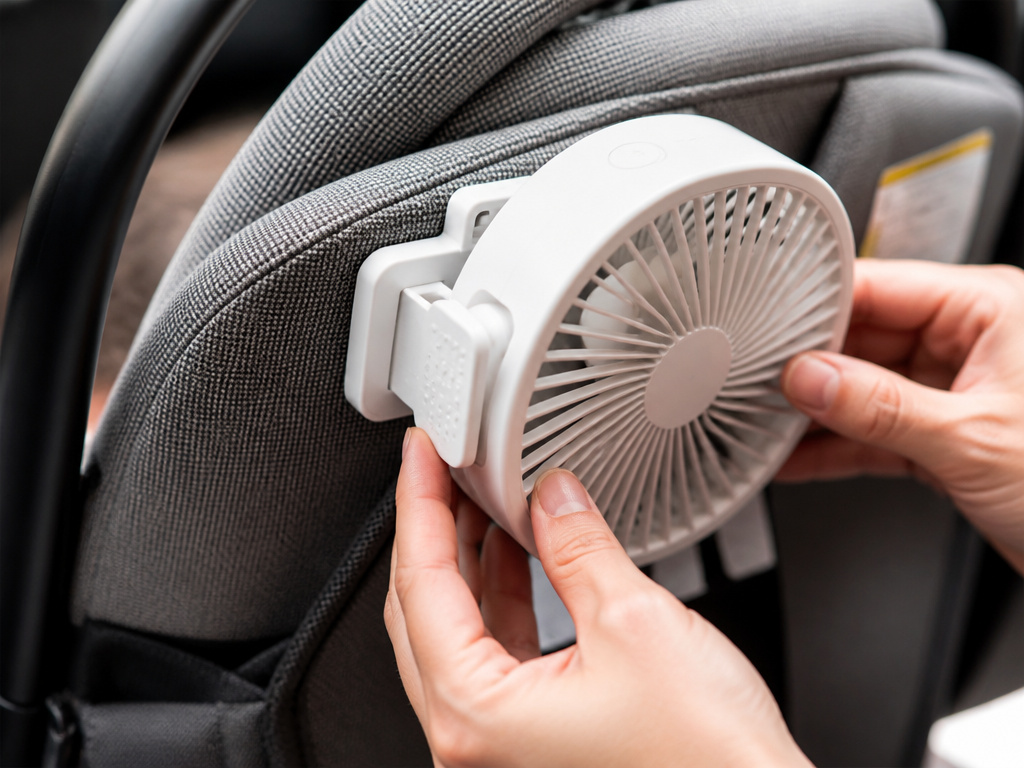 The market is full of gadgets promising peace. Most are useless; a few are safety hazards. Here’s the real breakdown.
| Product | Can It Help? | Key Consideration / Warning |
|---|---|---|
| Certified Car Seat Fan | Yes. | Must be battery-powered, securely clipped to the seatback, with finger-safe blades. Avoid ones that drape over the seat or have loose cords. |
| Breathable, Mesh Seat Liner | Yes. | Must be specifically designed for your seat model and thin enough not to affect harness tightness or installation. No memory foam or padding. |
| Car Seat Mirror | Maybe. | A major projectile risk. If used, it must be attached with the seat’s own strap system, not a suction cup. It often increases parent distraction. |
| Aftermarket Strap Covers | No. | Unless sold by your seat’s manufacturer for that model, they can hide slack and compromise harness performance. They are a common reason for stadium security screening failures at check-up events. |
| Head Support Pillow | Sometimes. | Only use if it came with the seat or is sold by the manufacturer for that model. It must go behind the child’s head/back, not around the sides where it could interfere with the harness. |
The bottom line: Your safest first investment is a quality fan or liner to address overheating, not a toy or a cover to address crying. Comfort supports calmness.
Frequently Asked Questions
Is it dangerous to let my baby cry it out in the car seat?
You must prioritize safe driving. A 2023 survey found over 90% of parents say a crying baby is a distraction on par with cell phone use. If the crying is severe and you are becoming too stressed to drive safely, pull over when it is legal and secure to do so. Check for an obvious cause (overheating, a pinched strap), offer comfort, then continue. The act of crying during travel is not physically harmful, but a distracted driver is a real risk.
My baby only hates the car seat sometimes. Why?
Context is key. A baby who is tired, hungry, or coming down with a minor illness will have a much lower tolerance for the confinement of the seat. It’s also common for frustration to peak around 4-8 months when separation anxiety develops but the baby lacks the mobility to express it. Track the timing. If meltdowns always happen on the way home from daycare, it’s likely overtiredness, not the seat.
Could my car seat be defective or the wrong model?
It’s possible, but less likely than a fit issue. Check for recalls on the NHTSA website using your model number and manufacture date. More commonly, a child can simply outgrow the comfort parameters of an infant seat before they outgrow its height/weight limits. The padding may compress, or the harness slots may no longer align well with their shoulders. If your baby once was content and now isn’t, consider whether a convertible seat might offer a better-fitting shell.
Are there specific car seat brands known for being more comfortable?
Some brands invest more in premium comfort fabrics, deeper padding, and multiple recline positions. Brands like Britax and Graco often receive high marks from parents for their padded inserts and no-rethread harness systems that make fit adjustments easier. However, the “most comfortable” seat is the one that fits your child’s body and your vehicle correctly. A perfect install of a mid-range seat beats a poor install of a luxury model every time.
How long does this phase usually last?
For many babies, intense car seat resistance peaks between 6 and 18 months and gradually improves as they become more verbal and mobile. For others, it can persist into the toddler years, morphing into frustration about being restrained. Consistency with your positive association routines is your best tool to shorten the phase.
The Bottom Line
Your baby hates the car seat for a reason you can find. Start with the harness—height, clip, tightness. Rule out overheating by dressing in layers and considering a fan or breathable liner. Acknowledge the psychological strain of separation and use your voice as an anchor.
The goal isn’t silence. It’s safe travel. When you know the seat is fitted flawlessly, you can hear the crying for what it often is: a protest against confinement, not a scream of pain. That knowledge lets you stay calm, drive safely, and pull over when you need to. This phase will pass. Your job is to outlast it, safely.
