
A Parent’s Guide on How to Soothe Baby in Car Seat Safely
This post contains affiliate links. As an Amazon Associate, we earn from qualifying purchases.
To soothe a baby in a car seat, first ensure their safety and comfort are not in conflict. Check for a snug harness, a non-slouching position, and a temperate environment. Then, use auditory and visual distractions. Long-term comfort comes from positive, short-duration exposures outside the car.
A crying baby in a car seat is a diagnostic problem, not merely a noise problem. The sound is a signal, and your first job is to rule out the signals that mean “I am unsafe” before you address the ones that mean “I am bored.” The harness might be pinching.The seat might be too hot. Their chin might be dipping toward their chest, a position that can restrict breathing within minutes.
What follows is a three-part system: diagnose the real problem, apply immediate in-car solutions, and build long-term tolerance. Each step keeps the car seat’s primary job, restraint in a crash, front and center. You’ll learn the physical checks that override the crying, the distractions that actually work at 65 mph, and how to turn the seat from a prison into a familiar space.
Key Takeaways
- The pinch test is your baseline: if you can pinch a fold of harness strap at the shoulder, it’s too loose and causing discomfort.
- Positional asphyxia risk is real; a chin-to-chest posture can compromise a baby’s airway in as little as five minutes, so correct slouching before soothing.
- Temperature is a primary agitator; a portable car seat fan like the Tiny-Aire can prevent overheating-driven crying before it starts.
- Never add aftermarket head supports, body pillows, or harness covers unless they are sold by your car seat’s manufacturer (e.g., Britax, Graco) for your exact model.
- Long-term comfort is built in the driveway with two-minute positive exposures, not on the highway during a meltdown.
The 3-Step Safety-First Method for Soothing
This process is a sequential checklist, not a search for a magic toy. Skip Step 1, and your Step 2 efforts are just masking a safety problem.
Step 1: Diagnose the Real Problem (The 90-Second Check)
Pull over safely. Do not reach for a pacifier yet. Your first move is a hands-on inspection.
Start with the harness. The pinch test is the standard: try to pinch the harness strap vertically at the child’s shoulder. If you can pinch a fold of material, the harness is too loose. A loose harness lets the child slump and creates uncomfortable rubbing. Tighten it until the strap lies flat and your fingers slide off.
Common mistake: Soothing before securing. A loose harness causes constant micro-shifts that irritate a baby’s skin and can lead to dangerous slouching. Fix the restraint first; the crying often drops by half.
Next, check the baby’s position. For a rear-facing seat, the harness straps must be at or below the baby’s shoulders. Look at the head. Is it flopped forward with the chin touching the chest? This chin-to-chest position is a red flag. The Australian government’s Product Safety guide explicitly warns this can restrict breathing and is not a safe sleeping posture.
If you see slouching, you have one manufacturer-approved intervention. According to the American Academy of Pediatrics, a tightly rolled receiving blanket placed on both sides of the child’s torso (between the child and the harness straps) can help maintain alignment. Some manuals also permit a small, rolled cloth between the crotch strap and the child. Never place padding behind the back or under the seat.
Finally, assess the environment. Place the back of your hand on the baby’s chest and the back of their neck. Are they hot and clammy? Overheating is a massive, silent agitator. Feel the harness buckle itself, metal left in the sun can become painfully hot.
| Checkpoint | What to Look For | Immediate Action |
|---|---|---|
| Harness Tightness | Can you pinch a vertical fold of strap at the shoulder? | Tighten until strap is flat and unpinchable. |
| Body Position | Chin touching chest? Straps above shoulders (rear-facing)? | Insert tightly rolled blankets on sides (if allowed). Adjust harness height. |
| Temperature | Sweaty neck/back, hot metal buckle. | Remove bulky layers over harness, direct fan, open vents. |
| Foreign Objects | Crumbs, toy parts, or aftermarket inserts under baby. | Remove all non-manufacturer items. Vacuum seat base. |
Step 2: Apply In-Car Comfort Solutions
Once safety is confirmed, you can address boredom and sensory distress. Your tools are sound, sight, and smell.
Auditory input is your strongest lever. White noise is more effective than lullabies at highway speeds because it drowns out irregular road noise. Use a portable white noise machine or a dedicated app on a phone placed securely in a seatback pocket. The constant “shhh” sound mimics the womb.
For visual distraction, your goal is high-contrast, slow movement. A soft, black-and-white book propped on the seatback facing them works. So does a car seat mirror that lets them see your face. Avoid small, hard toys that can become projectiles in a sudden stop.
Where this goes sideways: Using a loose lovey or blanket. In a minor crash, any unsecured object becomes a missile. If you use a comfort item, it must be a small, soft cloth tethered with a short pacifier clip to the seat’s strap or clothing, never around the neck.
Olfactory soothing is underused. A drop of lavender essential oil on a felt pad clipped to a vent can calm the cabin atmosphere. Never apply oils directly to a baby’s skin or the seat fabric, as they can degrade harness fibers.
What if feeding is the only solution? If you must feed baby during travel, the car must be parked and stationary. A moving vehicle turns a bottle into a choking hazard. Plan feeding stops into your trip timeline.
Step 3: Build Long-Term Car Seat Tolerance
A baby who only enters the seat for long, stressful trips will always protest. You build positive associations in short, controlled sessions.
Start with the car off, in the driveway. Place your baby comfortable in the seat for two minutes while you sit beside them, singing or reading. Give a favorite teether. Then take them out. Repeat daily.
Graduate to very short drives around the block, always ending before fussing begins. The goal is to create a neural link: car seat equals calm attention and mom’s voice, not isolation and engine noise.
For some babies, the root issue is physical discomfort from the seat’s recline angle or harness pressure points. This is where choosing the right seat matters. A Britax Marathon ClickTight has deeper, cushioned sides that many babies find more nest-like. The Graco Extend2Fit offers multiple recline positions for a better fit in your specific vehicle. A proper install is non-negotiable; the NHTSA car seat safety ratings page can help you verify your model’s fit.
Why Correct Installation is a Soothing Tool
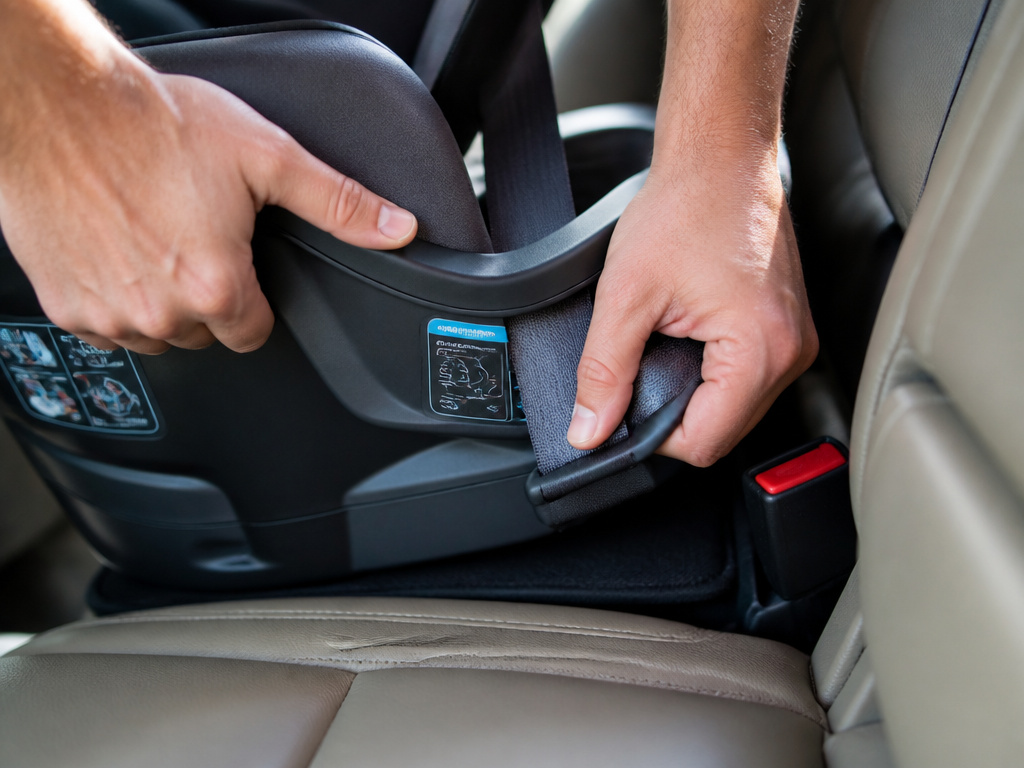 A poorly installed seat vibrates, shifts, and creaks. That constant subtle movement is unsettling. A rock-solid install feels stable and secure.
The lower anchor weight limit is a critical number. All vehicle lower anchors are rated for 65 pounds total, that’s the weight of the child plus the seat. Exceed this, and the anchors can fail in a crash, but well before that, the seat develops a worrisome wiggle. You can calculate your limit: 65 lbs minus the weight of your empty car seat (found in the manual).
If your child is approaching that limit, switch to a seat belt installation. The federal car seat installation guidelines stress that a seat belt, when locked correctly, is just as safe and often eliminates the slight “give” of lower anchors that sensitive babies dislike.
A seat that’s installed correctly doesn’t move more than an inch side-to-side or front-to-back at the belt path. That solidity translates directly to a calmer baby. The absence of creaks and wobbles reduces low-grade anxiety.
The Overheating Problem and Cooling Solutions
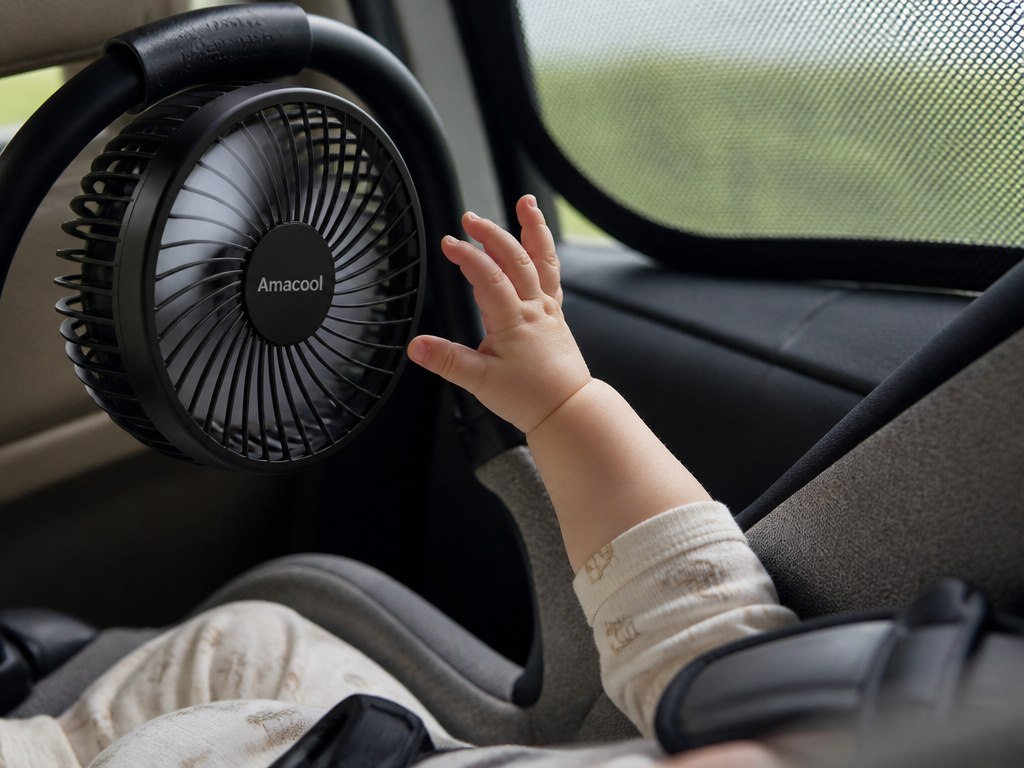 An overheated baby is a miserable baby. Car interiors heat rapidly, and a rear-facing seat traps body heat. Discomfort turns to distress quickly.
The single most effective tool is a portable car seat fan. The Tiny-Aire 2-in-1 clips directly to the handle or shell and oscillates. It’s USB-rechargeable and much safer than a loose blanket or a DIY solution. This addresses a core reason for crying before it starts.
Dress the baby in thin, moisture-wicking layers like cotton or bamboo. Place a sunshade on the window. Before buckling, lay a cool towel on the seat fabric for a minute to draw out the stored heat. The goal is to prevent overheating proactively. A cool baby is a content baby.
When to Stop the Car: Safety vs. Convenience
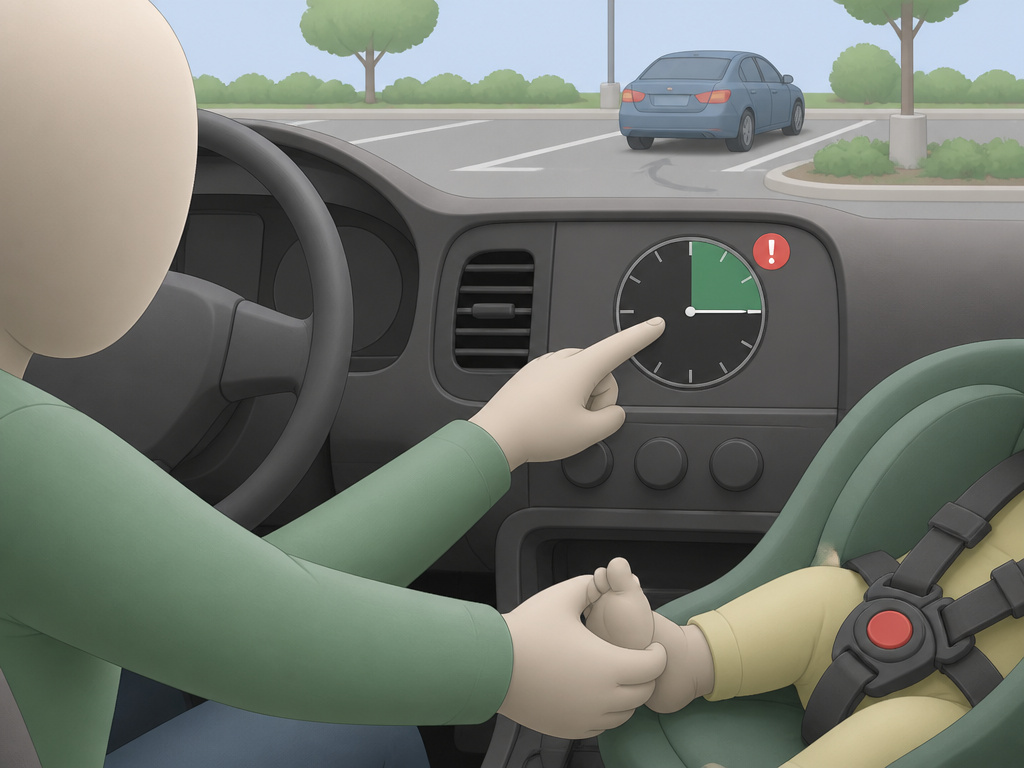 Soothing has a hard limit. If your calming a baby efforts fail after 10-15 minutes of driving, or if the cry becomes a frantic, shrieking sound you haven’t heard before, you must stop.
This process is about ruling out a hair tourniquet, a hidden buckle pinch, or the early signs of illness, not about giving in. Find a safe place to pull over, remove the baby from the seat, and do a full physical check in good light.This resets both of you.
The debate about whether it’s ever okay to let baby cry in the seat has a clear safety answer: prolonged, intense crying can lead to vomiting and aspiration risk, and it masks the signs of positional breathing problems. A short, frustrated cry is different from a prolonged scream of distress. Know the difference.
Frequently Asked Questions
Can I use a car seat head support pillow?
Only if it came with your seat or is sold by your seat’s manufacturer (e.g., a Britax or Chicco brand accessory) for your exact model. Aftermarket neck pillow products can interfere with the harness path and compromise crash protection. The AAP car seat information for families warns against adding unapproved padding.
Why does my baby scream the moment they are buckled in?
This is often a conditioned response from past negative associations (long trips, feeling hot). It can also be immediate physical discomfort, check the buckle tongue isn’t pressing into their thighs and that the crotch strap isn’t too short. Rebuild the association with the positive, short-duration exposures outlined in Step 3.
How can I help my baby sleep in the car seat?
Focus on creating the conditions for sleep, not forcing it. Ensure they are comfortably cool with a car seat fan, use steady white noise, and time drives with their natural nap rhythm. Never add blankets or pillows to induce sleep; a safe sleep environment in a car is a flat, firm crib, not a reclined seat.
Are some car seats more comfortable than others?
Yes. Seats with multiple recline positions (Graco Extend2Fit), no-rethread harnesses (Clek Fllo), and premium, breathable padding (UPPAbaby Mesa) often provide better comfort. Comfort supports proper positioning, which reduces crying. Always verify any seat meets your country’s safety standards (AS/NZS 1754 in Australia, FMVSS 213 in the U.S.).
The Bottom Line
Soothing a baby in a car seat is a safety protocol with a comfort layer. Your first response must always be to diagnose harness fit, body position, and temperature. The strategies to calm a baby in the car that work are the ones that address these physical realities first, white noise second, toys third.
Invest in tools that solve the root causes: a clip-on fan for heat, a mirror for connection, and the time to practice short, happy seat sessions at home. Remember, the seat’s job is restraint. Your job is to make that restraint feel like a hug, not a cage. When you get the safety basics rock solid, the crying often solves itself.
