Baby Failed Car Seat Test? Here’s What Happens & What to Do
This post contains affiliate links. As an Amazon Associate, we earn from qualifying purchases.
If your baby fails the hospital car seat test, the immediate next step is not discharge. The baby will be monitored in a supine position, often for 1-2 hours, to ensure the event was positional. A second test may be scheduled within 48 hours. If the second test is also failed, the baby may be admitted to a higher level of care (NICU) for observation or discharged with a car bed, not a traditional car seat.
That gap between a “fail” and a “go home” decision is where hospital protocols diverge and parent anxiety spikes. The test itself is a snapshot, 90 minutes of monitored breathing and heart rate in a semi-upright seat. A fail flags potential instability, but it doesn’t diagnose a disease.
What follows is a walk through the concrete hospital pathways, the data on what a fail actually predicts (and what it doesn’t), and the practical choices parents face when the standard plan gets rewritten.
Key Takeaways
- A 26% failure rate for late preterm infants is documented in peer-reviewed research, with oxygen desaturation being the most common cause.
- Hospital response is not one-size-fits-all: some units retest, some admit to the NICU, and leading consortiums like the NCNC no longer recommend routine testing.
- The test has poor reproducibility; about 11% of infants who pass a first test will fail a second one administered within days.
- A failure typically adds 1-3 days to the hospital stay for monitoring and repeated testing.
- The primary alternative to discharge with a standard seat is a car bed, a flat restraint system for infants who cannot tolerate the semi-upright position.
What the “Fail” Actually Measures
The Infant Car Seat Challenge (ICSC) isn’t a test of the seat. It’s a stress test for the baby’s cardiorespiratory system in a specific, suboptimal position. Newborns, especially preterms, are obligate nose breathers with floppy airways. The semi-reclined angle of a car seat can cause the chin to tuck to the chest, partially obstructing that airway.
The monitored parameters are heart rate and oxygen saturation. Failure criteria vary by hospital but commonly include one or more of the following: oxygen saturation falling below 85-90% for more than 10 seconds, a heart rate (bradycardia) dipping below 80 beats per minute, or an apneic pause lasting over 20 seconds.
The technical snapshot: In a study of 313 late preterm infants, the failure rate was 26%. The majority of those failures (41%) were due to recurrent desaturations below 88% for at least 10 seconds. A smaller percentage (33% of failures) had a more severe desaturation below 80%.
This isn’t about a baby being “weak.” It’s about physiology. The same baby might breathe perfectly while flat on their back in a bassinet. The challenge is designed to see if the added postural challenge of the car seat, a challenge they will face on the ride home, is more than their system can handle without support.
The Immediate Hospital Protocol After a Failure
The moment the monitor alarms and a nurse notes a failure event, the baby is immediately taken out of the car seat. The first priority is to ensure the baby is stable. They are placed flat on their back, often back in their bassinet or on a monitoring bed, and observed closely.
Phase 1: The Supine Observation.
The baby is monitored in the flat, supine position for a period of time, usually 1-2 hours. The goal here is critical: to determine if the event was purely positional. If the baby’s oxygen and heart rate remain perfect while flat, it strongly suggests the car seat angle was the culprit. If the baby continues to have events while flat, it indicates a broader medical issue that needs investigation, likely leading to NICU admission.
Phase 2: The Decision Tree.
After the supine observation, the medical team makes a call based on the baby’s overall health and the unit’s protocol.
| Hospital Pathway | Typical Action | Rationale |
|---|---|---|
| Retest Pathway | Schedule a second car seat challenge in 24-48 hours. | Allows time for maturation; the event may have been a transient anomaly. |
| NICU Admission Pathway | Transfer to a higher-acuity unit for continuous monitoring & workup. | For infants who failed supine observation or have other risk factors. |
| Car Bed Prescription Pathway | Order a car bed for discharge and train parents on its use. | For infants who pass supine observation but consistently fail the seated test. |
Where this goes sideways: Assuming a failure means something is “wrong” with the baby. Often, it only means something is wrong with the baby in that specific seat, at that specific angle, on that specific day. The supine observation is the control experiment that separates position from pathology.
The UCSF Benioff Children’s consensus statement from the Northern California Neonatal Consortium (NCNC) is explicit: they do not recommend routine testing because of its inconsistency. This stance highlights the first major fork in the road for parents: is your hospital following the older American Academy of Pediatrics guideline or a newer, evidence-based protocol that sees limited value in the test?
What Are the Real-World Consequences and Next Steps?
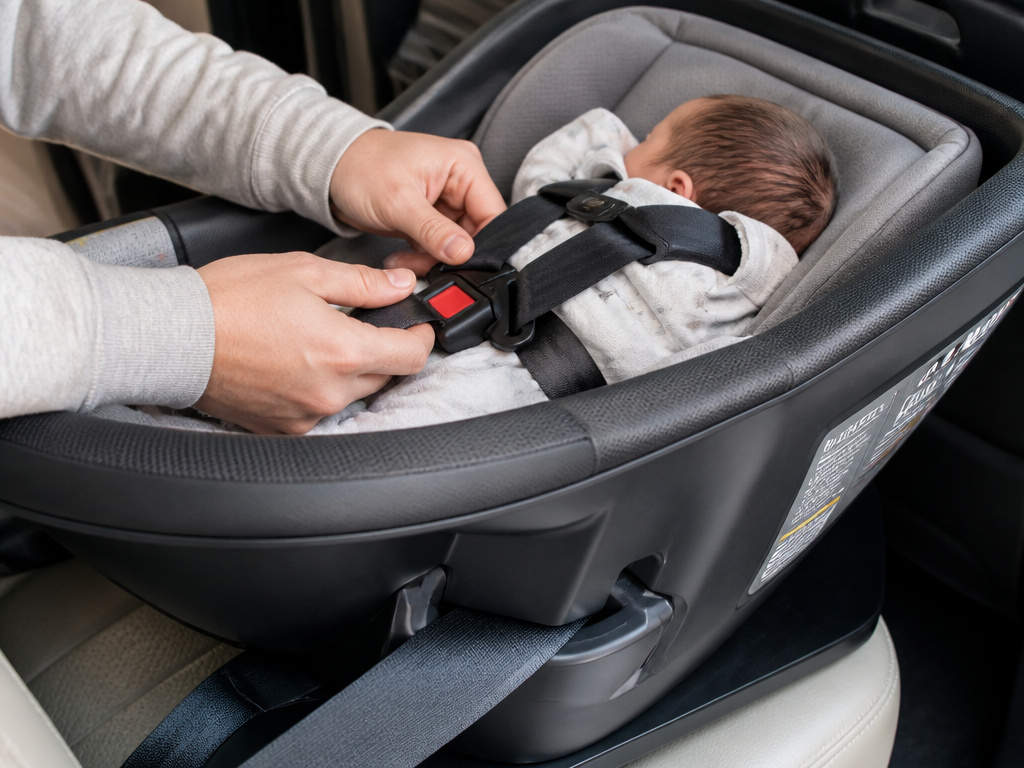
A failed test changes the discharge plan. The question is how much, and for how long.
Extended Hospital Stay.
This is the most immediate impact. A baby who was packed and ready to go now stays. The retest itself requires a 90-minute window with specialized nursing oversight. Scheduling can add a day. If the second test is failed, discussions about a car bed or further observation can add another 1-2 days. One study found infants who failed spent, on average, 39 more hours in the hospital than those who passed.
Possible Medical Workup.
A failure, especially if accompanied by concerns during supine observation, can trigger additional tests. This may include: – A septic workup (blood tests) to rule out infection. – A monitor for apnea and bradycardia (A/B monitor) over 12-24 hours. – A chest X-ray. – More frequent feeding assessments to ensure the baby has the energy to breathe and eat.
The Car Bed Option.
If the medical team determines the issue is purely positional, they may clear the baby for discharge in a car bed. A car bed, like the Graco SnugRide Infant Car Bed or the Angel Guard Car Bed, is a federally approved child restraint where the infant lies flat. It is installed sideways across the vehicle’s back seat and secured with the seat belt. It is a short-term solution, typically used for 1-3 months until the baby grows and matures enough to pass a car seat challenge test.
Common mistake: Using a car bed like a bassinet. It is a crash-tested safety device. The harness must be snug, and the bed must be installed at the correct angle, exactly per the manual. Parents must receive hands-on training before discharge.
The federal rules governing all these devices, from infant seats to car beds, are spelled out in the Code of Federal Regulations 571.213 (FMVSS 213). This is the legal standard that defines what constitutes a safe child restraint system.
How Reliable Is the Test? Understanding the Data
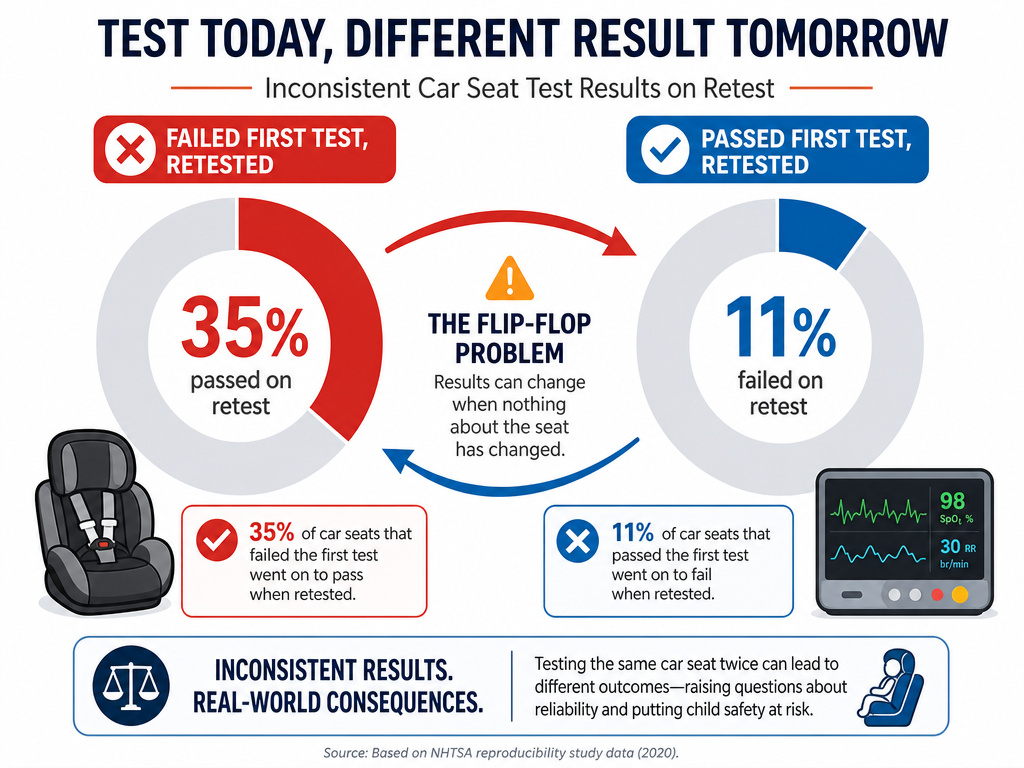
The emotional weight of a “fail” is heavy. The statistical reality is murkier. The test is not a crystal ball.
Poor Reproducibility.
Research shows the ICSC is not a consistent measure. In one study where 60 infants who failed a first test were retested, 35% failed again. More tellingly, in a study of infants who passed a first test, 11% failed one of two subsequent tests given within the next few days. If the test were a reliable measure of a stable physiological trait, those results should not flip-flop.
Limited Predictive Value.
This is the core of the controversy. While we know infants desaturate more in car seats, no high-quality study links failing an ICSC with an increased risk of death or adverse neurodevelopmental outcomes after discharge. A major PMC study on car seat test failure concluded that while failures led to more NICU admissions, “no unifying correctable cause” was found for the failures in late preterm infants.
Worth knowing before you start: The test is designed to catch acute events in the hospital. It does not predict which babies will have apnea events at home weeks later. The monitors used at home for infants with diagnosed apnea are a different tool for a different concern.
This data gap is why many clinicians are moving away from the test. They argue it creates anxiety, prolongs hospital stays, and leads to unnecessary interventions without proven benefit. Your hospital’s stance on the test is a practical piece of data for you to interpret.
Your Action Plan as a Parent
When the test fails, shift from worry to workflow. Your role is to understand, advocate, and prepare.
- Ask for the specific data. What was the exact event? Was it a desaturation to what number? For how long? Was it accompanied by bradycardia? This tells you the severity.
- Understand the proposed pathway. Is the plan to retest? To observe? To order a car bed? Ask for the timeline for each step. If a car bed is recommended, ask the hospital if they provide them or if you need to choose a car seat (or bed) yourself.
- Request hands-on training. If a car bed is the outcome, do not leave the hospital until a certified child passenger safety technician (CPST) or a nurse has shown you, in your actual vehicle, how to install it and secure your baby. This is non-negotiable.
- Plan for the ride home and beyond. A car bed changes the logistics. You cannot carry it like an infant seat. You will take the baby out at the car. Have a safe, warm carrier or stroller for the trip from the hospital door to the vehicle. Review guidelines on how to keep baby warm in car seat in winter, as the flat position may require different bundling strategies than a seated infant.
- Schedule the follow-up. Ask: “Who re-evaluates my baby for a traditional seat, and when?” This is often done by the pediatrician at a weight or age milestone, but the process should be clear. Knowing when you might change car seat to a standard model provides a light at the end of the tunnel.
The NHTSA FMVSS 213 test procedure is what ensures any device you use meets minimum safety standards. Your job is to use it correctly.
Frequently Asked Questions
Does a failed test mean my baby has brain damage?
No. A failed test indicates cardiorespiratory instability in a seated position at that moment. It is not a measure of brain function or a diagnosis of injury. The monitoring is intended to prevent a hypoxic event that could cause harm.
Will my baby always need a car bed?
Almost certainly not. Most infants outgrow the positional instability within a few weeks to months as their airway muscles strengthen and they gain better head control. Your pediatrician will advise when to retest for a traditional seat, typically around the time you’d consider when to take baby out of infant car seat due to size.
Can I refuse the car seat test?
You can refuse any medical test. However, most hospitals have a policy requiring a passed test or an approved alternative (like a car bed prescription) for discharge for at-risk infants. Refusing may complicate your discharge and could be against medical advice. It’s better to discuss your concerns with the medical team about the test’s value and the hospital’s specific protocol.
What if my baby passed the test but I’m still worried?
Your instincts matter. The test’s limitations mean a pass isn’t an absolute guarantee. For peace of mind, practice safe observation: avoid prolonged time in the seat outside the car, use mirrors to see your baby’s face, and never leave them unattended. Ensure you know how to prevent baby head from falling into a chin-to-chest position, as this is the primary airway risk.
Are some car seats better for preemies?
Yes. Several models, like the Chicco KeyFit 30 or the Nuna PIPA Series, offer lower minimum weight limits (often 4 lbs) and include more supportive, preemie-specific inserts. These inserts provide crucial car seat head support to maintain an open airway. A good insert is not a fluffy pillow; it’s a firm, contoured support that cradles the head and back.
The Bottom Line
A failed car seat test is a detour, not a roadblock. It signals a need for a different, safer travel plan right now, usually a car bed. The hospital’s protocol will guide the immediate next steps, which focus on ruling out illness and ensuring a safe discharge setup.
The larger truth is that the test itself is falling out of favor in leading medical circles because its results are inconsistent and it hasn’t been shown to improve long-term outcomes. Your energy is best spent not on fear of the “fail,” but on mastering the safe use of whatever restraint system gets your baby home. That means proper installation, a snug harness, and understanding that no seat is a substitute for vigilant observation. The goal is the same: a safe journey home, regardless of the path you take.
