
When to Change Car Seat for Baby: The 40-Pound Rule & Signs
This post contains affiliate links. As an Amazon Associate, we earn from qualifying purchases.
Change your baby’s car seat when they reach one of five limits: the seat’s maximum rear-facing height or weight, their shoulders go above the top harness slot, they exceed the lower anchor weight (usually 65 lbs minus seat weight), they hit the new 40-pound minimum for a booster, or the seat is expired or was in a moderate/severe crash. The “one-year” rule is outdated; keep them rear-facing until at least 26.5 pounds.
That list is the checklist. Most parents know the first item. They miss the next four. The lower anchor math trips up everyone installing a convertible seat for a toddler. The new federal booster rule changes the game for kindergarteners.
What follows: the five physical signs, the real weight numbers from the 2023 federal register, and the one call you should make after any fender-bender.
Key Takeaways
- The “one-year” rule is obsolete. Federal guidelines now say keep your child rear-facing until they are at least 26.5 pounds.
- Booster seats have a new federal minimum: 40 pounds. Putting a lighter child in one violates updated safety standards.
- Shoulder height markers on the seat’s shell are the law’s measuring tape. If the shoulders are above the line, the seat is outgrown.
- Lower anchors have a hidden weight limit. The formula is 65 pounds minus the weight of the car seat itself.
- After a crash, some manufacturers say replace the seat no matter what. Others have a minor crash protocol. Know your brand’s stance before you decide.
The 5 Physical Signs Your Baby Has Outgrown Their Seat
Look at the seat, not the calendar. Age is a rough guide, but the seat’s physical design and your child’s body decide the switch.
The first sign is the most visible. Car seats have shoulder height markers sewn into the fabric or molded into the plastic shell. In Australia, these markers are part of the law. If your child’s shoulders sit above the top harness slot or the marked line, the harness can’t position correctly on the collarbone. That means it’s time to move the harness straps up or move the child to the next seat mode.
Where this goes sideways: Ignoring the shoulder marker. In a crash, a harness riding too low on the shoulders lets the child’s torso pitch forward, increasing the risk of head and spinal injury.
The second sign is weight. You know the rear-facing limit printed on the seat’s label. The third sign is height—the top of the child’s head must be at least one inch below the top of the seat’s shell. But the fourth sign is invisible: the lower anchor weight limit.
Most parents install convertible seats with the vehicle’s LATCH system and never think about it again. Those lower anchors have a combined weight limit set by the car and seat makers. The NHTSA’s formula is simple but rarely checked: 65 pounds minus the weight of the car seat. A typical convertible seat weighs 20 pounds. That means the lower anchors are only rated for a 45-pound child. Once your child hits that number, you must uninstall the seat and reinstall it using the vehicle’s seat belt. The anchors alone won’t hold.
| Sign | What to Check | The Consequence If Ignored |
|---|---|---|
| Shoulder Height | Child’s shoulders above top harness slots or seat’s shoulder marker line. | Harness fails to restrain torso; excessive head excursion in a crash. |
| Weight Limit | Child’s weight exceeds the limit for the current mode (rear-facing, forward-facing). | Seat structure may be overloaded and could fail under crash forces. |
| Head Height | Less than 1 inch of shell above the child’s head in a rear-facing seat. | Head is insufficiently contained; risk of impact with vehicle interior. |
| Lower Anchor Limit | Child’s weight + seat weight exceeds 65 lbs (check seat manual for exact limit). | Lower anchors could detach or deform during a collision. |
| Harvest Fit | You cannot pinch a vertical fold in the harness strap at the child’s collarbone. | Child can slip through the straps (submarining) in a crash or sudden stop. |
The fifth sign is the harness fit itself. After buckling, try to pinch the harness strap vertically at the child’s collarbone. If you can pinch a fold of webbing, the harness is too loose. Tighten it until you can’t. If you’ve tightened it to the max and still get a fold, the seat is outgrown. This is a direct sign your baby is too big for car seat in its current configuration.
The Forward-Facing Turnaround: It’s Not One Year, It’s 26.5 Pounds
Forget everything you heard about turning the seat forward at your child’s first birthday. That advice was based on a 20-pound minimum, a standard set when car seat science was younger. The updated federal car seat guidelines tell a different story.
A 2023 amendment to Federal Motor Vehicle Safety Standard (FMVSS) No. 213 raised the bar. It states that car seats may only be recommended for forward-facing use by children who weigh a minimum of 12 kilograms—26.5 pounds. This weight aligns with a 95th percentile one-year-old. The goal is to keep children rear-facing, the safest position, for much longer.
A rear-facing seat cradles the child’s head, neck, and spine, distributing crash forces across the entire back. A forward-facing seat restrains the body but lets the head whip forward, placing immense strain on the undeveloped cervical spine.
The new rule is a floor, not a ceiling. The best practice is to keep your child rear-facing until they hit the maximum height or weight limit of their convertible seat. Many modern seats accommodate children rear-facing up to 40 or 50 pounds. So the decision to turn car seat around is a two-part check: is my child at least 26.5 pounds, and have they maxed out the rear-facing limits of this seat? If the answer to the first is yes and the second is no, leave them rear-facing.
From Infant Seat to Convertible: The Weight vs. Comfort Shift
Infant carriers are convenient. They click in and out of a base. But they are outgrown fast, usually by height before weight. The moment your child’s head is within an inch of the top of the shell, the seat is no longer safe rear-facing in that shell. That’s your cue to transition from infant seat.
Many parents move to a convertible seat around six to nine months. It’s not just about size. A convertible seat is a single, larger shell that can be used rear-facing and, later, forward-facing. It offers more legroom and often higher rear-facing limits than an infant carrier. The swap is about longevity and safety, not just hitting a number.
When you make this move, you’re choosing a convertible car seat that will be your child’s primary seat for years. Look for one with high rear-facing limits (40+ pounds) and clear shoulder height markers. This is the seat that will see you through the 26.5-pound rule and beyond.
The Booster Seat Hurdle: Why 40 Pounds Is the New Minimum
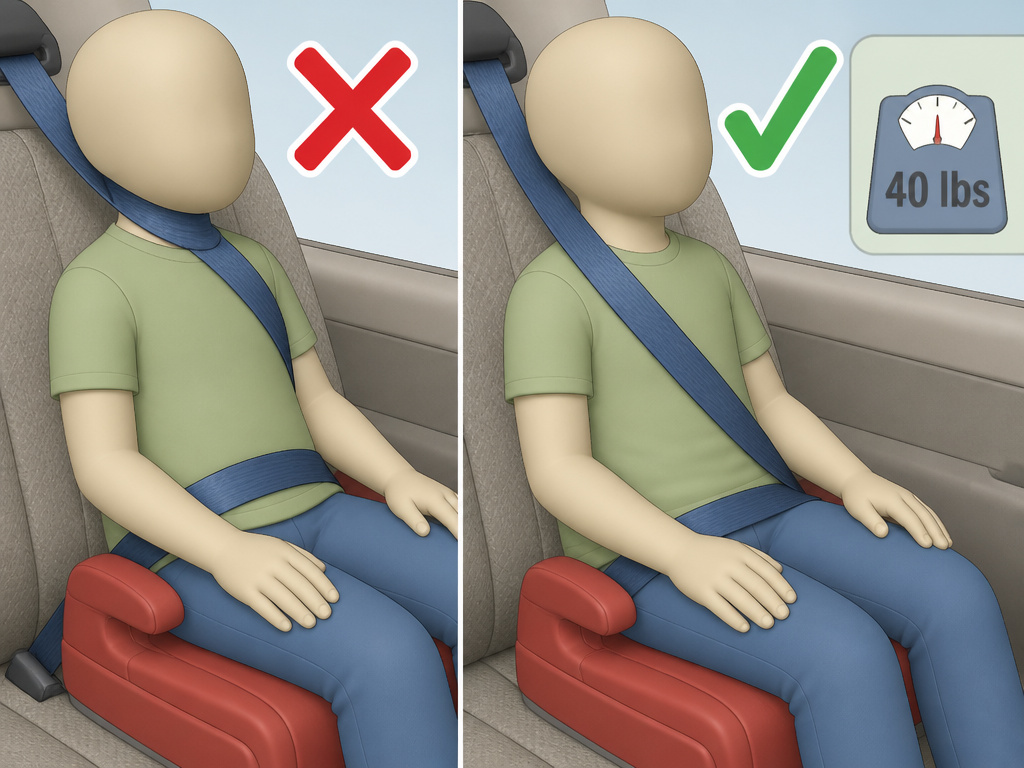
The step after a forward-facing harness seat is a booster seat. This is where another major change trips up parents. The old standard said a child could use a booster at 30 pounds. Not anymore.
The same 2023 FMVSS update that changed the forward-facing rule also set a new minimum for boosters. The standard now states that booster seats may only be recommended for children with a minimum weight of 18.4 kilograms, or 40 pounds. This increase is based on crash data showing that lighter children are not properly positioned by a seat belt alone, even with a booster’s help.
A booster’s job is to position the vehicle’s lap and shoulder belt correctly on a child’s body. The lap belt must lie across the upper thighs, not the soft stomach. The shoulder belt should cross the center of the shoulder and chest, not the neck or face. A child under 40 pounds often doesn’t have the skeletal maturity or mass for the belt to achieve this fit, even when elevated.
Common mistake: Moving a child to a booster because they “look big enough” or find the harness uncomfortable. The 40-pound minimum is a federal safety threshold, not a suggestion.
Before even considering a booster, your child must have outgrown the forward-facing harness limits of their convertible or combination seat. Then, and only then, apply the 40-pound test. Most children won’t be ready for a booster until at least age 5, and many benefit from staying in a harness until age 6 or 7.
When the Rules Bend: Expiration, Crashes, and Secondhand Seats
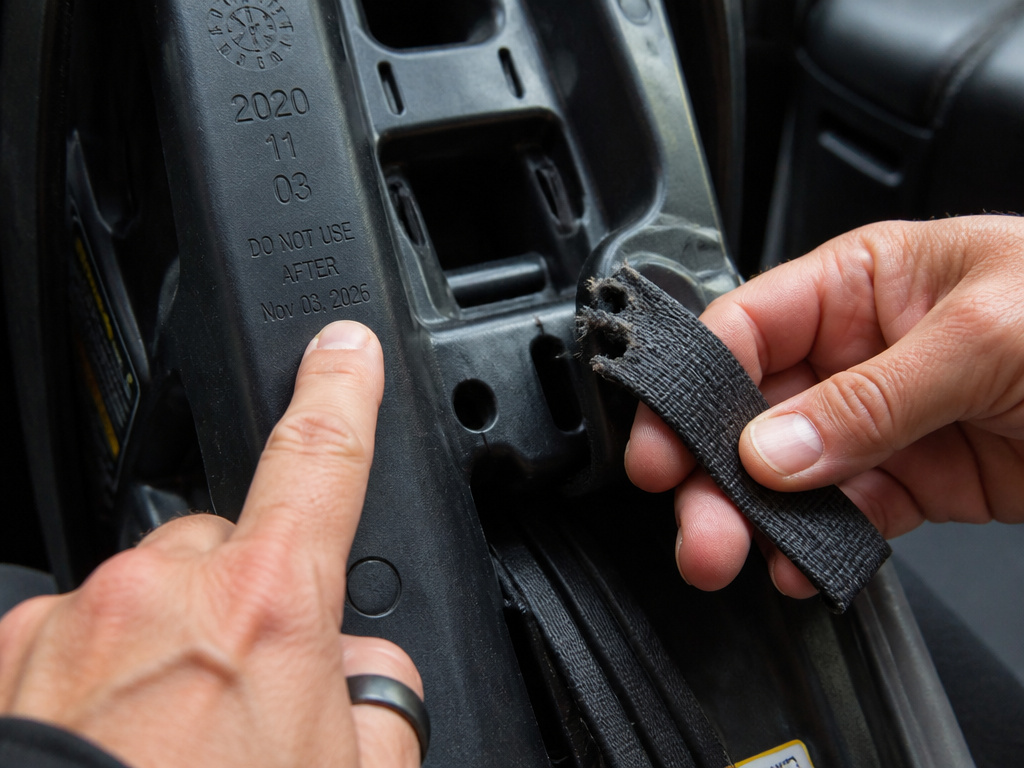
The hard rules have soft edges. Three situations force a judgment call: expiration dates, crashes, and used seats.
All car seats have an expiration date, usually stamped on the shell or label. Plastic degrades over time, especially with temperature swings in a car. Straps can fray. Safety standards evolve. Using an expired seat is a gamble with unknown odds. If you can’t find the date, contact the manufacturer. If they can’t confirm it’s in service life, retire it.
The crash question is murkier. The AAP car seat guidelines note a lack of consensus. Some manufacturers demand replacement after any crash. Others define a “minor crash” (no injuries, door damage, airbag deployment, etc.) and deem the seat safe if it meets those criteria. You must know your brand’s policy. When in doubt, replace. Insurance often covers it.
Buying a secondhand seat is risky. You must know its full history—no crashes, all parts present, not expired, and not recalled. Missing any one piece of that story makes it unsafe. For the price of a new, budget-friendly convertible seat, it’s rarely worth the risk.
Frequently Asked Questions
How do I know if my infant has outgrown their carrier?
Check the height limit first. If there’s less than one inch of shell above their head, they’ve outgrown it. Then check the weight limit on the label. Most carriers max out at 30-35 pounds, but most babies outgrow them by height first. Look for the signs baby has outgrown seat, like the harness straps coming from below the shoulders.
What is the number one mistake parents make when switching seats?
Moving to the next stage too early. Turning forward-facing at one year, switching to a booster before 40 pounds, or ditching the booster because the child is 8 years old but still under 4’9″. Each stage provides specific protection. Rushing it leaves a gap.
Can I follow my car seat manufacturer’s instructions if they say forward-facing at 20 pounds?
No. You must follow the stricter standard. Federal law (FMVSS No. 213) now sets the minimum at 26.5 pounds. If your seat’s manual says 20 pounds, it was printed before the December 2024 compliance date. The new law overrides the old label. Keep your child rear-facing longer.
Are there different rules for different states or countries?
Yes. State laws are often the bare minimum and lag behind best practices. For example, many states only require rear-facing until age 1. Other countries have their own standards, like the NSW child car seat rules in Australia. Always follow the strictest rule among federal safety standards, your seat’s manual, and current pediatric advice.
My child’s legs are bent in the rear-facing seat. Is that safe?
Yes. Children are flexible and will cross their legs or prop them on the seat back. There is no evidence of increased leg injury risk for rear-facing children. In a crash, their legs are contained. The risk of spinal injury from forward-facing is far greater than any hypothetical leg concern.
The Bottom Line
Changing your baby’s car seat is a series of checkpoints, not a single birthday. Use the seat’s physical markers—the shoulder height lines, the one-inch headroom rule, the printed weight limits—as your guide. Let the new federal numbers (26.5 pounds for forward-facing, 40 pounds for a booster) replace the old rules of thumb.
When you move to a convertible car seat, do the lower anchor math. When you consider a booster, weigh your child first. And after any crash, check your manufacturer’s policy before you decide to reuse. The right seat, in the right mode, used correctly every time, is the only thing that matters between your child and the road.
