
Car Seat Protector Rules: Can You Put One Under Your Seat?
This post contains affiliate links. As an Amazon Associate, we earn from qualifying purchases.
You can put a seat protector under a car seat only if the car seat manufacturer explicitly permits it in the manual, and only if it passes the 1-inch movement test at the belt path. Most protectors fail this test because they add compressible bulk or have grippy sides that mask a loose fit. The official stance from safety experts is to use nothing, but a thin receiving blanket or single-layer towel is often the safest compromise for protecting vehicle upholstery.
That “if” is the whole game. The space between a car seat and your vehicle’s upholstery is a safety zone, not a storage area. Adding anything changes the physics of a crash. What feels like a snug, protective mat can turn into a dangerous compressible layer that introduces slack.
What follows is a framework you need to audit any mat, towel, or branded protector you’re considering. We’ll cover the two official government documents that reframe the conversation, the exact test that proves whether a protector is safe, and the one scenario where a specific protector is actually the right call.
Key Takeaways
- The car seat manufacturer’s manual has the final say. If it says “nothing,” that’s the rule.
- Run the 1-inch movement test: install over the protector, check for less than 1 inch of movement at the belt path, remove the protector without loosening the straps, and re-check. If the seat moves more afterward, the protector fails.
- “Grippy” sides on a seat protector are a hazard. They can make a loose installation feel rock solid, hiding the problem.
- For vehicles with side airbags in the seats, using any non-OEM seat cover or protector can impair airbag deployment and cause severe injury, per a specific Toyota technical service bulletin.
- The safest options for protecting upholstery, when permitted, are a thin, unfolded receiving blanket or a single-layer towel—not a folded towel or a thick, rigid mat.
The Official Rules: No Standard, But Real Liability
Let’s start with the paperwork nobody reads. There is no federal safety standard specifically for car seat protectors. The National Highway Traffic Safety Administration (NHTSA) confirmed this in a 2006 interpretation letter.
NHTSA child seat cover interpretation states that while FMVSS No. 213 covers child restraints themselves, it does not apply to aftermarket accessory items like seat covers. However, these products are still considered “motor vehicle equipment” and are subject to recall if a safety defect is found.
The letter carries two critical warnings for manufacturers. First, a cover must not obscure the car seat’s airbag warning label. Second, and more important for you, it must not have “excessive padding or other material that can compress in a crash and introduce slack into the belt system.” That slack increases the risk of head injury or ejection.
This is the documented physical mechanism of failure: compression creates space, space becomes slack, slack leads to greater movement.
The second document is even more direct. A Toyota seat protector service bulletin explicitly warns against aftermarket seat covers or protectors on vehicles with side airbags. Toyota states these products “may affect side airbag performance” and that “modifications that negatively affect side airbag performance can result in severe occupant injuries.”
The takeaway? The regulatory landscape is a minefield of liability anchored to real, physical failure modes your seat protector must avoid.
The 1-Inch Movement Test That Decides Everything
Forget marketing claims about “crash-tested.” The only test that matters is the one you perform in your own back seat. It’s the same test Child Passenger Safety Technicians (CPSTs) use, and it relies on the universal standard for a secure installation: less than one inch of movement side-to-side or front-to-back at the car seat’s belt path.
Here is the exact, non-negotiable sequence.
Before you start: Ensure your car seat and vehicle are on a level surface. Have your car seat manual open to the installation section. This test checks for interference, not for your initial installation skill.
- Install With the Protector. Place your seat protector mat according to its instructions. Then, install your child’s car seat or base directly over it, following your car seat manual to the letter. Use either the LATCH system or the seat belt, and tighten until you achieve a secure fit.
- Check the Movement. Grasp the car seat at the belt path—this is where the seat belt or LATCH strap routes through the seat shell. Pull and push firmly side-to-side and front-to-back.
- The Measurement. If the seat moves more than 1 inch in any direction at the belt path, the protector has already failed. Stop. Remove it.
- Remove Without Loosening. This is the critical step. You must slide the protector out without unbuckling the seat belt or unlatching the lower anchors. If you cannot, the protector is physically interfering with the installation—another instant fail.
- Re-Check Movement. Once the protector is out, check the movement again at the same belt path. If the seat now moves more than it did with the protector in place, the protector was masking a loose fit. It is too thick or compressible to be safe.
Where this goes sideways: Using a protector with grippy rubber pads. It grips the vehicle fabric so well the seat feels immovable, but that grip isn’t structural. In a crash, the mat can compress or slip, and the seat can lurch forward. You’ve traded the honest feedback of metal-on-fabric for a deceptive sense of security.
Why does this happen? A thick, padded protector acts like a spring. When you tighten the seat belt or LATCH strap, you’re compressing that padding. In a crash, the force compresses it further, creating instant slack. Your properly installed seat just became loose.
When “Allowed” Doesn’t Mean “Safe”
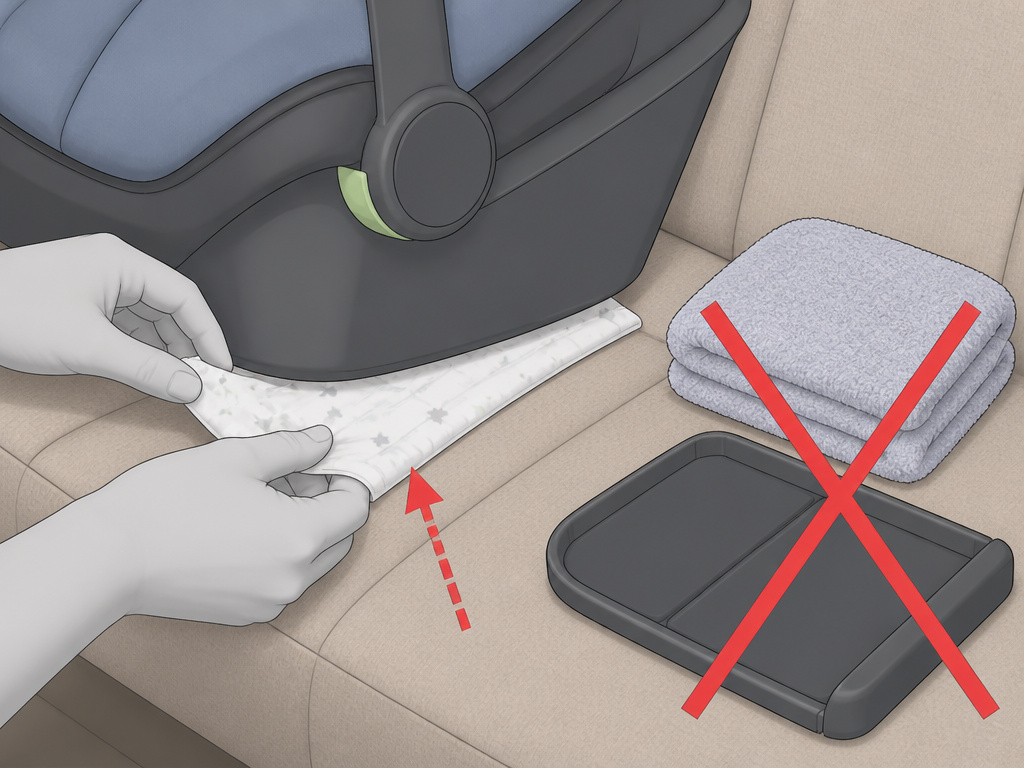
Your car seat manual is the final authority. Some manufacturers, like Graco, explicitly permit the use of their own brand of seat protector or a thin towel or blanket. This permission is not a blanket endorsement of all protectors.
The distinction between “allowed” and “safe in your specific car” is everything. A manufacturer’s allowance means they’ve tested their product and found it doesn’t compromise their seat’s performance under test conditions. It does not mean that product will work with your vehicle’s unique seat contours, fabric, and angle.
This is why the correct installation check is a two-part process. Manual first, then physical verification.
| Scenario | Manufacturer’s Stance | CPST / Safety Perspective |
|---|---|---|
| Thin Receiving Blanket | Often permitted if manual allows “a blanket.” | The “best” compromise. Minimal bulk, slides out for testing, unlikely to compress. |
| Single-Layer Towel | Often permitted if manual allows “a towel.” | “Better” option. Slight bulk, but usually passes the 1-inch test if not folded. |
| Folded Towel or Thick Mat | Almost never permitted. | Unsafe. Adds compressible bulk, almost always fails the movement test. |
| Rigid “Shell” Protector | Only if specifically approved by brand. | High risk. Can mask installs, often interferes with lower anchor access. |
| Anything on Side-Airbag Seats | Toyota prohibits non-OEM covers. | Do not use. Risk of impairing airbag deployment is severe. |
The community of parents and the official guidance often clash here. On forums, you’ll see parents advocate for protectors to guard against “nasty, wet, muddy, feet.” The practical need is real. The safety imperative is stricter. Your goal is a safe backseat, not a pristine one. A dent in the vehicle upholstery from a car seat base will rebound. A poorly installed seat won’t.
How to Choose (Or Not Choose) a Seat Protector
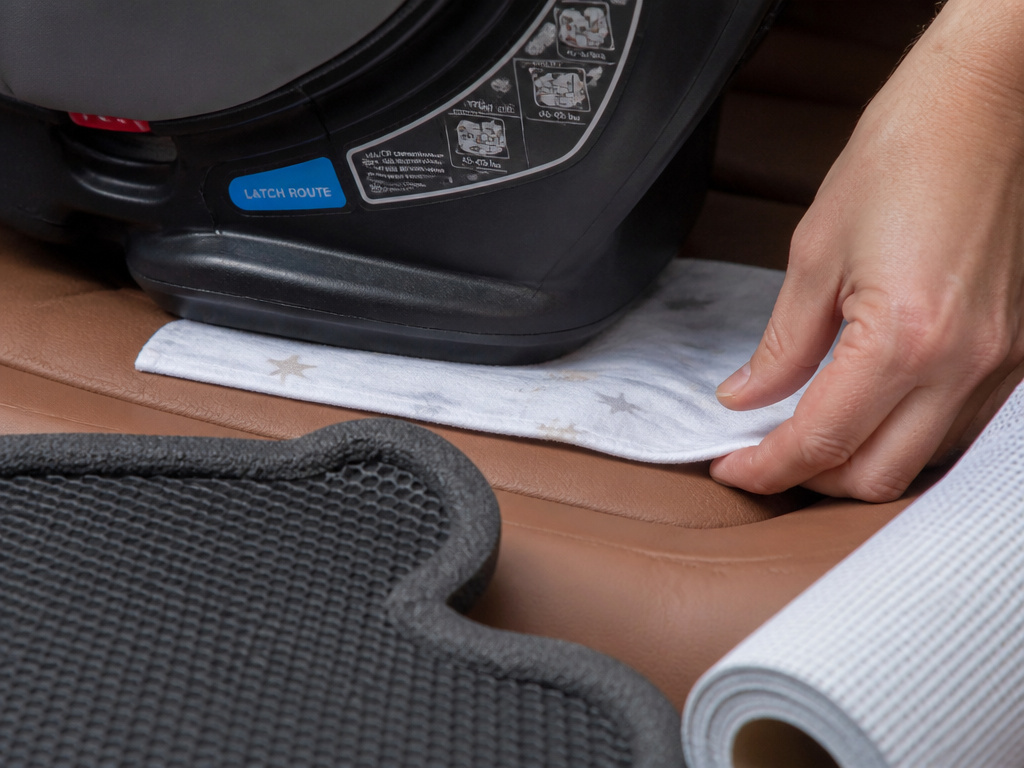
If your manual gives permission and you’ve weighed the risks, your selection criteria should be ruthless. This isn’t about cute patterns or extra pockets.
First, eliminate anything that is:
- More than 1/4 inch thick when uncompressed.
- Made of memory foam or similar compressible material.
- Advertised with “non-slip” or “grippy” sides as a primary feature.
- Sold as a universal fit without specific approval from your car seat’s brand.
- Designed for a vehicle with side airbags in the seats (unless it’s the vehicle manufacturer’s own accessory).
The materials that typically pass the 1-inch test, when permitted, are:
- A thin cotton receiving blanket. This is the gold standard for a reason. It’s designed to be thin and flexible.
- A flat, single-layer bath towel. Not a plush, folded bath sheet. A basic, worn-in towel.
I keep a Munchkin Brica Kick Mats in mind not as a seat-under protector, but as a reminder of the right philosophy: it protects the seat back from kicks without touching the installation zone. For the space under the seat, the product isn’t as important as the property. Thin, flat, and removable.
Common mistake: Using shelf liner. This was once a CPST hack for slippery leather seats. It’s now explicitly not recommended because it can melt onto leather in heat and, like grippy protectors, can mask a loose installation. That chapter is closed.
What about the Graco SnugRide SnugLock 35 DLX base? Graco allows protectors. In a real-world test with a popular seat protector, the mat covered the lower anchors, making installation a struggle. The tester couldn’t remove the mat without uninstalling the entire base—a clear failure of the “remove without loosening” rule. The brand’s allowance didn’t make that specific mat safe in that specific car.
When a Protector is Specifically Allowed
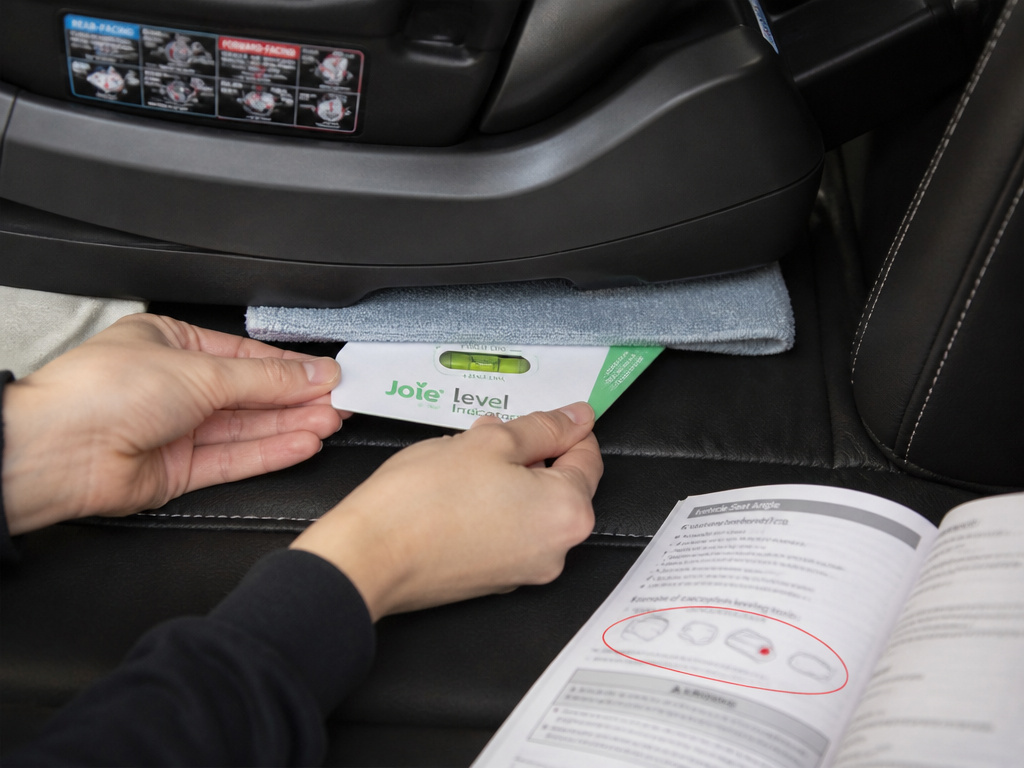
There is one narrow lane where a seat protector is not just allowed but can be part of a correct setup. Some car seats, particularly infant seats with bases, permit the use of a thin, non-skid mat or a specific brand’s leveling foot to achieve a proper recline angle on a sloped vehicle seat.
This is not about protection; it’s about geometry. The manual will specify the allowable angle range and what tools you can use to get there. In this case, the approved mat is a tool for proper car seat fit, not a shield for upholstery.
If you’re using a towel under car seat for leveling, it must be a single layer, placed only where needed to achieve the angle, and it must still pass the 1-inch movement test. The same goes for putting a blanket under a car seat base. The purpose dictates the placement.
Frequently Asked Questions
Are car seat protectors safe?
Car seat protectors are safe only if they are explicitly permitted by your car seat’s manual and pass the 1-inch movement test without masking a loose fit. Most are not recommended by safety experts because they add compressible material that can create dangerous slack in a crash.
What can I use to protect my car seats from car seat dents?
You can use a thin, unfolded receiving blanket or a single-layer towel if your car seat manual allows it. True dents from a properly installed seat are temporary and will disappear. The best protection is proper interior cleaning, not a barrier that compromises safety.
Do car seat manufacturers approve seat protectors?
Some do, but the approval is usually for their own branded accessory or for a generic “thin towel or blanket.” You must read your specific model’s manual. Never assume a protector is approved because it’s sold at a baby store.
Can a seat protector damage my car seat?
Yes. A thick or rigid protector can interfere with the seat belt or LATCH strap, causing undue wear. More critically, it can damage the vehicle seat’s side-airbag seams if not designed for it, which is a major safety violation.
How do I know if my car seat is installed tightly enough?
Check for movement at the belt path, not the top of the seat. With one hand at the belt path, try to move the seat side-to-side and front-to-back. If it moves more than one inch, it is too loose. This is the core skill for any base installation.
The Bottom Line
You can put a seat protector under a car seat, but the list of ones that are truly safe is vanishingly short. The physics are unforgiving: compressible space becomes crash-force slack. Your car seat’s manual is the law, and the 1-inch movement test is the judge.
Skip the thick, grippy, all-purpose mats. If your vehicle seats have side airbags, skip all aftermarket covers entirely. If your manual permits it and you need to protect light upholstery, a thin receiving blanket is your safest bet. Install the seat, test it, and never let the desire for a clean car outweigh the non-negotiable requirement for a secure one. Your child’s safety rides on that gap being empty or as close to empty as possible.
