
Key Difference Between Car Seat and Booster Seat Explained
This post contains affiliate links. As an Amazon Associate, we earn from qualifying purchases.
A car seat uses its own internal 5-point harness to restrain a child directly to the seat’s frame. A booster seat uses the vehicle’s existing lap and shoulder belt to restrain the child, relying on the car’s seat belt system. The harness is the primary restraint in a car seat; the belt is the primary restraint in a booster. That single fact dictates every other difference.
The harness spreads crash forces across the strongest parts of a small child’s body: the shoulders, chest, and hips. The vehicle belt, when correctly positioned by a booster, does the same for a larger child. The shift from one to the other happens when the child outgrows the harness height or weight limit on their forward-facing car seat. Most kids make that jump too early.
What follows is the anatomy of that gap—the four specs that decide the switch, the three seat types that bridge it, and the one rule Transport Canada found that changes the injury math by a factor of three and a half.
Key Takeaways
- The harness in a car seat is the restraint; the booster seat positions the vehicle’s belt to be the restraint.
- Move to a booster only when your child has outgrown their forward-facing car seat’s harness limits, typically after reaching at least 40 lbs and the top shoulder height marker.
- A child in a booster seat is 3.5 times more likely to suffer serious injuries in a crash compared to a child in a harnessed car seat, per Transport Canada data.
- Combination seats (also called 3-in-1 or all-in-one seats) can be used as a forward-facing harnessed seat first, then later converted to a belt-positioning booster.
- Never use a U.S.-purchased booster seat in Canada; they do not comply with Canadian safety standards and are illegal.
The Harness vs the Belt
A 6-point harness offers better protection than a booster seat in a number of ways. A correctly fitted 6 point harness will result in far less forward excursion, which is how far forward the head, shoulders and chest move in a crash. It also prevents torso rotation (which is seen in booster seats, which use the sash belt as the primary torso restraint).
The core job of a car seat is to be a crash capsule. Its rigid shell absorbs and distributes impact energy, and its internal harness holds the child firmly within that shell. The harness straps—two at the shoulders, two at the hips, one between the legs—attach directly to the seat’s frame. In a crash, the child and the seat move as one unit.
A booster seat has no harness. It is a platform, sometimes with a back, that elevates the child so the vehicle’s own lap and shoulder belt fit correctly. The belt does all the restraining work. The booster’s job is purely positional: to route the lap belt low across the hips and thighs, not the soft abdomen, and to guide the shoulder belt across the collarbone and chest, not the neck or face.
That difference in restraint mechanism creates a massive gap in protection. The harness system has more webbing in contact with the child’s body, spreading crash forces over a larger area. It also virtually eliminates “submarining,” where a child slides forward and down under the lap belt in a frontal crash. A booster seat relies entirely on the child staying properly positioned, which is why high-back models with side wings offer better protection than backless ones.
The NHTSA car seat guidelines are clear: keep your child in a forward-facing car seat with a harness until they reach the seat’s maximum height or weight limit. Only then is it time to move to booster.
When Is My Child Ready for a Booster?
The official answer is a set of numbers, but the real answer lives on your child’s shoulders. The switch is about size, not age.
Most forward-facing harnessed car seats have upper limits between 40 and 65 pounds. The shoulder straps must be at or above your child’s shoulders. If the top of their shoulders is above the highest harness slot, they’ve outgrown it. That’s your first signal.
The next test is the 5-Step Seat Belt Fit Test. Your child must pass all five before ditching the booster, too: 1. The child sits all the way back against the vehicle seat. 2. Knees bend comfortably at the edge of the seat. 3. The lap belt lies snugly across the upper thighs, not the stomach. 4. The shoulder belt crosses the middle of the shoulder and chest, not the neck or face. 5. The child can stay seated like this for the entire trip without slouching, leaning, or putting the belt behind their back.
Most children don’t pass this test until they are at least 4 feet 9 inches tall and between 8 and 12 years old. Rushing this booster seat transition is where the danger lies.
Where this goes sideways: Putting a child in a booster seat too soon, or moving them to an adult seat belt too soon. In a collision, a seat belt that doesn’t fit properly puts pressure on the neck and abdomen—the most vulnerable parts of a child’s body.
The 3 Main Types of Booster Seats
Not all boosters are the same. Your choice depends on your vehicle’s seats and your child’s size.
| Type | Best For | Key Limitation |
|---|---|---|
| High-Back Booster | Vehicles without built-in headrests or adequate seat back support. Provides side-impact protection via wings. | Bulky; takes up more space. Some models have a minimum weight of 40 lbs. |
| Backless Booster | Older, taller children who need just a slight lift for proper belt fit. Vehicles with high seat backs and headrests. | Offers no head or side protection. The child must be disciplined to sit upright. |
| Combination Seat (3-in-1) | Parents who want to use a harness first, then convert car seat to a booster later. Saves buying two separate seats. | Heavier and more complex than a dedicated booster. May have lower height/weight limits in booster mode. |
High-back boosters are the default recommendation for most families. They guide the seat belt correctly and provide crucial head and side support if your vehicle seats are low. Backless boosters are a final step for kids who are very close to passing the 5-step test but need that last inch or two of height.
Combination seats, like the Graco Tranzitions or Evenflo Symphony, are popular harness to booster options. They work as a forward-facing harnessed seat until the child maxes out the harness, then the harness removes and the seat becomes a high-back booster. Some later convert to a backless booster. It’s a cost-effective path, but check the booster-mode limits—sometimes they’re lower than a dedicated booster’s.
Combination Seats: The Best of Both Worlds?
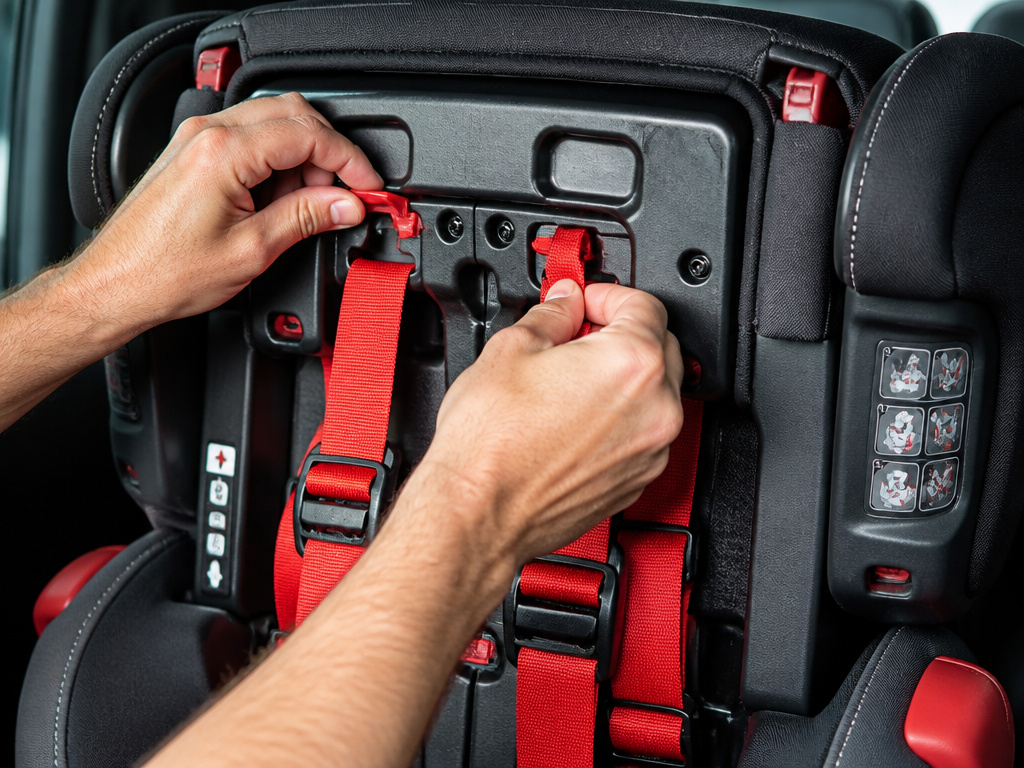
A combination seat seems like the perfect solution: buy once, use for years. It starts as a harnessed car seat and later converts to a booster. The reality is more about trade-offs.
The primary advantage is financial. You avoid purchasing two separate seats. The primary disadvantage is that a combination seat is often heavier, bulkier, and more complicated to install than a dedicated, purpose-built booster. Its booster mode might also have a lower maximum height limit than a standalone model.
I won’t recommend a combination seat as a first booster for a child who’s just outgrown their harness. The dedicated high-back booster is almost always lighter, easier to move between cars, and has taller head wings. Use the combination seat’s booster function as a backup or for carpools, not as the primary.
If you go this route, your choice is between a combination seat (forward-facing harness to booster) and an all-in-one seat (rear-facing, forward-facing harness, then booster). The all-in-one, like the Graco 4Ever DLX, is a larger investment but covers from birth to booster. The best car seats that become boosters balance high harness limits with a robust, well-fitting booster mode.
Why Most Booster Seats Aren’t Anchored to the Car
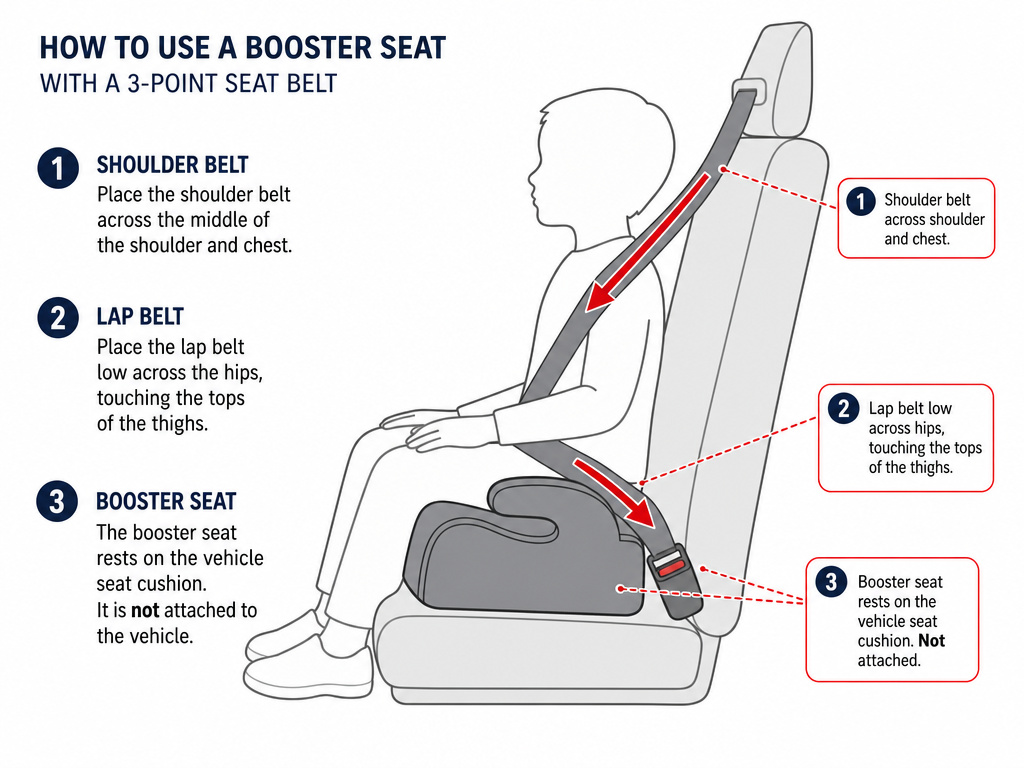
This trips up a lot of parents. You install a car seat with the seat belt or lower anchors, and you tug it to ensure it doesn’t move more than an inch. A booster seat just… Sits there. That’s by design.
Most booster seats are a seating platform for the child, not attached directly to the vehicle. The child sits on the booster and then the seat belt assembly is routed over the child’s shoulder and hip area, holding both the child and booster into the vehicle.
The vehicle’s seat belt is doing the securing. This is why proper belt fit is non-negotiable. If the belt is wrongly positioned, the booster is useless. A few models, like the Britax Highpoint, can be secured using the lower anchors for stability when the child isn’t in it, but it’s not required for safety.
The one exception is in 15-passenger vans. Most of these vehicles have center seats with only lap belts. Since booster seats require a 3-point (lap and shoulder) belt system, they can only be placed in the outside seating positions. Always check your vehicle manual.
The Hidden Dangers of an Ill-Fitting Seat Belt
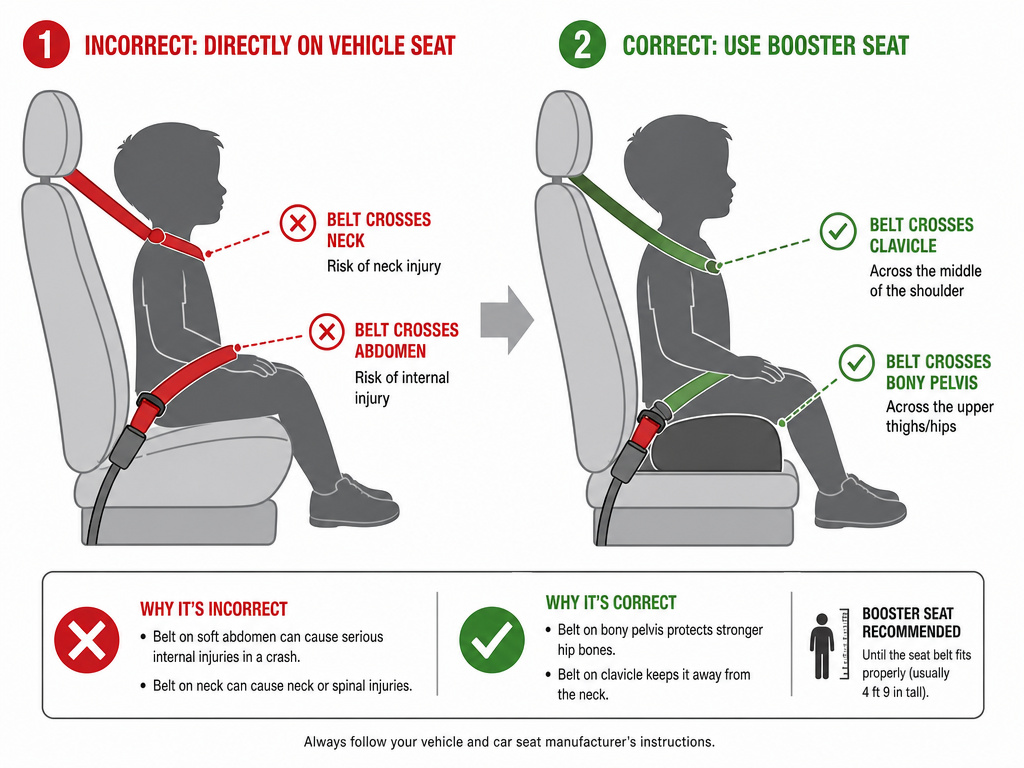
An adult seat belt is engineered for a body at least 145 cm (4’9″) tall. On a smaller child, the geometry is all wrong. The lap belt rides up over the soft organs of the abdomen. The shoulder belt cuts across the neck or face, leading the child to tuck it behind their back—which removes all upper-body restraint.
The result in a crash is called “seat belt syndrome”: internal abdominal injuries and spinal damage. The peer-reviewed booster seat usage data shows this outcome is the predictable result of a belt that doesn’t fit, not a rare one.
A booster seat’s entire function is to fix this geometry. It raises the child so the belt’s anchor points in the car work correctly. The belt should lie on the body where it’s designed to: the strong bony pelvis and the robust clavicle.
Canadian vs. U.S. Standards: This One Rule Is Absolute
Common mistake: Using a booster seat bought in the United States in Canada. U.S. Seats do not comply with Canadian safety regulations (CMVSS 213.2) and their use is illegal. The National Safety Mark, a label showing a maple leaf inside a circle, is the only proof of compliance.
Canadian law is stricter on booster seats than U.S. Federal regulations. Transport Canada’s standard (CMVSS 213.2) includes more stringent dynamic testing for side impacts and head containment. A seat sold in the U.S. Has not passed this test. It will not have the required National Safety Mark.
This is the law, not a minor technicality. If you are in Canada, you must use a Canadian-certified seat.The reverse is also true: a Canadian seat may not meet all U.S. FMVSS 213 requirements, though most dual-certified seats do. Always look for the certification label on the seat shell.
The government car seat installation tips from NHTSA are a great resource, but for Canadian residents, always cross-reference with Transport Canada’s guidelines.
How to Spot a Counterfeit or Expired Seat
The secondary market for car seats is risky. A seat that’s been in a crash, is past its expiry date, or is a cheap knockoff offers zero protection.
A counterfeit seat often lacks a visible model number and date of manufacture label. The instructions might be poor photocopies. The plastic may feel flimsy or have sharp edges. If the price seems too good to be true, especially from online marketplaces, it probably is.
Seat expiration dates matter because plastics degrade and safety standards evolve. Most seats expire 6 to 10 years from the date of manufacture. The date is stamped on the shell. Never use a seat that’s been in a moderate or severe crash, even if it looks fine. The structural integrity can be compromised.
Register your seat with the manufacturer to get recall notices. You can also sign up for email alerts from NHTSA or Transport Canada.
Frequently Asked Questions
Can my 4-year-old use a booster seat?
Probably not. Most 4-year-olds are not mature enough to sit properly in a booster for an entire car ride, and they likely haven’t outgrown a forward-facing harnessed seat. The AAP car seat information for families recommends keeping children in a harnessed seat until they reach the maximum height or weight limit, which for most seats is well beyond age 4.
Is a high-back booster safer than a backless one?
Yes, in most vehicles. A high-back booster provides head and side support, which is crucial if your vehicle seat is low or lacks a headrest. It also helps keep the seat belt positioned correctly if the child falls asleep. A backless booster is only suitable for older, taller children in seats with adequate head support.
Can I use just a seat belt if my child is over 8?
No. Age is a poor indicator. Use the 5-Step Seat Belt Fit Test. Most children need a booster until they are at least 4’9″ tall, which often happens between ages 10 and 12. Moving a child out of a booster too soon triples their risk of serious injury.
What’s the difference between a 5-point harness and the car’s seat belt?
five-point harness has five attachment points (two shoulders, two hips, one between the legs) and restrains the child to the car seat itself. The vehicle’s seat belt is a 3-point system (lap and shoulder) that restrains the occupant to the car frame. The harness offers superior containment and force distribution for smaller bodies.
Do I need to replace a booster seat after a minor crash?
Follow the manufacturer’s instructions, but most advise replacing any car seat or booster seat that was in a crash, regardless of severity. The seat’s energy-absorbing materials may be compromised, even if no damage is visible.
The Bottom Line
The difference is a complete system designed for a small body versus an adapter meant for a nearly adult-sized one, not just a harness versus a belt. The harness in a car seat is the restraint.The booster seat merely positions the vehicle’s belt to act as the restraint.
Your timeline should be driven by your child’s size, not their age. Max out the forward-facing harness first. Then move to a high-back booster. Finally, transition to a backless booster only when they’re too tall for the high-back but still don’t pass the 5-step test without it.
Skip the U.S.-market booster if you’re in Canada. And never buy a used seat unless you know its full history. The correct car seat installation steps matter just as much as choosing the right seat type. A $300 seat installed wrong is a $300 liability.
The goal is to get your child to adulthood without a serious injury. The harness, then the booster, are how you do that.
