
Removing the Newborn Insert from Your Car Seat: When & How
This post contains affiliate links. As an Amazon Associate, we earn from qualifying purchases.
Remove the newborn insert from your car seat when your child reaches 11 lbs (5 kg) or when the insert pushes them out of the proper seated position. The 11 lb limit is a strict rule for models like Chicco and Nuna, but others like UPPAbaby allow use beyond that weight if the child still fits correctly. The insert’s job is to position a small infant so the harness lies flat and the buckle sits against their body; once it starts doing the opposite, it must come out.
That 11 lb figure isn’t a suggestion. It’s the certified upper weight limit printed in the manuals for seats like the Chicco Fit3x and Nuna EXEC. But a number on a page doesn’t tell you what a bad fit looks like in your living room. The real trigger is mechanical: the insert becomes a spacer that lifts the baby away from the seat shell, compromising the harness’s ability to restrain them during a crash.
What follows: the exact weight limits for five major seats, the two physical signs that mean “remove it today,” and the one manufacturer that breaks the 11 lb rule with a fit-based exception. By the end, you’ll be able to look at your child in their seat and know, without a scale, if the insert stays or goes.
Key Takeaways
- The universal baseline is 11 lbs (5 kg), but always check your specific manual—Cybex Aton 2 allows its insert until 22 lbs.
- Remove the insert immediately if it pushes the baby’s head forward or causes the harness buckle to angle away from their body.
- UPPAbaby MESA V2 is the exception: you can use its insert past 11 lbs if the child isn’t slouching and all other fit criteria are met.
- Never add aftermarket pillows or padding; only use the manufacturer-approved insert that came with your seat.
- A late-removed insert creates a dangerous gap between the child and the seat shell, reducing crash protection.
The Universal 11 lb Rule & Why It’s Not Absolute
Most car seat manufacturers converge on a single number. For the Chicco Fit3x, Nuna EXEC, Nuna REVV, and Chicco NextFit Zip Max, the manual states the newborn insert must be removed once the child reaches 11 lbs (5 kg). This is a non-negotiable safety certification limit.
The infant insert is for use with infants who weigh between 5–11 lb (2.3–5 kg). DO NOT use the insert for a child who weighs more than 11 lb. Nuna EXEC User Manual, page 24
The why-layer is about crash physics. The insert is engineered to fill space for a tiny infant, bringing their body into contact with the harness system at the right points. Exceed the weight limit, and the now-compressed insert can lift the child, creating a gap between their back and the seat shell. In a collision, that gap allows for harmful extra movement before the harness engages.
But “universal” isn’t quite right. One glance at the manuals shows two clear outliers.
| Car Seat Model | Insert Weight Limit | Key Condition or Note |
|---|---|---|
| Chicco Fit3x | 11 lbs (5 kg) | Mandatory removal at 11 lbs. |
| Nuna EXEC / REVV | 11 lbs (5 kg) | Must be removed above 11 lbs. |
| Cybex Aton 2 | 22 lbs (10 kg) | “Infant Insert” recommended until 22 lbs or child needs more room. |
| UPPAbaby MESA V2 | 4–11 lbs (recommended) | Can be used beyond 11 lbs if child is not slouching and meets all fit criteria. |
| Chicco NextFit Zip Max | 11 lbs (5 kg) | “Newborn Positioner” for up to 11 lbs. |
The Cybex Aton 2 has a two-part system. Its “Newborn Inlay” (an EPS foam piece under the cover) is for babies up to about 11 lbs. The plush “Infant Insert” on top can stay until 22 lbs. The UPPAbaby MESA V2 manual is the only one that explicitly prioritizes fit over a hard weight cutoff. This isn’t a loophole—it’s a written exception based on the child’s individual proportions.
So your first step is not to guess. Find your manual and confirm your model’s rule. If it says 11 lbs, that’s your line. If it’s a Cybex or UPPAbaby, you have more nuanced instructions to follow.
Visual & Physical Fit Checklist (The Real-World Test)
The manual’s weight limit is your primary guide. Your eyes and hands are the backup system. You should perform this fit check every time you buckle your child in, starting around the 9 lb mark.
The two fail signs that override any weight:
- The head is pushed forward. Look at your baby in profile. Their head should rest back against the seat, with the ear roughly in line with the shoulder. If the insert is too thick or the baby too long, it can shove the chin toward the chest. This compromises the airway and is an immediate remove-it signal.
- The harness buckle angles away. The crotch buckle must lie flat against the child’s body. A too-small insert can make the baby sit too high, causing the buckle stem to point forward into empty space instead of back toward them. This creates slack in the crotch strap and is a major harness fit flaw.
Here is a step-by-step checklist to run through. If you answer “no” to any of these, the insert comes out now, regardless of weight.
- Back and bottom: Is the child’s back and bottom fully seated against the back of the car seat? Or is there a visible gap?
- Harness straps: Do the harness straps lie flat on the shoulders without twisting? Are they at or just below the shoulders for rear-facing?
- Pinch test: With the chest clip at armpit level, tighten the harness. Try to pinch the strap vertically at the child’s collarbone. If you can pinch any material, it’s too loose.
- Crotch buckle: Is the buckle positioned between the legs so it contacts the body? It should not be floating forward.
Where this goes sideways: Waiting for the 11 lb mark while ignoring a forward-pushed head. The insert is meant to position; if it’s mispositioning, it has already failed its job. That happens for some babies at 9 lbs.
This visual check is especially critical for convertible seats like the Chicco NextFit Zip Max. The newborn insert in a convertible is often just a small piece of padding. Its absence is felt immediately in a slouch. If the baby’s pelvis tips forward so their body curls into a C-shape, the insert has become a problem.
Manufacturer-Specific Guidelines & Exceptions
Generic advice breaks down here. Safety certifications are model-specific, so the rules are too. You must follow the manual for your exact seat.
Chicco Fit3x ClearTex Ultra-Slim All-in-One
The manual is absolute. “ONLY use the newborn insert if the child weighs between 5 and 11 lbs (2.3 and 5 kg).” It also mandates using the provided side support for children under 40 lbs. There is no discretion—at 11 lbs, you pull the crotch buckle through the slot and remove it.
Cybex Aton 2
This seat has layered inserts. The Newborn Inlay is a firm EPS foam block under the seat cover, recommended until about 11 lbs (3 months). The soft Infant Insert on top can remain until 22 lbs or until it “pushes baby’s head forward, or compromises the fitting of the child to the seat.” This is a rare instance where the manual tells you to remove an insert early for fit reasons, even below the weight limit.
Nuna EXEC & REVV
The rule is simple and strict: 5–11 lbs only. The Nuna EXEC manual adds that the insert can improve harness fit and recline angle for smaller infants. But the moment the scale hits 11.1 lbs, it becomes an unapproved piece of padding and must be stored.
UPPAbaby MESA V2
This is the notable exception. The manual recommends the insert for 4–11 lbs but explicitly states use may continue beyond 11 lbs “until all fit criteria are met, including the child not slouching.” This puts the responsibility on you to know the fit checklist. The insert stays only as long as it actively improves positioning.
Chicco NextFit Zip Max Convertible
The “Newborn Positioner” is for infants up to 11 lbs. The manual warns not to use any other insert or pillows. For convertible seats, the transition out of the insert is often when you also move the crotch strap to Position 2.
The common thread is that no manual approves aftermarket padding. The car seat insert that came in the box is the only one crash-tested with that shell. Adding a rolled-up blanket or a third-party head supporter voids the certification.
Why Late Removal Is a Safety Problem, Not Just Comfort
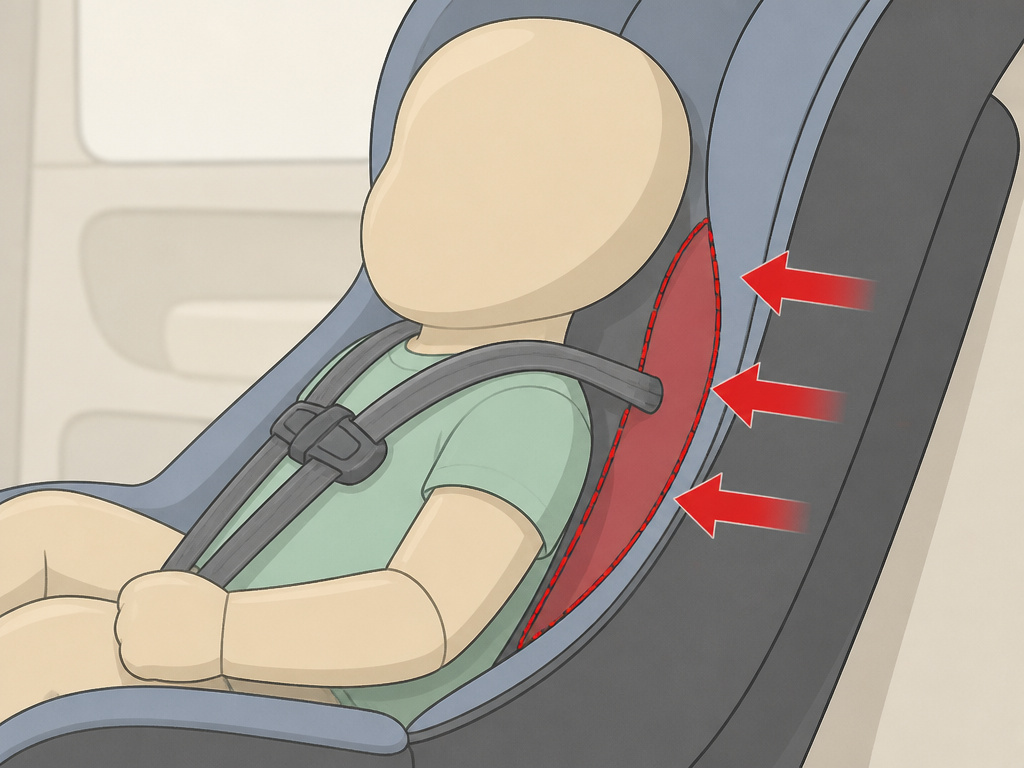
It’s easy to think a snug insert keeps a baby cozier. In reality, an overstayed insert undermines the seat’s entire safety function.
A car seat works by managing crash forces. The shell absorbs and distributes energy; the harness system holds the child securely within that shell. Every component is tuned to this. An insert kept in too long changes the geometry.
The child sits higher in the seat. This can raise the harness strap slots above their shoulders (a no-go for rear-facing). It increases the distance between the child’s body and the harness buckle, creating hidden slack. Most dangerously, it can create an air gap between the child’s back and the curved seat shell. In a frontal crash, the child will travel farther forward before the harness fully engages, increasing the force on their neck and spine.
Think of it like wearing a bike helmet that’s a size too big. It’s there, but it’s not engaging with your head at the right points at the right time. The protection is dramatically reduced.
This is why the safety guidelines for newborn inserts emphasize timely removal. It’s not a developmental milestone. It’s a maintenance step for a life-saving device.
Frequently Asked Questions
My baby is 10 lbs but seems squished. Can I take the insert out early?
Yes, and you should. The weight limits are maximums, not minimums. If the insert is compressing so much that it’s pushing your baby into an awkward position, it’s no longer serving its purpose. Remove it and perform the fit checklist. The harness might need tightening or the crotch strap position might need adjusting.
The insert is the only thing that stops my newborn from slouching. What do I do?
First, ensure the seat is installed at the correct recline angle (most have an indicator). If slouching persists without the insert and your baby is under the weight limit, the insert should stay. This is the exact scenario the UPPAbaby manual addresses. The insert’s job is to achieve proper positioning. If it’s still necessary for that, it stays.
Are all newborn inserts the same?
No. They are model-specific and not interchangeable. A Chicco insert is crash-tested with a Chicco seat shell. Using a different brand’s insert is using an untested component, which could affect performance in a crash. Only use the infant insert that was packaged with your seat.
What about the head support or head insert?
Many seats have a separate newborn head support. These often have their own guidelines. For example, some are removable independent of the body insert. Always check your manual for the head insert rules—they may be based on height rather than weight.
How do I clean the newborn insert?
Check the tag on the insert itself or the cleaning section of your manual. Most are machine washable on gentle cycle and air dry. Never use bleach or harsh chemicals, and never put the insert in the dryer unless the tag explicitly says it’s safe. The insert purpose is safety, and harsh cleaning can degrade the materials.
Before You Go
The rule is clearer than most baby gear advice: find your manual, find the number, and watch the fit. For Chicco and Nuna seats, 11 lbs is your hard stop. For Cybex, you have more weight room but must watch for head positioning. For UPPAbaby, you use the insert as a tool to achieve a safe fit, regardless of the scale.
Don’t overcomplicate it. The insert has one job—to make a small infant fit safely into a seat designed for a much larger child. The moment it stops doing that job, its time is up. Store it away. The next phase, a child sitting directly in the shell with a perfectly fitted harness, is the goal you’ve been working toward all along.
