
When to Stop Car Seat in Stroller: 3 Essential Safety Limits
This post contains affiliate links. As an Amazon Associate, we earn from qualifying purchases.
Stop using a car seat in your stroller when your child meets any one of three specific limits: the stroller’s Carriage Mode age or weight limit, the infant car seat’s own height or weight limit, or the developmental milestone of sitting upright unassisted. The most common hard stop is the stroller’s Carriage Mode limit, which for models like the Cybex Eos is 6 months or 9.1 kg (20 lbs).
That 6-month or 20-pound mark is the first checkpoint, not the finish line. The manual for your specific travel system holds the real numbers, and they are not suggestions. Ignoring them shifts the stroller’s center of gravity, stresses the frame, and turns a routine bump into a tip-over risk.
What follows is a breakdown of those three limits, how to find yours, and the step-by-step shift from carrying an infant seat to buckling a wiggly toddler into the stroller’s own seat. We’ll cover the safety specs you must check, the common mistakes that cause most injuries, and how to know your child is truly ready for the next stage.
Key Takeaways
- The first limit is your stroller’s Carriage Mode spec, often 6 months or 20 lbs. This is a frame stability limit, not just a comfort guideline.
- The second limit is your infant car seat’s maximum height/weight. A child who outgrows the car seat is unsafe in it, regardless of the stroller.
- The third limit is your child’s ability to sit upright unassisted. If they can’t sit up, they can’t safely use the stroller’s toddler seat, even if they’re under the weight limit.
- Using an incompatible car seat, like a Chicco seat on a Cybex stroller, voids all safety certifications and can lead to the seat detaching from the frame.
- The transition isn’t a single day. Plan to use the toddler seat for short, supervised trips first, while keeping the infant seat handy for longer naps on the go.
The Three Limits That End Car Seat Use in a Stroller
You are looking for a hard number in a manual. Most parents find two. The process ends when you hit the first one.
The stroller’s Carriage Mode limit is the most immediate. This is the manufacturer’s calculation for how much weight the stroller frame can safely support in that specific configuration. Exceed it, and the stroller’s balance changes. The Cybex Eos manual states this limit as 6 months or 9.1 kg (20 lbs), whichever comes first. The UPPAbaby Vista V2 toddler seat is rated from 3 months (or birth with a special insert) up to 50 lbs. These are not interchangeable numbers. The 50-pound limit applies to the toddler seat mounted on the frame, not an infant carrier snapped into it.
The infant car seat’s own limit is the second gate. Car seat safety is governed by different standards. Your child must stay within that seat’s height and weight limits for it to function as designed in a crash. The NHTSA mandates that children remain rear-facing until they reach their car seat’s maximum limit. If your child hits 32 inches but the car seat max is 30, the car seat is done, even if the stroller’s carriage mode could technically hold more weight.
The developmental milestone is the quiet third limit. Most manuals include a clause: “Discontinue use once the child can sit upright unassisted.” This is about physiology, not weight. A baby who can’t control their torso will slump in a toddler seat, even with a harness, risking airway obstruction. This milestone often arrives before the weight limits, especially for smaller babies.
Where this goes sideways: Assuming “weight limit” is the only rule. A long baby can outgrow an infant seat by height at 4 months, while a stocky baby might hit the weight limit at 5 months but still not be able to sit up. You need to check all three boxes.
How to Find Your Specific Stroller’s Limits
Grab the product manual. If it’s lost, search the manufacturer’s website for “[Your Stroller Model] manual PDF”. The limits are always in the “Specifications” or “Using Your Stroller” section.
Look for these specific phrases: * “Carriage Mode: For children up to [X] months or [Y] kg/lbs.” * “Toddler Seat Mode: For children from [X] months up to [Y] kg/lbs and [Z] cm/in.” * “Only compatible with [Brand] infant car seats.”
For a travel system, the compatibility list is law. The Chicco Corso LE manual explicitly warns that using a non-Chicco infant car seat “may result in serious injury or death.” This isn’t legal boilerplate. The attachment mechanisms are brand-specific; a mismatch might feel secure but will release under lateral stress.
| Stroller Model | Carriage Mode Limit | Toddler Seat Limit | Key Compatibility Rule |
|---|---|---|---|
| Cybex Eos | 6 months or 9.1 kg (20 lbs) | 22.7 kg (50 lbs), 96.5 cm (38 in) | ONLY Cybex infant car seats |
| UPPAbaby Vista V2 | N/A (uses bassinet or toddler seat from 3 mos) | 50 lbs (22.7 kg), 40” (101 cm) | UPPAbaby parts only |
| Evenflo JourneyLite | Use with compatible infant seat only | 40 lbs (18 kg), 38” (96 cm) | Only listed Evenflo seats (Discovery, Nurture, Embrace) |
The Safety Mechanics: Why These Limits Aren’t Arbitrary
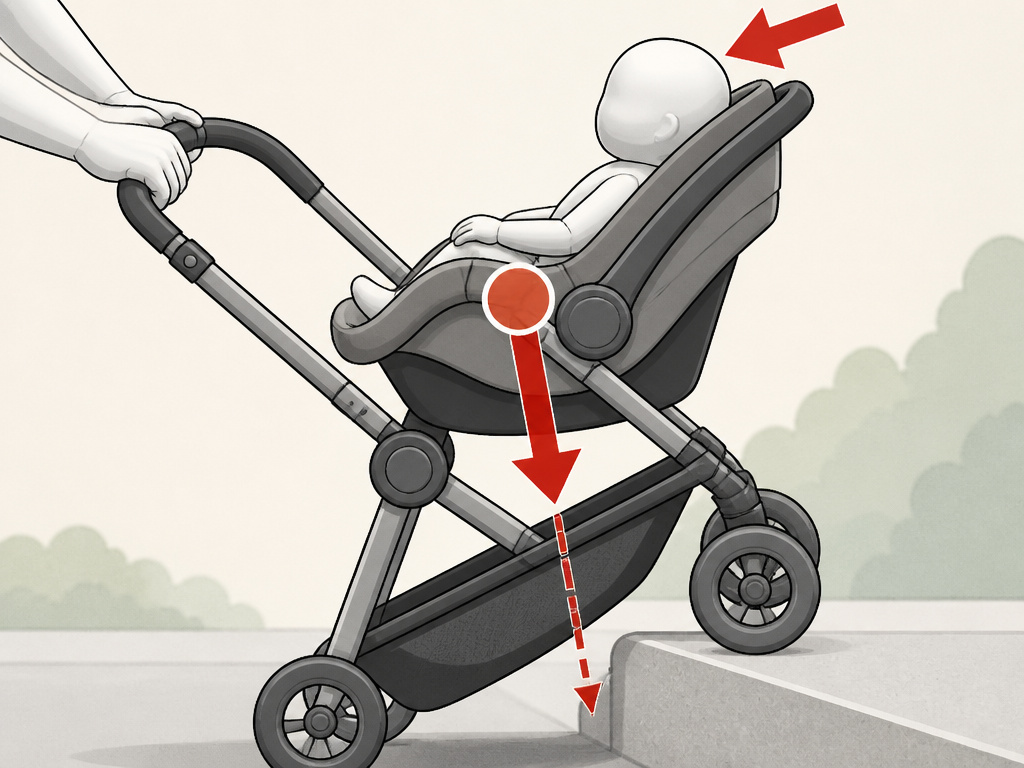
A stroller with an infant car seat attached is a top-heavy unit. The center of gravity is high, over the wheels. The frame is engineered to remain stable with a load up to a specific weight in that precise position. Add another five pounds of baby, and that center shifts. Going over a curb or a driveway lip can generate enough torque to tip the whole assembly forward.
The car seat’s shell and internal harness are tested to contain and protect a child up to its stated dimensions. A taller child’s head may rise above the shell’s top, making it useless in a side-impact. A heavier child generates forces in a crash that the seat’s structure and LATCH anchors are not rated to handle.
This is why the NHTSA car seat safety guidelines stress following the manufacturer’s limits for both the car seat and the vehicle’s lower anchors. The same principle applies to the stroller as a “vehicle.” The peer-reviewed car seat research notes that incorrect use, including using the wrong seat for a child’s size, is a primary failure point, observed in over 70% of cases in one study.
A Manitoba study found a 70% rate of incorrect car seat use, with issues ranging from poor installation to incorrect harnessing for the child’s size. Using an outgrown infant seat in a stroller is part of that same spectrum of risk.
The “sitting upright” milestone is about airway safety. A floppy infant in a reclined stroller seat can have their chin drop to their chest, a position that can restrict breathing. The toddler seat’s recline angles are not as deep as a bassinet or infant carrier, which are designed for supine sleep.
How to Make the Switch to the Toddler Seat
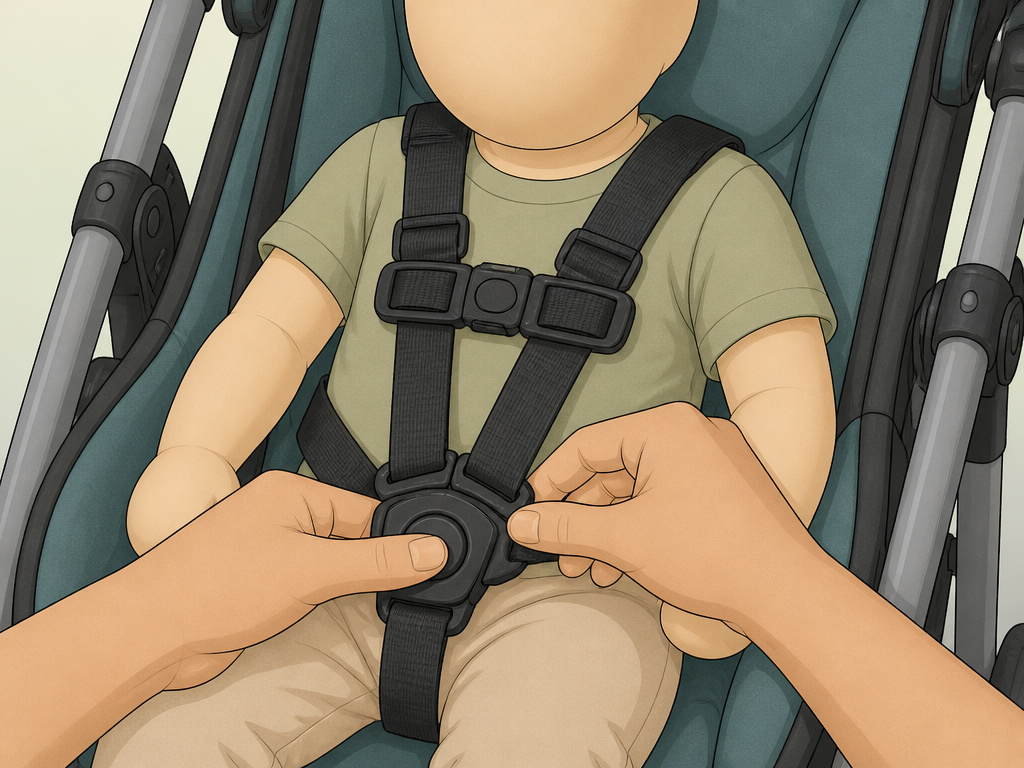
The transition is a practical skill. You are moving from a portable sleep pod to a more interactive, and escape-prone, seat. Your goal is a secure, comfortable fit.
First, ensure the stroller frame is ready.
- Confirm the toddler seat is correctly attached to the frame. You should hear an audible click. Tug on it.
- Adjust the seat to its most reclined position for the first few uses.
- Lock the wheel brakes.
Next, harness your child.
This is the core of the process. The 5-point harness is non-negotiable. 1. Place your child in the seat. The harness straps should come from at or just above their shoulders. 2. Buckle the crotch buckle first, then snap the two shoulder buckles into the chest clip. 3. Tighten the harness until you cannot pinch any slack in the strap at the child’s shoulder. The chest clip should be at armpit level.
Perform the two-second test.
Can your child slump sideways or forward? If yes, the harness is too loose. Does the harness leave red marks on the child’s shoulders or thighs after five minutes? If yes, it’s too tight. Aim for snug, not restrictive.
This is where most parents under-tighten. A loose harness is just decoration. A proper 5-point harness system should keep the child’s back and pelvis firmly against the seatback, even if they try to lean forward.
Common mistake: Putting the chest clip too low. A chest clip resting on the belly does nothing in a sudden stop. The child’s torso can jackknife forward, risking abdominal injury. It must be on the sternum.
What to Do With the Infant Car Seat After the Transition
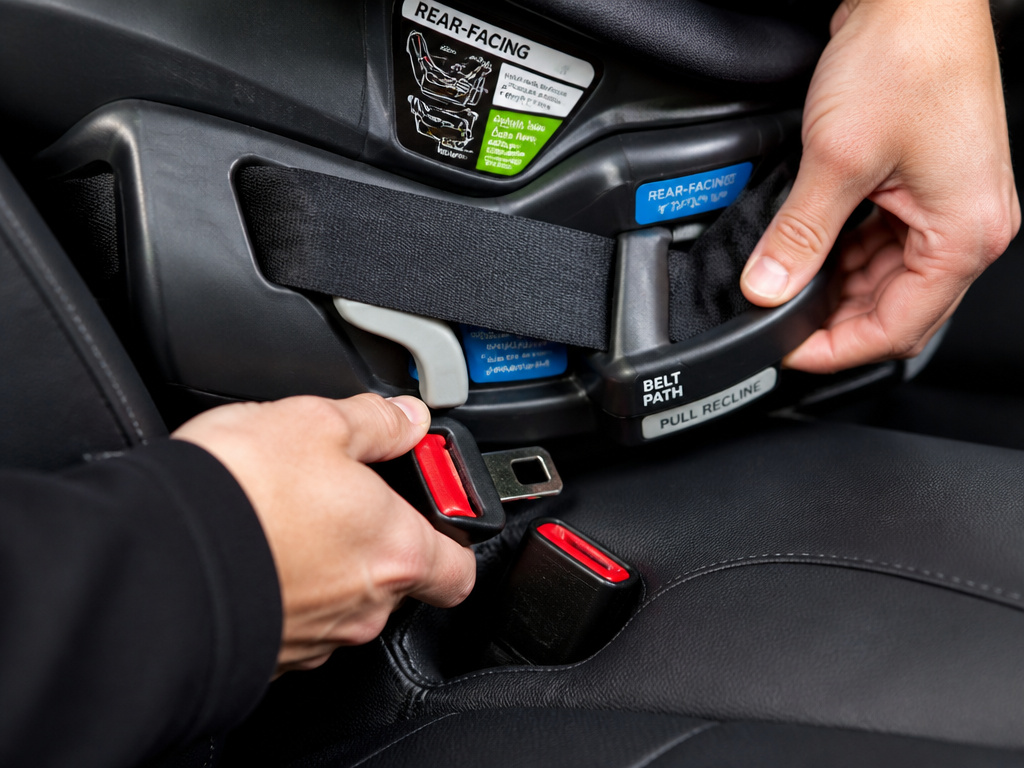
The infant seat isn’t obsolete. It remains your child’s primary vehicle restraint until they outgrow its limits. You just stop clicking it onto the stroller.
For car journeys, continue to use it rear-facing, installed with either the vehicle’s seat belt or lower anchors (never both), per the federal booster seat recommendations. The stroller transition and the car seat transition are separate timelines. A child may ride in a stroller’s toddler seat at 7 months but still be in a rear-facing infant car seat until age 2 or beyond.
If you have a travel system, the stroller frame now functions as a standard stroller. Some parents sell the infant seat once it’s outgrown and purchase a convertible car seat for the car, which is not designed to attach to strollers but lasts much longer.
Troubleshooting: Signs You Transitioned Too Early
The timeline is a guideline, not a calendar mandate. Watch your child.
- Slumping to one side constantly in the toddler seat. This is the clearest sign of insufficient torso control. Return to the infant carrier for another few weeks.
- Fussiness and crying that stops when moved back to the infant seat. It might not be defiance; it could be discomfort or a feeling of insecurity.
- Difficulty breathing or noisy breathing when reclined in the toddler seat. This suggests airway compromise. Use the most upright recline setting that the child can tolerate, or revert to the carrier.
If you see any of these, pause. There is no prize for early transition. The infant carrier is a safe, contained space. Use it until your child genuinely seems comfortable and stable in the more open seat. This is a core part of choosing a car seat and stroller system that adapts to your child’s pace.
Frequently Asked Questions
My baby is 4 months and 18 pounds. The manual says 6 months or 20 lbs. Which limit applies?
The weight limit applies. If your child reaches the weight limit before the age limit, you must stop using the Carriage Mode. The “or” in the manual means whichever condition happens first. Your 18-pound, 4-month-old has not reached either limit yet, so they are still within specifications.
Can I use the stroller’s toddler seat for a newborn?
Only if the manual explicitly states it is safe from birth. The UPPAbaby Vista V2 toddler seat is rated from 3 months, or from birth if you purchase the optional Infant SnugSeat accessory. Most toddler seats are not designed for newborns, who lack the neck strength and require a near-flat lying position. For a newborn, you need a travel system with a bassinet or a compatible infant car seat.
What if my stroller doesn’t have a separate “Carriage Mode” limit?
Many all-in-one strollers are designed only for use with their toddler seat. In this case, you follow the toddler seat’s minimum and maximum limits. The transition question doesn’t apply; you use the infant car seat separately and the stroller separately. This is a key difference between a standard stroller and an integrated travel system.
Are there any car seats that work with any stroller?
No. Universal compatibility is a myth. Stroller and car seat brands use proprietary attachment systems. Adapters exist to bridge some brands (e.g., a Chicco car seat to a Baby Jogger stroller via a Chicco-branded adapter), but you must buy the specific adapter made by your stroller’s manufacturer for your car seat model. Always verify compatibility before assuming an adapter will work.
How do I know if my child can sit upright unassisted?
The test is simple. Place your child on a firm, flat surface without any support. If they can maintain a seated position with their back straight and only using their hands for balance (not propping) for at least 30 seconds, they have the core strength for a stroller seat. If they fold forward or to the side immediately, they are not ready.
Before You Go
The shift from car seat carrier to stroller seat is a physical milestone, governed by engineering specs and developmental readiness. The numbers in the manual, 20 pounds, 6 months, 38 inches, are your guardrails. The child’s ability to sit upright is the green light.
Check your stroller’s Carriage Mode limit first. It’s often the lowest bar. Then, monitor the infant car seat’s height and weight tags. Finally, watch for that moment of independent sitting. When all three align, make the switch: click the toddler seat onto the frame, tighten the harness until it passes the pinch test, and take a short walk. Keep the infant seat in the car for now. You’ll need it a while longer.
The goal isn’t to rush the process. It’s to move to the next stage with the same safety margin you started with. Your stroller seat guidelines are the blueprint. Follow them, and the transition is just another part of the journey.
