
When Is Baby Too Big for Car Seat? The 65-Pound Anchor Rule
This post contains affiliate links. As an Amazon Associate, we earn from qualifying purchases.
Your baby is too big for their car seat when they exceed the manufacturer’s posted height or weight limit for that specific seat and mode, or when their weight plus the seat’s weight hits the 65-pound lower anchor limit. The 2023 Federal Register rule now sets the minimum weight for forward-facing with a harness at 26.5 pounds, and for booster seats at 40 pounds.
That 65-pound anchor rule is where most parents get tripped up. It’s a hard ceiling set by the vehicle and seat makers, and it’s not printed on every seat label. You have to do the math.
What follows is the breakdown of those limits, the four physical signs that matter more than age, and the exact steps to check your own seat. This isn’t about guessing. It’s about matching numbers you can look up tonight.
Key Takeaways
- The lower anchor weight limit is 65 pounds total, child plus car seat. Exceed it, and you must switch to a seat belt installation.
- A 2023 NHTSA rule raised the minimum forward-facing weight from 20 to 26.5 pounds to keep toddlers rear-facing longer.
- Your child has outgrown the seat’s harness when their shoulders are above the top harness slot or their ears reach the top of the seat shell.
- Convertible car seats like the Graco Extend2Fit or Britax One4Life let you delay the next purchase by accommodating higher rear-facing limits.
- Always check your specific seat’s manual first; generic charts can miss crucial model-specific details.
The 65-Pound Lower Anchor Limit (And Why It’s Non-Negotiable)
Lower anchors have weight limits set by the vehicle and car seat manufacturers. You can determine the lower anchor weight limit by checking the warning label or installation diagrams located on the side of the car seat. If your car seat does not have a label, you can determine the maximum allowable child weight for lower anchor use by subtracting the weight of the car seat from 65 pounds.
That quote from the NHTSA car seat safety guide is the most overlooked spec in the manual. The LATCH system (Lower Anchors and Tethers for Children) in your car has a maximum capacity of 65 pounds. That number is the combined weight of your child and the car seat itself.
Most convertible seats weigh between 15 and 25 pounds. If your seat weighs 20 pounds, your child can only use the lower anchors until they hit 45 pounds. After that, the anchors are not certified to hold the load in a crash. You must unclip the lower anchor connectors and reinstall the seat using your vehicle’s seat belt.
The math is simple, but you need two numbers: your child’s current weight and your car seat’s weight. The seat’s weight is in the instruction manual, often on the first few pages. If you’ve lost the manual, search the model name and “weight” online, manufacturers like Britax and Graco publish these specs.
Where this goes sideways: Parents see the seat’s harness is rated to 50 or 65 pounds and assume the installation method doesn’t matter. It does. The lower anchors physically cannot handle more than 65 pounds total. Exceeding that limit risks the anchors bending or pulling free in a collision. The switch to seat belt installation isn’t a suggestion; it’s a mandatory step when the numbers add up.
The Four Signs Your Child Has Outgrown the Seat (Not Just the Harness)
Harness limits get the attention, but they’re only one part of the picture. A child can fit the harness but still be too tall for the seat’s protective structure. These four checks are faster than digging for the manual.
- Shoulders above the top harness slots. The harness should come from at or above the child’s shoulders when rear-facing, and at or below when forward-facing. If the shoulders are above the highest slot, the harness can’t restrain them properly. This often happens before they hit the weight limit.
- Ears reach the top of the seat shell. The top of the child’s ears must not reach the top of the hard plastic seat shell. If they do, their head is no longer contained by the seat’s side wings in a side-impact crash. This is a non-negotiable height limit.
- Less than one inch of shell above the head (rear-facing). For rear-facing seats, there must be at least one inch of hard shell above the top of the child’s head. This ensures their head is fully supported in a rebound crash.
- The harness buckle sits below the child’s hips. On a forward-facing seat, the crotch buckle should be in front of the child, not underneath them. If you have to use the farthest buckle position and it’s still behind their legs, the seat’s depth is too small.
These are physical failsafes. A child who passes all four might still be over the weight limit. But a child who fails any one of them has outgrown that seat mode, regardless of what the scale says.
Decoding the Labels: From Infant Carriers to Booster Seats
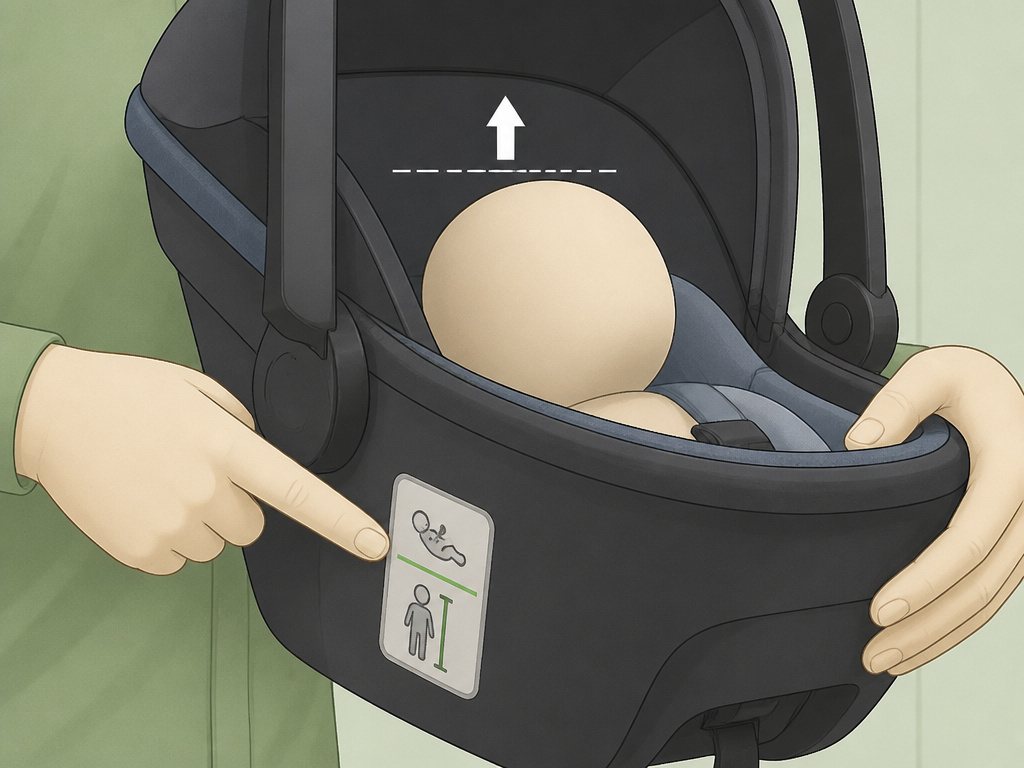
Car seat labels use a mix of weight, height, and sometimes age. The new 2023 Federal Register rule is phasing in clearer labels, but for now, you’re reading a patchwork of standards. Here’s how to translate them.
| Seat Type | Primary Limit | Key Threshold (NHTSA Rule) | What Happens After |
|---|---|---|---|
| Infant (Rear-Facing Only) | Height (top of head within shell) or Weight (usually 22-35 lbs) | N/A | Transition to a convertible car seat. |
| Convertible (Rear-Facing) | Weight (often 40-50 lbs) AND Height (1-inch shell rule) | Forward-facing minimum now 26.5 lbs (was 20 lbs) | Switch seat to forward-facing mode with harness. |
| Convertible (Forward-Facing with Harness) | Shoulder height vs. Top harness slot AND Weight (often 65 lbs) | Booster minimum is 40 lbs | Remove harness, use seat as belt-positioning booster (if seat allows). |
| Booster Seat | Vehicle seat belt fit (5-step test) AND Minimum 40 lbs | Must be used with lap-and-shoulder belt only | Graduation to vehicle seat belt alone. |
The forward-facing minimum weight change is critical. The old standard let seats recommend forward-facing at 20 pounds. The new rule, citing data that 93% of sub-20-pound kids were rear-facing but only 22% of 20-29 pound kids were, pushes that to 26.5 pounds. This keeps a 95th-percentile one-year-old rear-facing longer, which is safer for their neck and spine. If your seat manual says 20 pounds, it’s outdated, follow the new 26.5-pound guideline.
The AAP car seat information reinforces this: keep them rear-facing as long as the seat allows. A car seat that grows with your child, like an all-in-one model, makes that easier.
How to Check Your Specific Car Seat Tonight
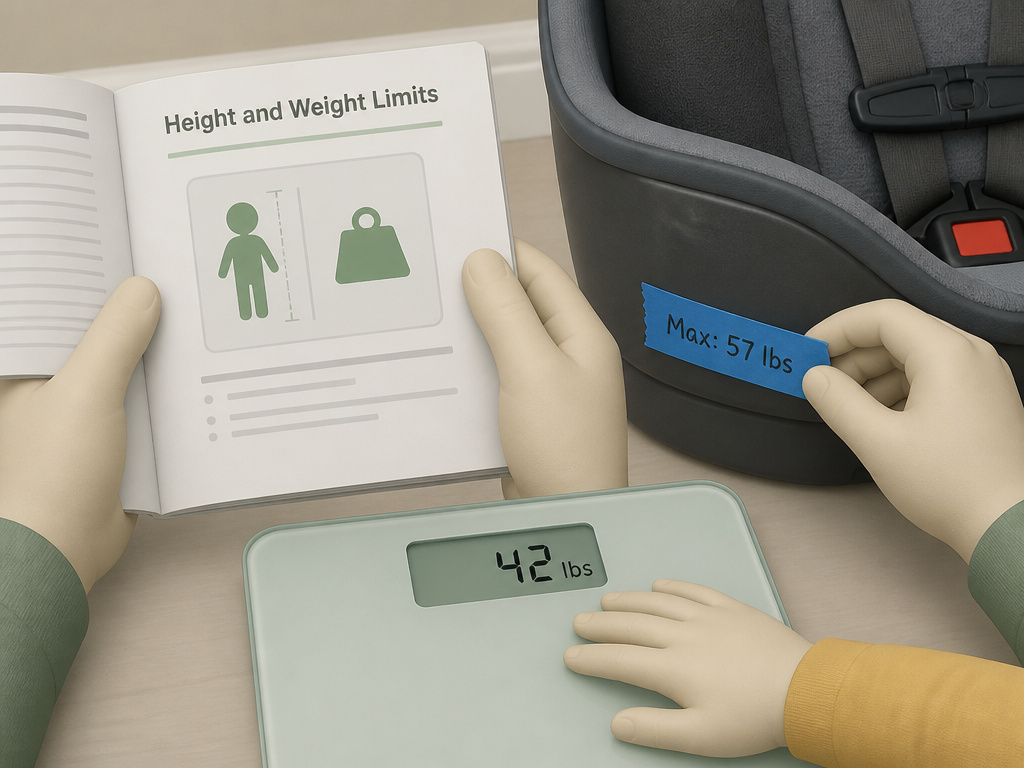
Don’t guess. This twenty-minute process gives you a definite answer.
First, find the manual. If it’s gone, search “[Your Car Seat Brand and Model] manual PDF.” Every major brand has them online. Look for the “Height and Weight Limits” section. It will list limits for rear-facing, forward-facing with harness, and booster mode separately.
Second, weigh your child. A home scale is fine. Then, find the seat’s weight in the manual. Do the 65-pound math: 65 minus seat weight equals max child weight for lower anchors. Write that number on a piece of tape and stick it to the seat.
Third, perform the four physical checks with your child in the seat, installed in the car. The fit can change when the seat is at the correct recline angle. Have a second person help you see if the shoulders are above the top harness slots.
Common mistake: Checking fit with the seat in your living room. The car’s seat angle changes the child’s position relative to the harness slots and shell. Always check in the installed seat.
If your child is nearing any limit, the harness height, the 1-inch shell rule, or the anchor math, start planning the next car seat stage. That might mean adjust harness straps to the highest position, or it might mean shopping for a new seat. Don’t wait for the day they suddenly don’t fit.
The One Question That Decides Your Next Move
You’ve done the checks. You have the numbers. One question consolidates everything: Is my child exceeding a limit for the current seat mode, or just for the current installation method?
If they’ve exceeded the lower anchor limit but are still within the seat’s harness height and weight limits, your move is simple: reinstall the seat using the vehicle’s seat belt. The seat itself is still safe.
If they’ve exceeded the height or weight limit for the rear-facing mode, but are within the forward-facing limits for that same seat, your move is to switch to convertible seat mode. You’ll need to adjust the harness, reinstall it forward-facing, and attach the top tether.
If they’ve exceeded all the limits for the convertible seat’s harness mode, your move is to decide between using the seat as a booster (if it converts) or buying a dedicated booster. This is when you consult the official booster seat ratings and the vehicle seat belt fit test.
That distinction, seat mode vs. Installation method, saves you from unnecessary purchases. It turns a vague worry into a clear action.
Frequently Asked Questions
What if my child’s weight is fine but they’re too tall?
The height limits are absolute. If their shoulders are above the top harness slots or their ears reach the top of the shell, they have outgrown that mode. Weight is only one factor; skeletal size matters more for proper restraint geometry.
My infant carrier says up to 32 inches, but my baby is 30 inches and their head is at the top. What now?
They’ve outgrown it. The “within one inch of the shell” rule for rear-facing overrides any listed height. It’s time to transition to a convertible car seat that offers more shell height rear-facing.
Can I just use the seat belt instead of LATCH to get more weight capacity?
Yes, but only if the child is still within the seat’s own harness weight limit. The seat belt installation has a much higher capacity (usually the vehicle’s seat belt limit, which is far beyond a child’s weight). Switching to seat belt installation when the child hits the 65-pound anchor limit is the correct procedure.
Do I need a new seat when we switch from rear-facing to forward-facing?
Not if you have a convertible seat. That’s its purpose. You’ll need to adjust the harness straps to the correct slot height (at or below the shoulders for forward-facing) and attach the top tether. The seat stays the same.
Are the rules different for booster seats?
Yes. Booster seats require the child to meet a minimum weight (40 pounds per the 2023 rule) and maturity to sit properly. The final arbiter is the vehicle seat belt fit test: knees bent at seat edge, lap belt low on hips, shoulder belt crossing the chest and shoulder.
Before You Go
Stop looking at age. Start looking at the numbers on your seat’s label and the results of the four physical checks. The 65-pound lower anchor limit is your first hard stop, calculate it tonight. The new 26.5-pound forward-facing minimum is your guide to keeping toddlers rear-facing longer, where they are safest.
Your next step is either a reinstall with a seat belt, a mode change on your convertible seat, or a move to a dedicated booster. The answer is in your manual, your scale, and a two-minute fit check in the car. Don’t guess. Measure.
