
Car Seat Safety: When to Remove the Newborn Head Insert
This post contains affiliate links. As an Amazon Associate, we earn from qualifying purchases.
Remove the newborn head insert from your car seat when your baby weighs 11 pounds or more AND passes the seat’s fit test without it. The weight limit is the manufacturer’s hard line. Nuna and Chicco manuals say stop at 11 pounds, UPPAbaby says 11 pounds, but the fit check is what keeps your child safe. If the harness straps sit at or below the shoulders, the headrest is at or an inch above the shoulders, and the chest clip is at armpit level with the crotch buckle secure, the insert has done its job.
The 11-pound mark is the point where the extra padding meant to position a tiny infant becomes a compression hazard in a crash. The seat’s structure and harness system are engineered for a child’s body directly against the shell, not a layer of aftermarket foam.A too-small baby needs the insert; a baby who fits without it gets a dangerous gap.
What follows: the exact weight and fit criteria for the UPPAbaby MESA MAX, Nuna REVV, and Chicco NextFit Zip Max, the two signs you’ve waited too long, and the one scenario where you should ignore the weight limit entirely.
Key Takeaways
- The universal weight limit for removing an infant insert is 11 pounds, but you must check your specific seat’s manual. Nuna and UPPAbaby state it explicitly.
- The real test is the fit check: harness straps at or below the shoulders, headrest bottom at or 1 inch above the shoulders, chest clip at armpit level, and no gap at the crotch buckle.
- Harness pads are optional and must be removed for preemies, they add bulk that can misroute the harness straps on a child under 5 pounds.
- On an airplane, the insert stays in the seat if your baby still needs it for a safe fit, regardless of the “car seat only” rule, safety overrides carrier policy.
- After a minor crash, inspect the insert for compression or tears. If you see any damage, replace the entire seat; the insert is a non-regulated part that can fail.
The Two-Part Rule: Weight and Fit
You have two bosses here: the number on the scale and the checklist in the manual. One gives you permission to start the process, the other tells you when you’re finished.
The weight limit is non-negotiable. Nuna REVV and EXEC manuals state “DO NOT use the insert for a child who weighs more than 11 lb.” The Chicco NextFit Zip Max manual says its Newborn Positioner and Headrest are only for infants between 4 and 11 pounds. The UPPAbaby MESA Max manual sets the same upper limit: 5 kg, or 11 pounds. This is a certification boundary. The seat was crash-tested with the insert for infants under that weight and without it for those over it.
Common mistake: Waiting for your baby to “look big enough” before checking the manual. The 11-pound rule applies even if your 13-pound newborn still seems snug with the insert. The padding compresses under force, creating a dangerous gap between the child and the harness.
The fit check is your final exam. UPPAbaby’s manual is the clearest: remove the insert when you can achieve all criteria without it. Those criteria are a harness position at or slightly below the shoulders, the bottom of the headrest at or 2.5 cm (1 inch) above the shoulders, the chest clip at armpit level, and the crotch buckle resting securely against the child with no gap. If your baby passes this test at 9 pounds, the insert comes out early. If they don’t pass at 12 pounds, you have a different problem, the seat might be outgrown rear-facing.
| Car Seat Model | Insert Weight Range | Key Fit Criterion Without Insert |
|---|---|---|
| UPPAbaby MESA MAX | 1.8 – 5 kg (4 – 11 lbs) | Headrest bottom at or 1″ above shoulders |
| Nuna REVV | 5 – 11 lb (2.3 – 5 kg) | Harness straps at or just below shoulders |
| Nuna EXEC | 5 – 11 lb (2.3 – 5 kg) | Must not be used over 11 lb |
| Chicco NextFit Zip Max | 4 – 11 lb (1.8 – 5 kg) | Newborn Positioner and Headrest only |
Why the Fit Check Matters More Than the Scale
The scale tells you when to stop. The fit check tells you why. An insert left in too long does more than just take up space, it actively mispositions the harness and creates a false sense of security.
The harness straps are the most critical part. They must sit at or slightly below the child’s shoulders when rear-facing. An insert that’s too thick pushes the child up, raising the shoulder point relative to the harness slots. What looks like a perfect fit with the insert becomes a dangerous above-the-shoulder harness route once you remove the padding. That lets the child’s torso ramp upward in a crash, increasing the risk of spinal injury.
The one-inch headrest rule is equally specific. The top of your child’s head should be no less than 2.5 cm (1 inch) from the top of the headrest when it’s in its highest position. An insert can artificially boost a baby’s height, making them seem farther from the top. Remove it, and you might find their head is suddenly too close. That’s your signal to raise the headrest, not to put the insert back in.
Where this goes sideways: Using the insert as a permanent head support. Aftermarket neck pillows or head supports that didn’t come with the seat are a major red flag for car seat insert safety. They can push the head forward, compromising the airway, and they aren’t crash-tested with your specific seat model.
The chest clip and crotch buckle get the last word. The chest clip must be at armpit level to keep the harness straps properly positioned on the shoulders. A thick insert can slide it down toward the belly. The crotch buckle must rest securely against the child with no gap. UPPAbaby warns that with the insert, the child should not sit on top of the buckle. If there’s space, the buckle can migrate during a crash, concentrating force on the pelvis instead of distributing it across the lap.
Step-by-Step Removal and Safety Check
Pulling out a piece of foam looks simple. Doing it right requires a full reset of the seat’s geometry.
Step 1: Weigh your baby. Use a reliable digital baby scale. If they are at or over 11 pounds, you have the green light to proceed with the fit test. If they’re under 11 pounds but you suspect they might fit the seat without the insert, you can still run the test, the manual is your ultimate guide.
Step 2: Remove the infant insert. For most seats, this means unzipping the seat cover or simply lifting the padded insert out from under the harness straps. Refer to your manual. For the UPPAbaby MESA MAX, the insert sits under the child; for the Chicco NextFit Zip Max, the Newborn Positioner is a separate piece under the buttocks and the Headrest attaches to the shell.
Step 3: Adjust the harness height. Most modern seats have a no-rethread harness system. Slide the headrest up or down until the harness straps emerge from the slot at or just below your baby’s shoulders. This is the single most important adjustment.
Step 4: Secure your baby. Place your child in the seat, thread the harness straps over their shoulders, and buckle the crotch buckle. Pull the harness adjuster strap until you can no longer pinch any excess webbing at the collarbone. The strap should be snug.
Step 5: Perform the four-point fit check. This is the moment of truth. 1. Harness Straps: At or below the shoulders? Good. 2. Headrest: Bottom is at or 1 inch above the shoulders? Good. 3. Chest Clip: Centered at armpit level? Good. 4. Crotch Buckle: Rests against the body with no gap? Good.
If all four points pass, the insert stays out. Store it somewhere dry. If any point fails, reinstall the insert and try again in a week or two. Your baby will grow into the seat.
The part nobody mentions: Harness pads are optional on many seats, like the UPPAbaby MESA MAX. The manual explicitly states they must be removed when securing a preemie. Those little pads add just enough bulk to misroute the straps on a child under 5 pounds.
When the Rules Change: Airplanes, Preemies, and After a Crash

The 11-pound rule assumes a standard, full-term infant. It also assumes you’re in a car. Three scenarios throw a wrench in the works.
Flying with a car seat. The federal car seat installation standards from the NHTSA strongly urge using a child restraint on an aircraft. The carrier itself is certified for flight, but the base is not. Here’s the twist: if your baby still needs the insert to achieve a proper fit at 10 pounds, you use it on the plane. The FAA’s “car seat only” rule refers to the base, not the safety components. A proper fit trumps a generic policy every time.
Premature or low-birth-weight babies. A baby under 5 pounds might not fit the seat even with the insert. The Chicco NextFit Zip Max manual explicitly says to consult the infant’s doctor before use. The issue involves skeletal development and breathing. For these children, the newborn insert purpose is critical, but so is medical oversight.Never guess.
After a crash. The NHTSA says car seats don’t automatically need replacement after a minor crash. But that guidance is for the seat shell and harness. The insert is a non-regulated, non-structural piece of foam. Inspect it closely for compression, cracking, or tears. If you see any damage, or if the crash was moderate to severe, replace the entire seat. The insert’s job is to absorb and distribute force; a compromised one won’t do that a second time.
UPPAbaby MESA MAX vs. Nuna REVV: A Side-by-Side Guide

Not all inserts are created equal, and their removal triggers slightly different checks. Knowing your model matters.
The UPPAbaby MESA MAX insert is a single, sculpted piece that cradles the infant’s entire back and head. Its manual provides the most detailed fit checklist. The 1-inch headrest clearance rule is specific to this seat. You also need to ensure the child isn’t sitting on top of the crotch buckle when the insert is in place. The harness pads are a separate, optional component.
The Nuna REVV and EXEC inserts are more modular, often involving a head hugger and a body insert. The rule is blunt: “DO NOT use the insert for a child who weighs more than 11 lb.” Their focus is on the harness strap position being at or just below the shoulders. The headrest is less adjustable than the UPPAbaby’s, so the fit is more binary.
| Aspect | UPPAbaby MESA MAX | Nuna REVV/EXEC |
|---|---|---|
| Insert Type | Single, full-body sculpted pad | Often modular (head + body inserts) |
| Hard Weight Limit | 11 lb (5 kg) | 11 lb (5 kg) |
| Primary Fit Focus | 1-inch headrest clearance, crotch buckle contact | Harness strap at/below shoulders |
| Harness Pads | Optional; must be removed for preemies | Integrated or included; follow manual |
| Manual Clarity | Detailed 4-point checklist | Direct weight prohibition |
If you’re following newborn insert guidelines for a Chicco NextFit Zip Max, the process is similar: the Newborn Positioner and Headrest come out together at 11 pounds, and you then run the same harness and headrest checks.
Signs You’ve Waited Too Long
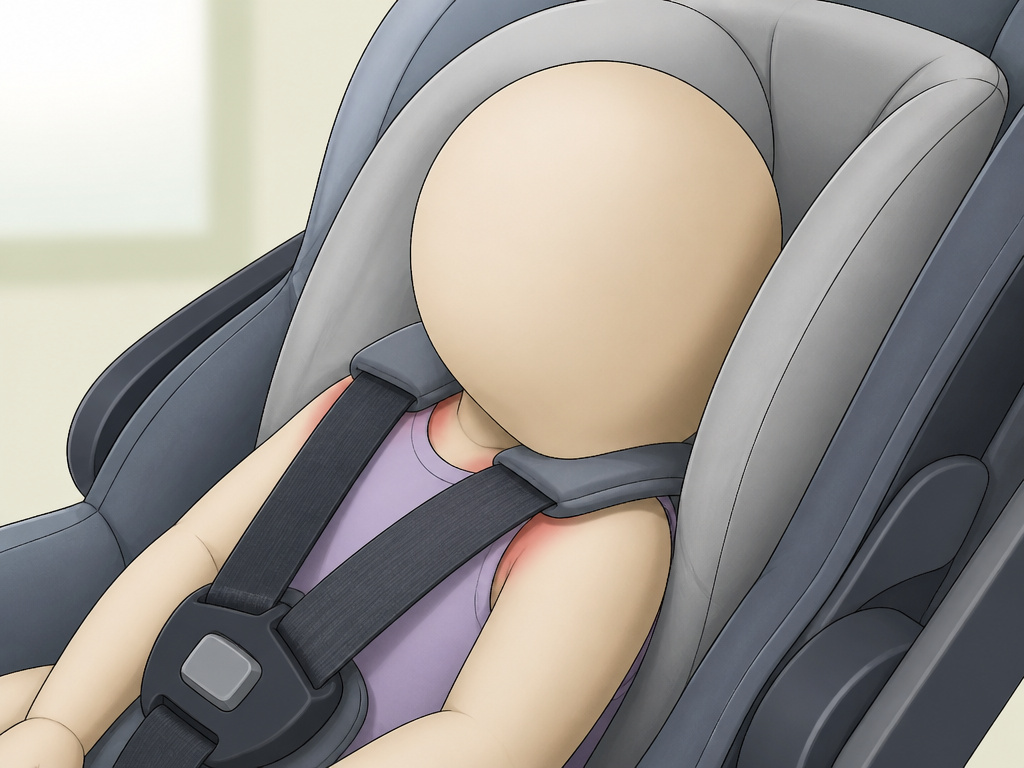
The seat will tell you. You just have to know what to look for.
The harness straps are the biggest giveaway. If they’re digging into your baby’s shoulders or leaving deep red marks, the insert is likely compressing and the straps are now too tight on the body. If the straps are above the shoulders, the insert has pushed your child too high in the seat. Both are fails.
Watch the head position. If your baby’s head is flopping forward or to the side in a way it didn’t before, the insert might be over-compressed, creating a gap between the head and the side wings. That’s a whiplash risk.
Finally, check for comfort. A baby who suddenly hates the car seat after being content might be protesting a bad fit. They can’t tell you the padding is shot, but they can scream the entire drive.
Frequently Asked Questions
Can I use the newborn insert after 11 pounds if my baby still fits?
No. The 11-pound limit is a certification standard, not a comfort guideline. The seat was crash-tested with the insert for infants under 11 pounds and without it for those over 11 pounds. Using it beyond that weight creates an untested, unsafe configuration. The padding can compress unpredictably in a crash, creating space for the child to move.
My baby is long but skinny. Should I keep the insert for head support?
Never use the insert for head support alone. If your baby passes the weight limit, the insert comes out. For a long, skinny baby who needs better positioning, look for a seat with more adjustable head and body wings or consult a Child Passenger Safety Technician (CPST). Adding aftermarket head support safety products is dangerous unless they came with the seat.
Do I need to keep the insert for the next baby?
Yes, if it’s in perfect condition and you’re storing the seat for a future child. Store it in a clean, dry place with the seat. If the insert is damaged, stained, or has been in a crash, replace the entire seat. Manufacturers do not sell inserts separately because they are integral to the seat’s crash performance for small infants.
How do I clean the insert before storing it?
Check your manual. Most inserts have removable, machine-washable covers. The foam core usually must be spot-cleaned only, never submerge it. Use a mild detergent and air dry completely before storage. A damp insert can mold and degrade the foam.
What if I lost the insert and have a newborn under 11 pounds?
You cannot use the seat without it. The seat is not safe for an infant under 11 pounds without the specific, crash-tested insert. Contact the manufacturer immediately to purchase a replacement insert. Do not use the seat or substitute with blankets or aftermarket products.
Before You Go
The insert has one job: to position a tiny infant correctly in a seat built for a much larger range. Its retirement is a milestone, not a loss. When your baby hits 11 pounds and passes the fit test, pull it out and store it. The seat is now in its standard configuration, ready to keep them safe as they grow. The rules are specific for a reason, they’re the difference between a proper car seat installation and a guess. Follow the manual, not a hunch. Your next step is watching for the signs they’ve outgrown the seat rear-facing altogether, which is a whole different set of numbers.
