
Guide: How to Disconnect an Infant Car Seat from Its Base
This post contains affiliate links. As an Amazon Associate, we earn from qualifying purchases.
To disconnect a car seat from its base, find the release lever or button on the back or side of the carrier, press and hold it, and lift the seat straight up. For a Graco seat, slide the base release handle up. For a Doona, press and hold button #10 while tilting the seat toward you. Never pull or twist the seat without activating the release—it can damage the locking mechanism and compromise safety.
That handle or button is the only thing physically holding several pounds of plastic, metal, and your child securely to the anchored base. Missing it means you’re fighting the engineered lock.
What follows is the breakdown of every common release type, the model-specific quirks that jam them, and the one mistake that makes reinstallation unsafe. This isn’t about pulling harder. It’s about finding the right latch.
Key Takeaways
- The release mechanism is always on the car seat carrier, not the base itself.
- You must press and hold the release while lifting; a quick tap won’t fully disengage the locks.
- Store LATCH connectors after base removal. Letting them dangle can damage the vehicle’s upholstery and the connectors.
- If the seat feels stuck, check that the carry handle is in the correct, upright position—it often locks the seat to the base.
- Never use both the vehicle seat belt and the LATCH system to install the base. You must choose one.
The Universal Two-Step Sequence
All infant car seat carriers disconnect from their bases the same way. The mechanism’s location changes, but the physics do not.
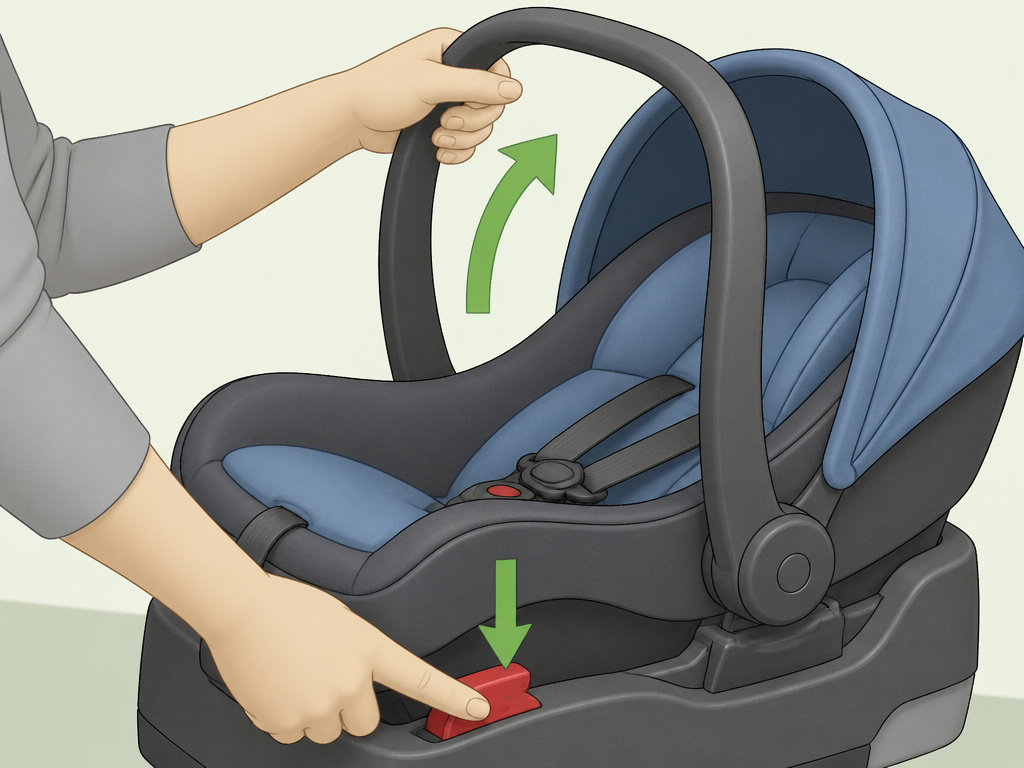
To disconnect the car seat from the base, locate the release lever or button on the rear or side of the carrier shell. Press and hold this mechanism firmly, then lift the carrier straight up and out of the base. A proper release requires continuous pressure during the lift.
The release works by retracting a set of metal lock bars or hooks from slots inside the base. A quick tap might partially retract them, leading to a stuck feeling. Hold the button down for the full motion.
Where this goes sideways: Trying to pull the seat out by the carry handle. The handle is for carrying, not disconnecting. Yanking on it stresses the plastic hinge points and can crack the shell over time. You’ll also look like you’re wrestling a greased pig.
The process is simple. Find the latch, hold it, lift. The challenge is that manufacturers hide this latch in different spots.
| Brand / Model | Release Mechanism Location | Action Required |
|---|---|---|
| Graco (most models) | Back of carrier, center | Slide handle UP |
| Chicco KeyFit | Back of carrier, center | Squeeze lever IN |
| Evenflo REVOLVE 180° | Side of carrier (varies) | Press button, lift tray |
| Doona | Side of base, marked #10 | Press & hold button, TILT seat |
| Britax / B-Safe | Top rear of carrier | Pull lever UP |
If your seat isn’t budging, stop. Forcing it is how plastic tabs snap. The problem is usually one of three things: you’re not pressing the release correctly, the carry handle is locked in the wrong position, or the base isn’t actually installed tightly in the vehicle. A wobbly base can bind the seat.
Model-Specific Release Buttons & Levers
Manufacturers love their proprietary names. A release lever is a release lever, whether Graco calls it a “SnugLock” or Chicco uses a “UAS release.” Here’s how to speak their language.
Graco’s Slide-Up Handle
On most Graco seats, you’ll find a prominent colored handle centered on the back of the carrier. The official manual states: “From the back of the car seat, slide the base release handle up and lift the car seat out of the base.” You must slide it up. Pushing it in or pulling it does nothing. Once it’s up, keep your thumb on it as you lift.
The Doona Two-Button System
The Doona is its own beast. It has two critical buttons: the LATCH connector release (#7) and the base release (#10). To detach the Doona car seat, you press and hold button #10 on the base while slightly tilting the seat toward you. Don’t just pull up. The tilt angle is what clears the anchor points. This is the step most people miss on the first try.
Evenflo’s LockStrong™ Tray
Models like the REVOLVE 180° LITEMAX NXT use a rotating tray system. You’re not just releasing the car seat; you’re unlocking the whole tray. Press the grey button on the side of the seat to unlock the LockStrong tray (the indicator turns red), then you can rotate it. To remove the seat, you lift it off the silver bars on the tray. It’s a two-part motion that feels odd until you’ve done it twice.
Common mistake: Confusing the seat release with the base’s recline lever. The recline lever is on the base itself, usually at the front. Pulling that won’t free the seat; it just changes the base’s angle.
For a Cybex Cloud T, look for a large button near the headrest. For an Evenflo Aria model, check the sides. The rule is universal: find the moving part that isn’t the handle.
What “Disconnect” Actually Means: Seat vs. Base
This phrase trips up more parents than anything else. “Disconnect the car seat” can mean two different operations, and confusing them wastes time and effort.
- Removing the Carrier from the Base: This is what we’ve covered. You take the car seat out of its installed base, leaving the base secured in the car. You do this to carry the baby inside.
- Removing the Entire Base from the Vehicle: This is a full uninstallation. You are detaching the base from the car’s seat belt or LATCH anchors because you need to move it to another car or store it.
The steps for the second one are more involved: * If installed with LATCH: Press the red button on each LATCH connector and unhook it from the vehicle’s anchor bars. * If installed with a seat belt: Unbuckle the belt and retract it completely.
The Joie Rue manual is clear: “Press the red LATCH release buttons to unhook the LATCH anchors.” After you remove the base, you must also store those LATCH connectors. Most bases have little clips or slots on the back. If you let the metal hooks swing loose, they’ll bang into your car’s interior every time you turn a corner.
The Carry Handle Lock & Other Sticking Points
 You’ve found the release. You’re holding it down. The seat still won’t come out of the base. Now what?
Check the carry handle position. On nearly every model, the seat only releases when the carry handle is in the upright, locked position. The Graco manual puts it in a warning box: “The carry handle MUST be upright and locked when installed in the vehicle.” If the handle is down or in a stroller-click position, it often mechanically blocks the release mechanism.
Other culprits: * Debris in the lock channel: Crumbs, sand, or pet hair can jam the lock bars. Tip the base over and give it a sharp tap. A quick vacuum around the lock slots fixes this. * A misaligned seat: If the seat isn’t seated fully forward in the base, the locks won’t align. Press down firmly on the front of the carrier near the baby’s feet, then try the release. * Extreme temperature: In very cold weather, plastic contracts and can bind. In hot weather, it can expand and stick. Give it a moment to adjust if you’ve just come from outside.
Easy to miss: The level indicator. If your base is improperly reclined, the seat can bind at an angle. Adjust the base’s recline foot so the level indicator shows green, then try removing the seat again.
If none of this works, consult your manual. There is a model-specific trick you haven’t found yet. For an ISOFIX base, the release might be a pull cord or a secondary latch under the seat fabric.
Before You Store It: The Post-Removal Checklist
 Getting the seat out is only half the job. What you do next determines if it goes back in smoothly.
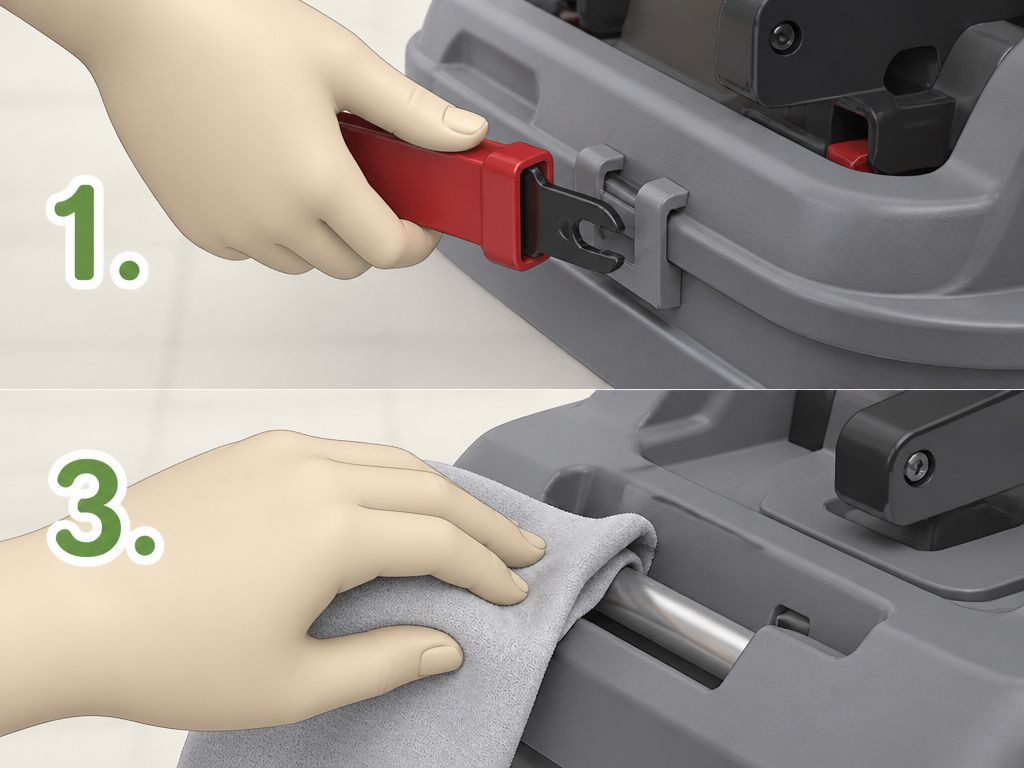
- Store the LATCH connectors. Clip them into the storage positions on the base. This prevents damage and keeps them from getting lost under the vehicle seat.
- Check the lock bars. Look at the metal bars on the bottom of the carrier. They should be fully retracted. If one is sticking out, work the release mechanism a few times to free it.
- Wipe down the contact points. Use a dry cloth to clean the lock bars on the seat and the receiving slots in the base. Dirt creates friction.
- Position the handle. For storage, most manuals recommend locking the handle in the upright position to protect the hinge.
Skipping these steps is how you end up with a seat that rattles, won’t click in solidly, or has connectors that are bent and won’t hook. A minute of care saves a frantic struggle in a rainy parking lot later.
Frequently Asked Questions
Why won’t my car seat click into the base after I take it out?
The lock bars on the seat are probably not fully retracted. Work the release lever several times while looking at the bottom of the carrier. You should see the bars move in and out. If they’re stuck out, debris is likely jamming them. Clean the mechanism.
Is it safe to disconnect the car seat with the baby in it?
Yes, that’s the primary design function of an infant carrier. Ensure you have a firm grip with both hands—one on the carry handle and one supporting the bottom of the seat—before you lift. The seat is heavy and awkward with a baby in it.
Can I use the car seat without the base?
Most infant seats are certified for aircraft and vehicle use without their base, using only the vehicle seat belt routed through the designated belt path. You must follow the manual’s instructions for belt installation exactly. It is often a tighter, more secure fit but less convenient for daily in-and-out.
How do I know if my seat is properly disconnected?
When you lift the seat, it should come freely with no hanging or catching. You should hear a distinct click or release sound. Once out, the base should sit empty with no parts extending upward. Give the base a shake; nothing should be loose or broken.
What if my release lever breaks?
Stop using the seat immediately. A broken release mechanism means the seat cannot be securely attached to the base. Contact the manufacturer’s customer service for a replacement part. Do not attempt to rig a fix with tape or zip ties.
The Bottom Line
Disconnecting a car seat isn’t a strength test. It’s a search for the right latch. Find the manufacturer’s designated lever or button, press and hold it, and lift straight up. The hassle starts when you skip the “hold” part or fight against the carry handle lock.
Keep the base’s LATCH connectors stored when not in use. Check the lock bars for debris. And remember, you’re not just taking a seat out. You’re disengaging a safety device that’s meant to hold firm. A little patience with the mechanism pays off in a seat that clicks back in solidly every single time.
