
Do Car Seat Bases Have Expiration Dates? Learn the Rule
This post contains affiliate links. As an Amazon Associate, we earn from qualifying purchases.
Yes, car seat bases have expiration dates, typically ranging from 6 to 10 years from the date of manufacture. The exact timeline is brand-specific: Chicco bases expire in 6 years, Baby Jogger and UPPAbaby in 7, Safety 1st and Maxi-Cosi in 8, and Britax ClickTight models in 10. The date is stamped on a label on the base itself. This expiration is a hard safety limit due to material fatigue and evolving crash-test standards.
That range is a certified ceiling based on how the plastics, metals, and webbing inside the base respond to years of heat cycles, vibration, and UV exposure. A base past its date hasn’t been tested to perform in a crash.
The rest of this guide walks through the manufacturer evidence. You’ll get the exact timelines from their manuals, learn where to find your base’s date, understand the two physical reasons expiration exists, and know what to do when the clock runs out.
Key Takeaways
- Car seat base expiration dates are not universal; they vary by brand from 6 to 10 years from the manufacture date.
- The manufacture date is the starting point, not the purchase date. Find it on a label on the top or underside of the base.
- Expiration is driven by material degradation (plastic becomes brittle) and outdated safety standards.
- Always replace the base after any moderate or severe crash, regardless of its age, per NHTSA guidelines.
- An expired base is not safe for reuse, resale, or donation. Destroy the harness straps and recycle it.
The 7-10 Year Lifespan: Why Car Seat Bases Expire
A car seat base is a precision energy-absorption system designed to manage crash forces so the carrier and your child decelerate safely.The materials engineered to do that have a finite reliable life.
The landscape of child passenger safety is continuously evolving with updates from the National Highway Traffic Safety Administration (NHTSA) alongside innovations in safety technology. As federal regulations evolve… Older car seats become outdated.
Two forces set the expiration clock. First, material fatigue. The high-impact plastics in the shell and the steel in the frame undergo constant stress from temperature swings inside your car. Over years, this thermal cycling can make plastics more brittle and metals more prone to microfractures, damage you can’t see. Second, safety standards evolve. A base manufactured in 2015 was tested to the standards of 2015. By 2025, those standards have changed, and the base’s design may not incorporate newer understandings of side-impact protection or belt geometry.
| Brand | Standard Expiration | Key Source & Note |
|---|---|---|
| Britax (ClickTight® Bases) | 10 years | Britax Knowledge Center: Infant Car Seat Bases with ClickTight® models (Aspen®, Alpine®). |
| Safety 1st / Maxi-Cosi | 8 years | Safety 1st manual: “Do not use this base more than 8 years after the date of manufacture.” |
| Baby Jogger | 7 years | Baby Jogger manual: “DISCONTINUE USE of this child restraint base after 7 years from the manufacture date.” |
| UPPAbaby Mesa V2 | 7 years | UPPAbaby manual: “Discontinue use of this child restraint after 7 years from the date of manufacture.” |
| Chicco KeyFit | 6 years | Chicco manual states 6 years from manufacture or date of purchase (with receipt). |
The timeline starts at the date of manufacture (DOM), not the date you bought it. A base can sit on a store shelf for a year, eating into its usable life. This is why checking the expiration date location is the first step in any car seat safety check.
Where to Find the Expiration Date on Your Base
You need two pieces of information: the manufacture date and the brand’s lifespan. The date is always on a permanent label or stamp.
Look on the top or underside of the base. Most brands, like Safety 1st and Baby Jogger, place the label on the top. Others, like Nuna, may have it on the bottom. The label will include the model number, serial number, and a date code (e.g., “MFD: 06-2023”).
Common mistake: Assuming the carrier and base share the same expiration date. They are manufactured separately and can have different DOMs. You must check both.
Chicco presents a rare edge case. Their manual for the KeyFit base states not to use it longer than “6 years from manufacture date or date of purchase (proof of purchase required).” If you have your receipt, the clock could start later. Without it, you default to the manufacture date. This exception highlights why knowing your specific car seat base expiration timelines is non-negotiable.
Expiration vs. Crash Replacement: Two Different Clocks
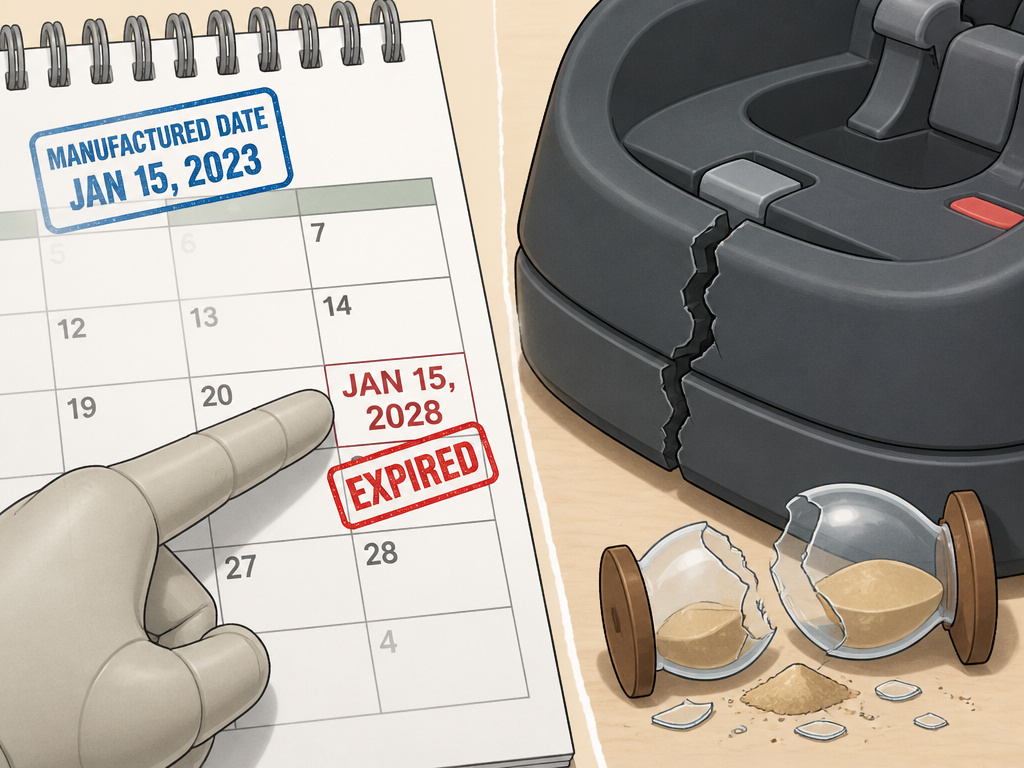
Expiration is a countdown from manufacture. Crash replacement is an event-based reset to zero. They are separate rules, and a crash does not extend the expiration date.
The crash-replacement rule is stricter. Following NHTSA guidance adopted by all manufacturers, you must replace a base after a moderate to severe crash. For a minor crash, replacement may not be mandatory if all of the following are true: * The vehicle was drivable from the crash site. * The door nearest the car seat was not damaged. * No passengers were injured. * Airbags did not deploy. * There is no visible damage to the base or carrier.
If any condition is missing, replace it. The internal structure can be compromised without showing a crack. This is a key reason infant car seats expire and must be replaced, as the integrity is no longer guaranteed.
Where this goes sideways: Keeping a base “just for practice” after a crash. Once a base’s structural integrity is in question, it should not be used at all. It becomes a liability.
The bottom line: if you’re unsure about the crash severity, replace the base. It’s not worth the risk. This is a primary key reason to replace an infant car seat, alongside expiration.
What To Do With an Expired or Damaged Base
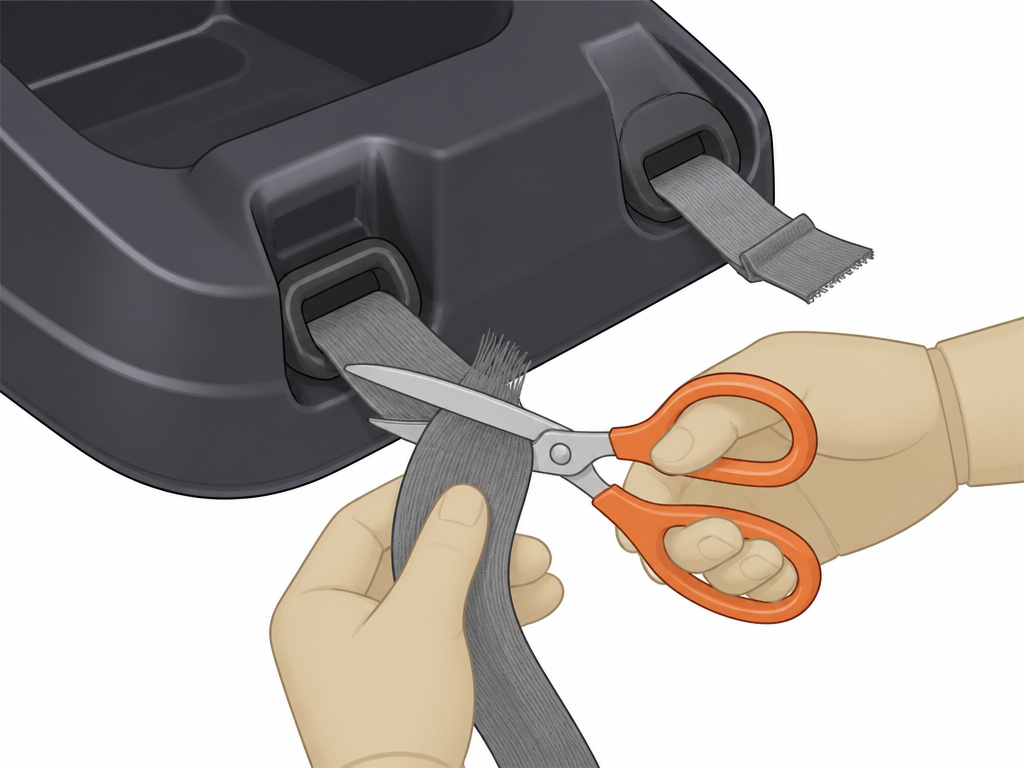
An expired base is a safety hazard, not a hand-me-down. Its performance in a crash is uncertified. You have an ethical and safety obligation to ensure it is never used again.
- Render It Unusable. Before disposal, cut the harness straps (if it’s a carrier) and the LATCH/UAS straps on the base with scissors. This prevents anyone from retrieving it and thinking it’s safe.
- Do Not Donate or Sell. Thrift stores, online marketplaces, and even well-meaning friends are not appropriate outlets. Passing on an expired seat transfers liability and risk.
- Recycle Responsibly. Many communities have specific programs. Retailers like Target often hold annual car seat trade-in events where you can drop off an old seat for recycling and receive a coupon. This is the best path for responsible disposal of infant car seat bases.
The process for an expired base is the same as for one that must be replaced after an accident. The outcome is identical: it leaves your possession in a destroyed state.
How Base Design and Compatibility Affect Longevity
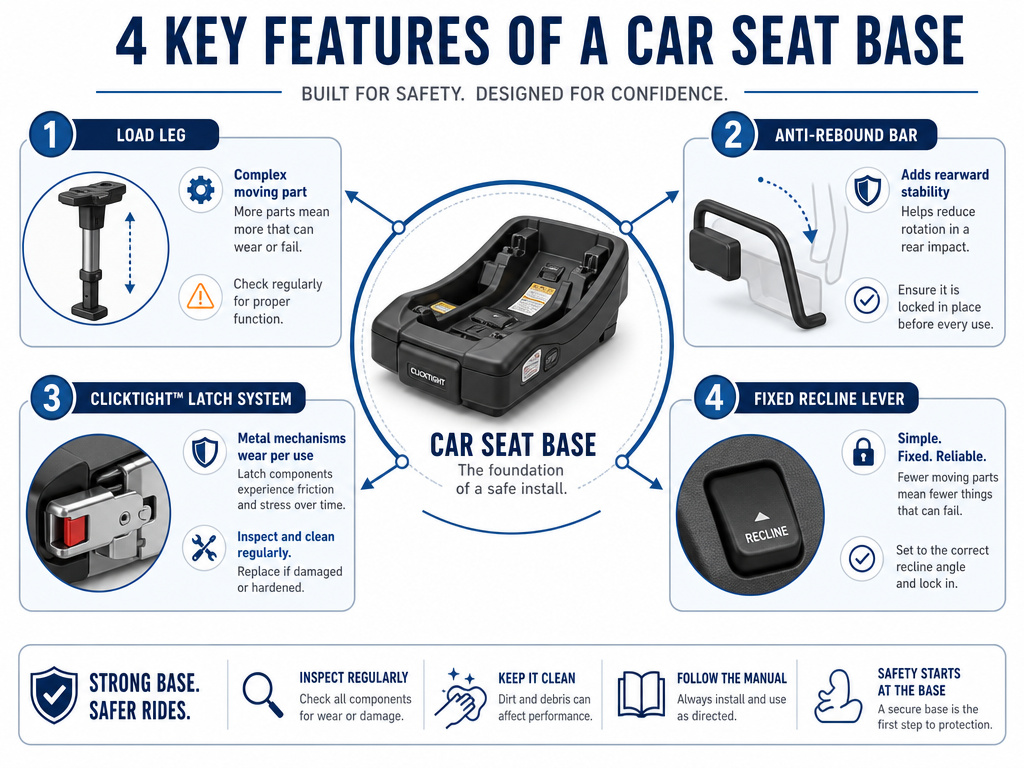
Not all bases are built the same, which is partly why expiration dates differ. A base with a heavy-duty steel reinforcement bar or a specialized energy-absorbing foam may have a different certified lifespan than a simpler model.
| Base Feature | Potential Impact on Longevity & Safety |
|---|---|
| Load Leg | Adds stability and reduces forward rotation in a crash. A complex moving part that must maintain integrity. |
| Anti-Rebound Bar | Prevents the seat from snapping back toward the vehicle seat. Critical for rear-facing safety; its attachment points are high-stress. |
| ClickTight or Similar Belt-Path System | Involves metal mechanisms and latches that undergo wear each use. Britax certifies these robust systems for 10 years. |
| Simple, Fixed Recline | Fewer moving parts, less to degrade over time. Often found on bases with shorter expiration timelines. |
These differences between car seat bases mean you cannot assume compatibility or equal lifespan. A base is only certified for use with its specific matching carrier model. Using a mismatched base voids all safety certifications instantly, it’s as dangerous as using an expired one. Always check the manual for the specific compatibility of car seat bases.
Frequently Asked Questions
Does the car seat carrier expire at the same time as the base?
Not necessarily. The carrier and base are manufactured separately and have their own date stamps. You must check the label on each. Often they are close, but they can differ by months. Both must be within their valid dates to be used.
Can I use a base past its expiration date if it looks fine?
No. The degradation that matters, microfractures in plastic, weakening of harness webbing, is invisible. The expiration date is the last day the manufacturer certifies it will perform as tested. Using it beyond that date is an unverified risk.
I lost my manual. How do I find my base’s expiration timeline?
First, find the brand and model number on the base’s label. Then, visit the manufacturer’s website. Most, like Britax, Chicco, and Graco, have support pages where you can download the exact manual for your model using that number.
Do second-hand or borrowed bases have an expiration date?
Yes, and it’s already ticking. The number one rule for a second-hand base is that you must know its full history: manufacture date and that it has never been in a crash. If you cannot verify both with certainty, do not use it. The risks outweigh any savings.
Before You Go
Your car seat base has one job: to be the strongest, most reliable link between your child’s carrier and the vehicle in a crash. Its expiration date is the guarantee that it can still do that job.
Check your base’s label today. Note the manufacture date, reference the brand’s lifespan (6, 7, 8, or 10 years), and mark a calendar alert for its retirement. If it’s been in any crash, evaluate it against the NHTSA criteria and replace it if there’s any doubt. When its time is up, destroy the straps and recycle it. This is about eliminating a variable you can control. The date on that label is the one thing in a crash scenario you can know for sure.Make it count.
