
Airport Car Seat & Stroller Check-In: A Complete How-To Guide
This post contains affiliate links. As an Amazon Associate, we earn from qualifying purchases.
To check in a car seat and stroller at the airport, you have two free options: gate-check or ticket-counter check. Federal rules treat them as assistive devices, so they don’t count as luggage. Gate-checking is the default because it minimizes handling time and lets you use the items through the terminal. The process requires matching your gear to airline size limits, attaching a gate-check tag from the jet bridge, and leaving it plane-side for loading into the cargo hold.
That “assistive device” classification is the legal lever. It comes from the US Department of Transportation and is printed in the Code of Federal Regulations. The label changes everything from baggage fees to damage liability timelines.
What follows: the three specs that decide gate-check versus counter-check, the federal rule that makes airlines liable for damage by default, and the one inspection you must do plane-side before you walk away.
Key Takeaways
- Car seats and strollers fly free as assistive devices, not luggage, under DOT regulations.
- Gate-check whenever possible, it cuts the baggage-handling chain in half and reduces the risk of loss.
- The DOT’s December 2024 rule creates a rebuttable presumption that airlines are liable for damage to wheelchairs and similar devices in their care.
- Inspect your car seat’s internal foam for cracks after any checked trip; invisible structural damage is the real safety risk.
- If you have both a stroller and a car seat, most airlines will only gate-check one. You must check the other at the ticket counter.
The Legal Backbone: Assistive Devices, Not Luggage
Your stroller isn’t a suitcase. The US Department of Transportation defines it, along with wheelchairs and car seats, as an assistive device. This classification is in the official DOT stowage rules. It means airlines cannot count them toward your baggage limit or charge you a checked-bag fee. They also get priority for storage space in the aircraft cabin or cargo hold over regular luggage.
14 CFR Part 382 Subpart I governs the stowage of wheelchairs and other assistive devices. It mandates that airlines return these items “promptly and as close as possible to the door of the aircraft” and establishes specific liability for damage.
This rule exists for wheelchairs, but the principle extends to family travel gear. The logic is the same: these are necessary mobility aids, not optional bags. Knowing this lets you push back politely if an agent tries to charge you. The airline’s contract of carriage will have a section on assistive devices, you can point to it.
The practical effect is you have a right to bring these items. You are not asking for a favor.
Gate-Check vs. Ticket Counter Check: The Handling Chain
Your choice here decides how many times your gear changes hands between you and the airplane’s belly. That handling chain is where damage happens.
| Method | Best For | Risk If You Choose Wrong |
|---|---|---|
| Gate-Check | Strollers, car seats you use through the airport. | Not available if the item is over 20 lbs or you have two large items. |
| Ticket Counter Check | Large, heavy travel systems, or when you have both a stroller and car seat. | The item enters the main baggage system immediately, doubling its journey and exposure. |
Gate-checking is the shorter chain. You keep the item until you board. An agent at the jet bridge tags it, and ground crew load it directly into the cargo hold. It’s the last bag on, often the first bag off. For checking a stroller and car seat, this is the goal.
Ticket-counter checking is the long chain. You surrender the item at check-in. It goes on the main baggage conveyor, through the sorting facility, onto a cart, and finally into the plane. Each transfer is a drop, a scrape, a collision with another bag.
Common mistake: Checking a compact umbrella stroller at the counter. It weighs under 20 lbs and folds small. Gate-check it. Sending it through the main system is how the canopy fabric gets torn by a conveyor belt edge.
Most airlines, like American, have a clear policy: one stroller and one car seat per child, but if you have both, only one can be gate-checked. The other must be checked at the ticket counter. Plan for this. The stroller is usually the gate-check pick because you need it for the child.
The 3-Step Gate-Check Process (and the One Step Nobody Skips)
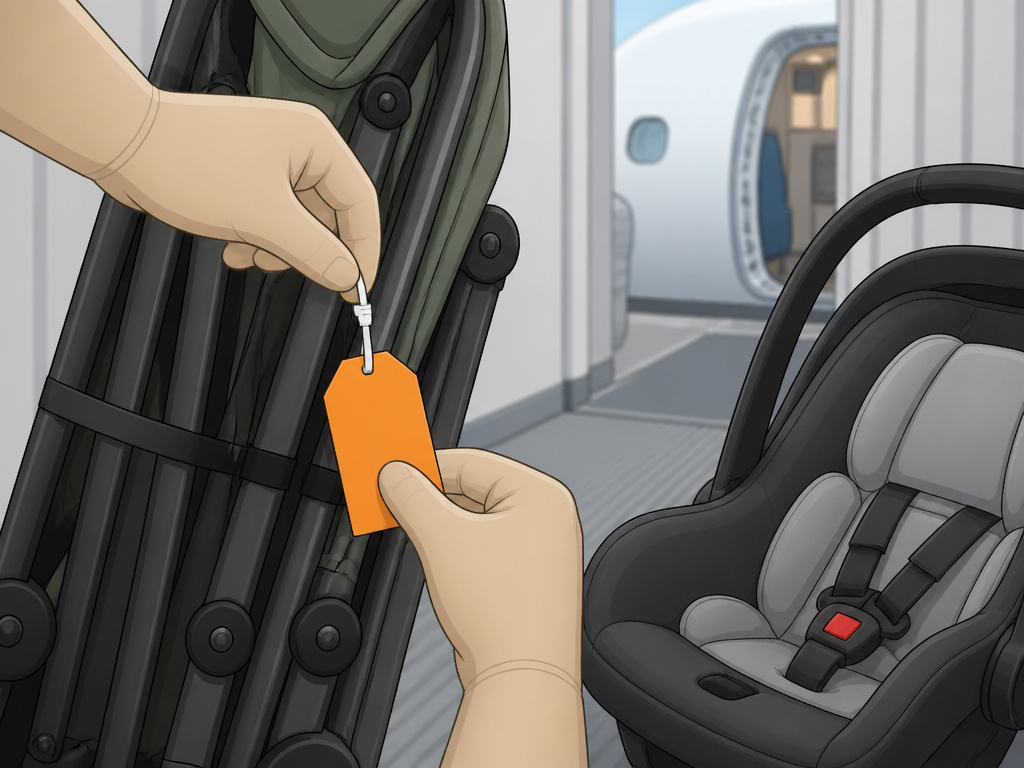 The actual handoff takes sixty seconds. The preparation takes ten minutes. Skip the prep and you’ll be the parent holding up the boarding line while digging for a pen.
Step 1: Before You Get to the Gate
Fold the stroller. Remove any loose items: cup holders, toy bars, the rain cover. Strap them into the storage basket or put them in your carry-on. For the car seat, buckle the harness straps together and tighten them so they don’t dangle. This prevents them from getting caught in cargo doors or conveyor mechanisms. If you have a travel bag, put the seat in it now. A simple “bumpy bag” is fine, its job is to keep off dirt, not stop a forklift.
Step 2: At the Jet Bridge
Wait until the gate agent calls for passengers needing extra time or those with young children. When you approach, have your folded stroller and car seat ready. The agent will attach a bright, durable gate-check tag to each item. They will likely keep the paper portion of your boarding pass. Watch them attach the tag. Ensure it’s secure and the information is correct. This tag is the only thing routing your gear to your destination and not to Tulsa.
Step 3: Plane-Side Leave
You walk down the jet bridge. Just before you step onto the plane, you’ll see a designated area, often a wall or a cart, labeled for gate-checked items. Leave your tagged stroller and car seat there. Do not take them onto the plane. A ground crew member will collect them for loading.
Where this goes sideways: Not doing the plane-side visual check. Before you leave your gear, turn it over. Look for the gate-check tag. If it’s missing, go back. An untagged stroller left plane-side becomes airport lost-and-found property, not a through-checked item. It stays in that city.
The return happens at your destination, either right outside the aircraft door or at the top of the jet bridge. It’s not always consistent. If you don’t see it, ask a flight attendant or the gate agent at arrival before you leave the secure area.
What a Travel Bag Actually Does (And Doesn’t Do)
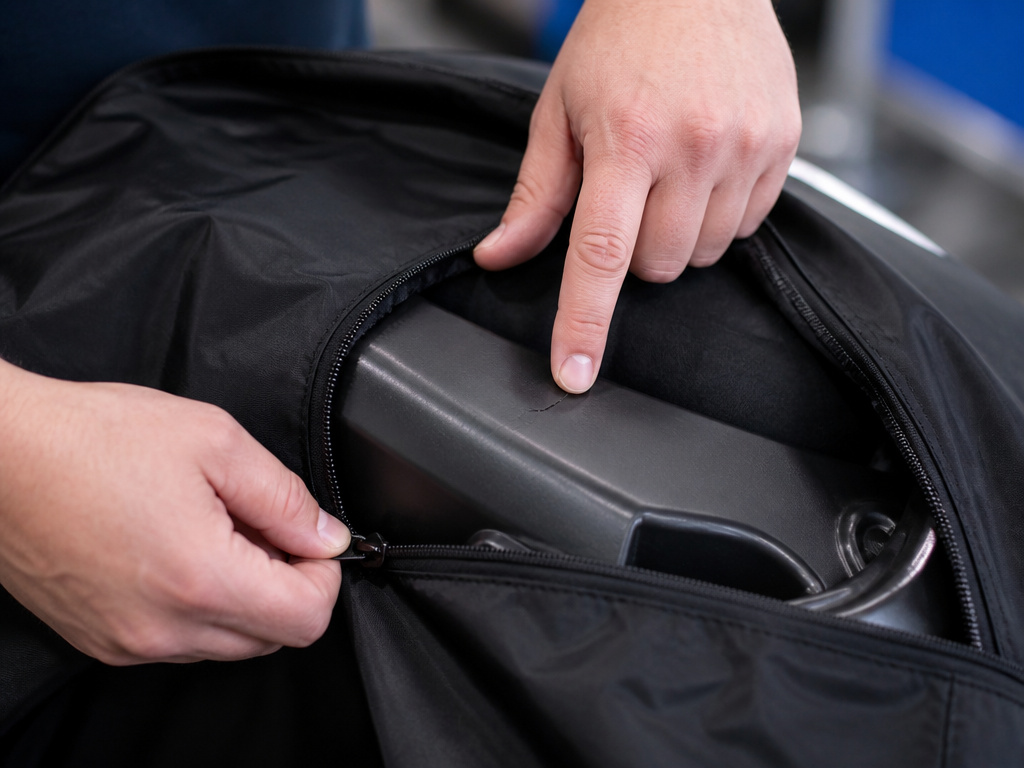 A travel bag is a dust cover, not a suit of armor. This distinction matters more for car seats than strollers.
Emily A. Thomas, PhD, Consumer Reports’ auto safety manager, is clear: bags protect from dirt and weather. They do not guarantee against structural damage from a four-foot drop onto a concrete ramp. The seat’s plastic shell can crack internally. The energy-absorbing foam under the fabric can fracture. You won’t see that crack from the outside.
A quality bag may be able to withstand dirt, dust, and water, but parents should not put their faith in a bag protecting their baby gear against structural damage.
So why use one? Hygiene and organization. A wet, grimy car seat is a problem you have to solve at your destination. A bag also often has wheels and straps, making the slog of carrying a car seat through the airport less brutal. For a stroller, a bag keeps grease and de-icing fluid off the handle and fabric.
The verdict: a cheap, nylon “bumpy bag” is a worthwhile investment. A $100 padded travel case is overkill unless you are checking a carbon-frame running stroller as fragile luggage.
Airline Liability and Your Inspection Rights
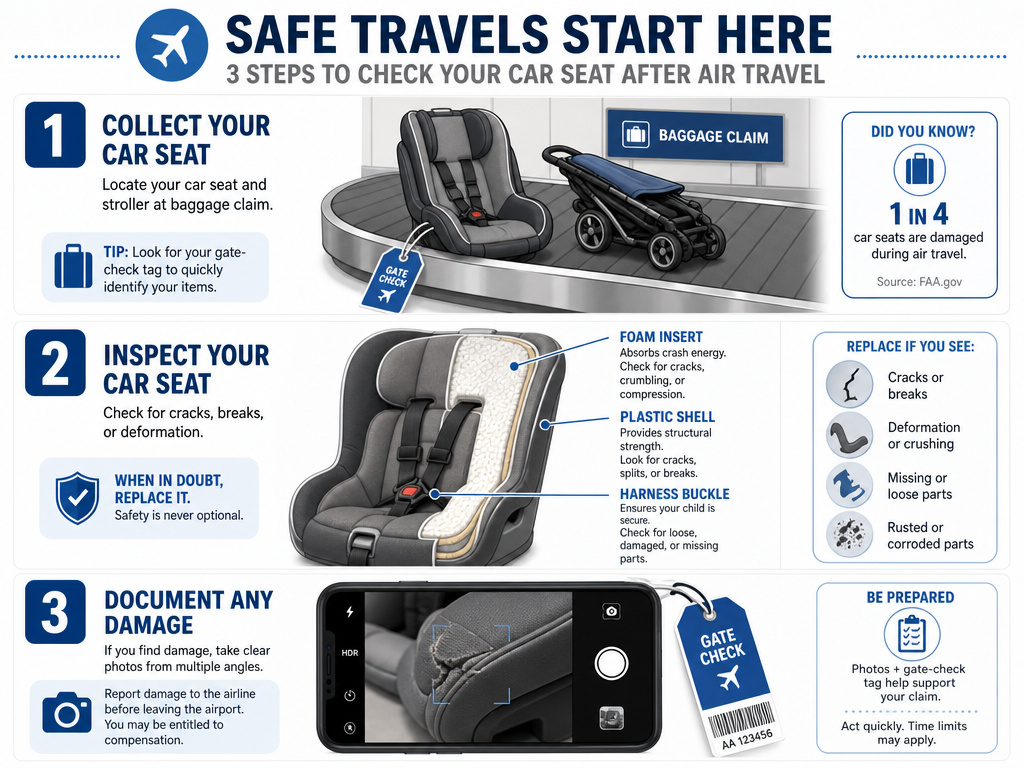 If something gets broken, the law is on your side, but you have to act. A December 2024 DOT final rule created a “rebuttable presumption” that airlines are liable for damage to wheelchairs, scooters, and other assistive devices while in their care.
This means the airline is assumed to be at fault. They can only overcome this if they prove the damage was pre-existing, caused by your negligence (like improper labeling), or that the claim is fraudulent. They can no longer blame “an act of God.”
Your inspection ritual:
- At retrieval: Look at the item before you leave the airport baggage claim or gate area. Check for obvious tears, dents, or broken parts.
- The deep check for car seats: At your destination, remove the cover and inspect the foam inserts and plastic shell. Run your fingers along the plastic looking for hairline cracks. Check that the harness adjuster and buckle mechanism work smoothly.
- Document everything: Take clear, well-lit photos of any damage. Include the gate-check tag in the shot if it’s still attached.
If you find damage, go immediately to the airline’s baggage service office. File a report. Under the federal wheelchair stowage regulations, they must provide a loaner if needed and give you the choice of your preferred vendor for repairs. For a car seat, the repair is often a replacement. Most manufacturers and safety experts recommend replacing a car seat that has been in any accident, including a hard drop during baggage handling.
Special Scenarios & Edge Cases
The standard process breaks in a few common situations. Plan for these.
The Oversized Stroller.
Jogging strollers or double strollers often exceed the 20-pound weight limit many airlines set for gate-check items. You must check these at the ticket counter. Use a sturdy travel bag. Consider purchasing a separate “damage protection” sticker from the airline if offered, it signals to handlers to go easy.
The Car Seat You Use Onboard.
If your child has their own seat, you can and should use an FAA-approved car seat on the plane. This is the safest option and avoids checking entirely. The seat must have a label stating “This child restraint is certified for use in motor vehicles and aircraft.” You’ll install it in the aircraft seat using the lap belt. This is a core strategy for traveling with a car seat and stroller.
The Connecting Flight.
When you have a layover, your gate-checked items should be transferred automatically. However, on tight connections, they might not make it. Always confirm with the gate agent at your connecting airport that your items were loaded. If they weren’t, the airline is obligated to deliver them to your final destination within 24 hours for domestic flights.
Rented Car Seats.
If you’re renting a car seat upon arrival, you skip the check-in hassle but inherit a different risk. Inspect a rental seat as if you just pulled it from a baggage cart. Check for expiration dates, missing parts (like the chest clip or LATCH connectors), and any cracks. Your familiarity with your own seat’s safety is gone.
Frequently Asked Questions
Do I need a special bag to check a car seat?
No airline requires one. A bag is for cleanliness and easier transport, not a safety requirement. Any durable nylon bag that fits will work.
Can I check my car seat and stroller for free?
Yes. Federal regulations classify them as assistive devices, not standard luggage, so airlines cannot charge you a baggage fee for them. This applies to both gate-checking and checking at the ticket counter.
What if my gate-checked stroller doesn’t come out at the arrival gate?
Do not leave the secure gate area. Tell the arrival gate agent or a flight attendant immediately. They can radio the ground crew to locate it. If it’s truly lost, file a mishandled baggage report before you leave the airport.
Is it safer to check the car seat or use it on the plane?
Using an FAA-approved car seat on the plane is the safest option for your child. It provides the same crash protection in turbulence or a rare ground incident as it does in a car. Checking the seat always carries a risk of invisible damage.
How early should I arrive if I’m checking a large stroller?
The standard advice is to arrive at least two hours early for domestic flights. If you have a large, powered mobility device (like some specialized adaptive strollers), the DOT allows airlines to ask you to check in one hour before the general public’s check-in time. For a typical large jogging stroller, the two-hour rule suffices.
Before You Go
Your car seat and stroller are tools, not luggage. The law treats them that way. Use gate-checking to shorten their journey. Use a simple bag to keep them clean. And inspect them, especially the car seat, with the seriousness their job demands. The system is built to accommodate them, but you are the final inspector. Your practical travel strategies hinge on that last look before you strap it into the rental car.
