
The Best Ways to Carry a Car Seat for Travel and Daily Use
This post contains affiliate links. As an Amazon Associate, we earn from qualifying purchases.
To carry a car seat, you need the right tool for the job and the right technique for your back. A dedicated car seat travel cart is the most secure and ergonomic option for convertible seats. For infant carriers, use the built-in carry handle or a purpose-made backpack strap system. Never drag a seat by its LATCH straps or top tether, as this stresses the plastic shell and can void its crash-worthiness.
The physical act matters more than you think. A 25-pound convertible seat isn’t just weight; it’s an awkward, top-heavy shape with sharp plastic corners. The wrong grip strains your wrist, and a single drop onto a hard airport floor can compromise the internal energy-absorbing foam. This isn’t about convenience. It’s about protecting a several-hundred-dollar safety device from damage you cannot see.
What follows is a breakdown of the four proven carrying methods, the specific gear that makes each one work, and the airline policy fine print that decides whether you wrestle it to the gate or roll it smoothly to your seat.
Key Takeaways
- A car seat travel cart is the single best investment for transporting a convertible seat through an airport; it turns a 25-pound burden into a rolling suitcase.
- Never use a car seat’s LATCH straps or tether as a carry handle; the force can deform the anchor points and void the manufacturer’s safety certification.
- For infant carriers, a backpack strap conversion kit distributes weight across your shoulders, but you must verify it doesn’t interfere with the seat’s belt path.
- Always check your specific seat’s manual for carrying instructions; the Chicco Fit360 manual explicitly warns against carrying the seat with a child in it, a common mistake.
- When gate-checking, a hard-sided travel bag is non-negotiable to protect against baggage handler scratches, moisture, and dirt that can hide structural cracks.
The Right Gear for the Job
Your car seat is a precision safety device, not luggage. The wrong carrying method stresses the plastic shell at its weakest points, the belt path grooves and the LATCH anchor bars. A dedicated car seat travel cart, like the Britax B-Lively Travel Cart, is engineered to cradle the seat’s base and back without putting pressure on those critical zones. It turns the whole unit into a roll-aboard.
A car seat travel cart supports the seat’s weight at its structural base, preventing torsion stress on the belt path and LATCH anchor points that can occur when carried by hand. This is the method certified technicians use to transport seats between inspection stations.
The alternative is a carry strap or backpack system. These work well for lighter infant seats. The J.L. Childress Ultimate Car Seat Travel Bag includes backpack straps that clip onto the seat’s carry handle. The key is attachment. The straps must secure to the manufacturer-designed handle, not around the seat’s body. Wrapping a strap around the shell can compress the energy-absorbing foam inside, and that compression might not rebound.
Where this goes sideways: Using a bungee cord or ratchet strap to lash a seat to a standard luggage cart. The uneven pressure points can crack the plastic around the lower anchor connectors. You won’t see the crack until you install it next time. If you must use a cart, one with a full-platform base is mandatory.
| Carrying Tool | Best For | Risk If Misused |
|---|---|---|
| Dedicated Travel Cart | Convertible & All-in-One seats | Minimal risk if platform-supported |
| Backpack Strap Kit | Infant Carriers | Straps can compress side-impact foam if routed incorrectly |
| Built-in Handle | Infant Carriers Only | Handle plastic fatigues after ~300 carry cycles (per anecdotal wear reports) |
| Your Bare Hands | Short distances, last resort | Dropping from waist height can void crash certification |
Hand-Carry Methods Compared
You will have to pick the seat up eventually. There are two safe hand-carry grips, and both start with emptying the seat of toys, blankets, and crumbs. A heavy seat is one thing; a off-balance seat is a wrist injury waiting to happen.
First, the two-handed base carry. Slide one hand under the seat’s bottom, palm up, near the back. Place your other hand on the seat back, fingers gripping the top. Lift with your legs, keeping the seat upright. This grip keeps the seat’s center of gravity close to your body and protects the belt path from getting banged against your hip.
Second, the forearm carry for infant seats. Hook the seat’s carry handle over your forearm, letting the seat’s weight rest on your arm. Use your other hand to stabilize the side. This frees a hand for doors or a toddler. It only works for seats under 15 pounds, think Chicco KeyFit 30, not a loaded Doona.
Common mistake: Carrying an infant seat by the handle with the baby still in it. The Chicco Fit360 manual states “NEVER remove or carry seat with child in it.” The handle is not rated for the dynamic load of a moving child; it’s for the static weight of the empty seat.
The wrong way is any grip that uses the LATCH straps or tether strap as a handle. Those webbing straps are sewn to metal anchors that are molded into the plastic shell. Yanking on them applies a sheer force the anchors aren’t designed to handle. Over time, this can loosen the anchor’s bond to the shell. You’re essentially stressing the part that’s supposed to hold your child in a crash.
Why the Tether is Off-Limits
The top tether strap has a specific job: to limit forward head rotation in a frontal crash. Its anchor point on the seat back is a critical load-bearing piece. Using it as a drag handle applies force in the wrong direction, potentially weakening the internal reinforcement. The official NHTSA car seat safety guidelines emphasize using the tether correctly for installation, but the inverse, using it for transport, is a quiet way to compromise it.
Air Travel: Gate-Check vs. Cabin
This is the decision point. Checking the seat with your luggage is the easiest for you but the hardest on the seat. The cabin is safest for the seat but requires you to manage it in-flight. Most major U.S. Airlines allow you to check a car seat for free, and they also allow you to use an FAA-approved seat on board for a child with a ticket.
Gate-checking means you use the seat up to the aircraft door, then hand it to a baggage agent who places it in the cargo hold. You need a protective bag. A padded, hard-sided bag is not overkill. It guards against scrapes, rain, and dirt. Why does dirt matter? It can grind into the harness adjuster mechanism, making it sticky and hard to tighten properly later. A simple nylon sack offers zero impact protection.
Using it on the plane is the gold standard for seat integrity. You know exactly how it’s handled. The process is straightforward: book a seat for your child, bring an FAA-approved seat (it will have a sticker on it saying so), and install it rear-facing using the airplane’s lap belt. The belt threads through the seat’s forward-facing belt path, yes, even for rear-facing installation on a plane. It locks differently than in a car, but it works.
I watched a family gate-check their nice convertible seat in a flimsy bag. When it came out at baggage claim, the recline adjuster lever was snapped clean off. The baggage system didn’t do it; it was likely crushed under another bag in the cart. A hard case would have absorbed that blow.
The carry-on item policies are clear. A car seat does not count as your personal item or carry-on bag on virtually every airline. You can bring it on top of your normal luggage allowance. This is codified in the airline carry-on policies for car seats. Always verify with your specific carrier 24 hours before departure, but the federal rule is on your side.
Car Seat Longevity & Transport Damage
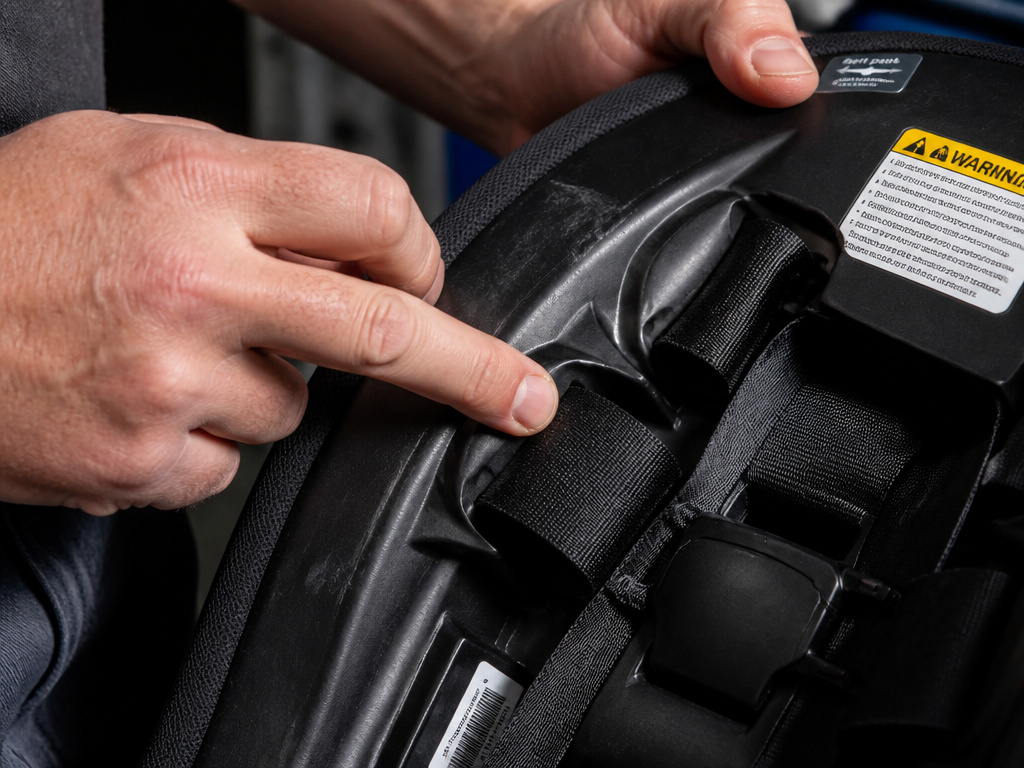 A car seat has an expiration date, usually 6 to 10 years from manufacture. Sun, heat, and physical impacts degrade the plastics and foam. The way you carry and store it directly affects this timeline. Dragging a seat across a rough garage floor scuffs the plastic, but more importantly, it can create micro-fractures. These are stress concentrators.
Think of it like bending a paperclip back and forth. One big bend might not break it, but repeated small stresses at the same spot will. The same principle applies to the seat’s shell where the harness straps pass through. A sharp impact from a drop can create a hairline crack that grows with each temperature cycle.
The storage test: After a trip, don’t just chuck the seat in the basement. Do a quick inspection. Run your fingers along the belt path. Feel for new rough spots or cracks. Check the harness adjuster for smooth operation. Buckle and unbuckle the chest clip a few times. If anything feels gritty, stiff, or loose, you may have transport damage. The official booster seat standards assume the seat has been treated as a safety device, not cargo.
This is where the peer-reviewed study on child car seats provides context. It notes that improper use and handling are rampant, and that damage is often invisible. Your vigilance is the final quality control.
From Car to Destination: The Final Leg
 You’ve arrived. Now you need to get the seat from the baggage claim to the rental car or ride-share. This is where your gear choice pays off. A travel cart shines. A seat in a backpack is manageable. Carrying a 30-pound convertible by hand for a 10-minute walk through a parking garage is miserable.
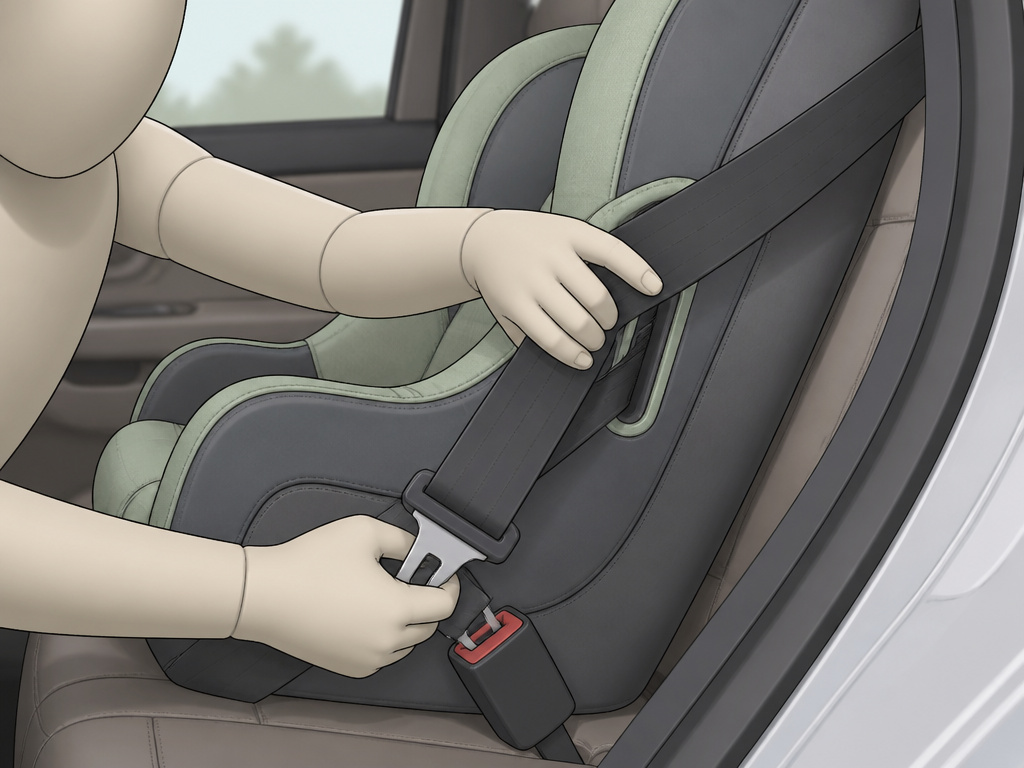
For rental cars, practice installing with a seat belt only. Many rental cars have lower anchors, but they are often buried deep in the seat crack and can be a hassle to find. The seat belt is universal. Know how to lock your seat belt (pull it all the way out and let it retract) and how to achieve a less-than-one-inch shake at the belt path. This skill is more valuable than any gadget.
If you’re using a ride-share like Uber or Lyft, your strategy changes. You need speed. An infant seat that clicks into a base is fastest. For a convertible, pre-thread the seat belt through the correct path before the car arrives. When it pulls up, you’re just buckling it in. This 90-second drill beats fumbling while a driver watches the meter.
Your strategies for carrying a car seat through the airport must include this last segment. The best airport cart is useless if you abandon it at the curb because you can’t fit it in the car. Collapsible carts exist. Measure your trunk.
Frequently Asked Questions
Can you carry a car seat by its handle?
You can carry an infant car seat by its manufacturer-designed carry handle. This is its intended purpose. You cannot and should not carry a convertible or all-in-one car seat by any handle, as they are not designed for it. Lifting a convertible by the top of the seat back or headrest stresses the plastic shell at its thinnest points.
What is the easiest way to carry a heavy car seat?
The easiest way to carry a heavy convertible car seat is with a dedicated travel cart. It eliminates lifting and carrying over distance. The second easiest method is a two-person carry, with one person holding the base and the other the back, for short distances like from a house to a car.
How do you carry a car seat and a toddler?
You carry the car seat with a travel cart or backpack system, freeing both your hands. You then hold your toddler’s hand or use a wrist leash. Alternatively, wear your toddler in a child carrier backpack if they are small enough. The goal is to have one dedicated tool for the seat so your hands are free for the child.
Do you need a bag to gate-check a car seat?
You do not need a bag to gate-check a car seat, but it is strongly recommended. Airlines will accept a bare seat. A padded, hard-sided travel bag protects the seat from scrapes, dirt, and moisture during handling. A bag also makes it easier for baggage handlers to grip and may prevent the seat from being placed directly under other luggage.
Can a car seat be carried on like a backpack?
Yes, but only if you use a manufacturer-approved backpack strap kit designed for your specific car seat model. These kits attach securely to the seat’s existing carry points. Do not rig your own straps with carabiners or rope, as uneven pressure can damage the seat’s structure and void its warranty.
The Bottom Line
Carrying a car seat is a physics problem with safety stakes. Solve it with the right tool: a travel cart for convertibles, a backpack kit for infant seats. Your back will thank you, and the seat’s structural integrity will remain intact for the crash it’s designed to survive. Check the manual, protect it in transit, and never use its safety straps as luggage handles. That’s the line between a portable seat and a compromised one.
