
How to Dispose of an Infant Car Seat | Your Safety Guide
This post contains affiliate links. As an Amazon Associate, we earn from qualifying purchases.
To dispose of an infant car seat, you must first determine if it is safe for another child. If it’s expired, crashed, or has an unknown history, you must destroy it to prevent reuse, then recycle the components. This involves cutting harness straps, marking the shell, and disassembling it according to the manufacturer’s manual before checking local recycling rules for plastics, metal, and foam.
The 10 km/h line is where manufacturer liability ends. Britax Römer’s manual states that threshold voids the seat’s safety certification, even with no visible damage. That number isn’t a suggestion, it’s the engineering limit printed in the warranty booklet.
What follows: the exact disassembly steps from an Evenflo manual, the ongoing fight between federal crash rules and hospital safety teams, and how to find a recycling program that actually takes expanded polystyrene foam.
Key Takeaways
- The 10 km/h rule is absolute. If your infant carrier was in any collision over 6 mph, the manufacturer considers it unsafe. The plastic shell can have internal stress fractures you cannot see.
- Cut every strap and write “DO NOT USE” on the shell. This isn’t just for your trash can. It stops the seat from being pulled from a dumpster and resold.
- Recycling is not guaranteed. Your local center may take #5 polypropylene plastic but reject the foam padding. Call them with the material list from the seat’s manual before you drive over.
- NHTSA and hospitals disagree on post-crash use. The federal agency has a checklist for minor crashes; pediatric safety programs at places like Children’s Hospital Los Angeles say replace it after any moderate impact.
- The model number and manufacture date are your first stop. You need both to verify expiration and find the correct recycling an infant car seat instructions for your specific seat.
The 10 km/h Crash Rule That Voids Your Warranty
Look for the label on the side of the shell. Every car seat has a manufacture date. The countdown to its car seat expiration starts there. Most seats expire six years out, but newer models push to eight or ten. The plastic degrades from temperature swings inside your car, expanding in summer heat, contracting in winter cold. After thousands of cycles, it loses its ability to absorb crash forces predictably.
The Britax Römer BABY-SAFE i-SIZE manual states the infant carrier should be replaced after any accident with a collision speed exceeding 10 km/h (about 6 mph), as damage may not be visible. This is a manufacturer warranty and safety certification limit.
That 10 km/h threshold is a sourced number, not a guess. It comes straight from the OEM’s safety certification. A fender-bender in a parking lot can exceed it. The seat might look fine. The internal plastic matrix is not.
Where this goes sideways: Assuming a minor crash is fine. The NHTSA has a checklist for reusing a seat after a minor crash, no airbag deployment, no visible damage to the seat, the vehicle could be driven away. But the injury prevention team at Children’s Hospital Los Angeles advises replacement after any moderate crash. Their pediatric hospital safety advice is stricter because they see the outcomes. When in doubt, the hospital’s rule wins.
| Scenario | NHTSA Stance | Hospital Safety Recommendation | Manufacturer Rule (e.g., Britax) |
|---|---|---|---|
| Minor Crash (meets all NHTSA criteria) | Seat can be reused. | Use caution; consider replacement. | Check manual; often requires replacement. |
| Moderate Crash (airbags deploy, vehicle towed) | Replace the seat. | Replace the seat. | Replace the seat. |
| Unknown History (bought used, gifted) | Do not use. | Do not use. | Do not use. |
Step-by-Step: Taking a Seat Apart for the Bin
You have a seat that’s expired or crashed. Now you must make it unusable. The goal is to prevent anyone from seeing a intact shell in the trash and thinking it’s safe. This is a non-negotiable step before recycling.
First, grab a permanent marker and scissors or a box cutter. Write “DO NOT USE – UNSAFE” in large letters on the plastic shell in at least two places. Then, cut the harness straps. Cut them close to the buckle so they cannot be rethreaded. Cut the LATCH strap and the tether strap too. Remove the fabric cover and the foam padding. These are often not recyclable.
The part nobody mentions: The sensor clip on models like the Evenflo LITEMAX NXT. It’s that plastic piece on the chest clip that alerts you if the baby is left in the car. You need to remove and discard that separately, it contains a battery and electronics that shouldn’t go into plastic recycling.
Now, disassemble. The Evenflo REVOLVE 180° LITEMAX NXT manual gives explicit instructions: remove all fabric and padding, then unscrew and separate the plastic shell from the metal frame. You’ll need a Phillips screwdriver. Keep the screws and metal pieces together; most recycling centers want metals separated.
Easy to miss: The foam padding inside the headrest and sides. Most curbside recycling and many municipal centers will not take this expanded polystyrene. You have to call and ask. If they refuse, that foam goes in the regular trash.
Here is the basic breakdown flow from the manual: 1. Remove fabric cover and harness straps (cut them). 2. Unscrew and detach the plastic shell from the base or frame. 3. Separate components: plastic shell, metal frame/parts, foam padding, fabric. 4. Check local guidelines for recycling #5 plastic (shell) and metals. 5. Dispose of non-recyclable foam and fabric as directed.
Your Three Paths to Responsible Disposal
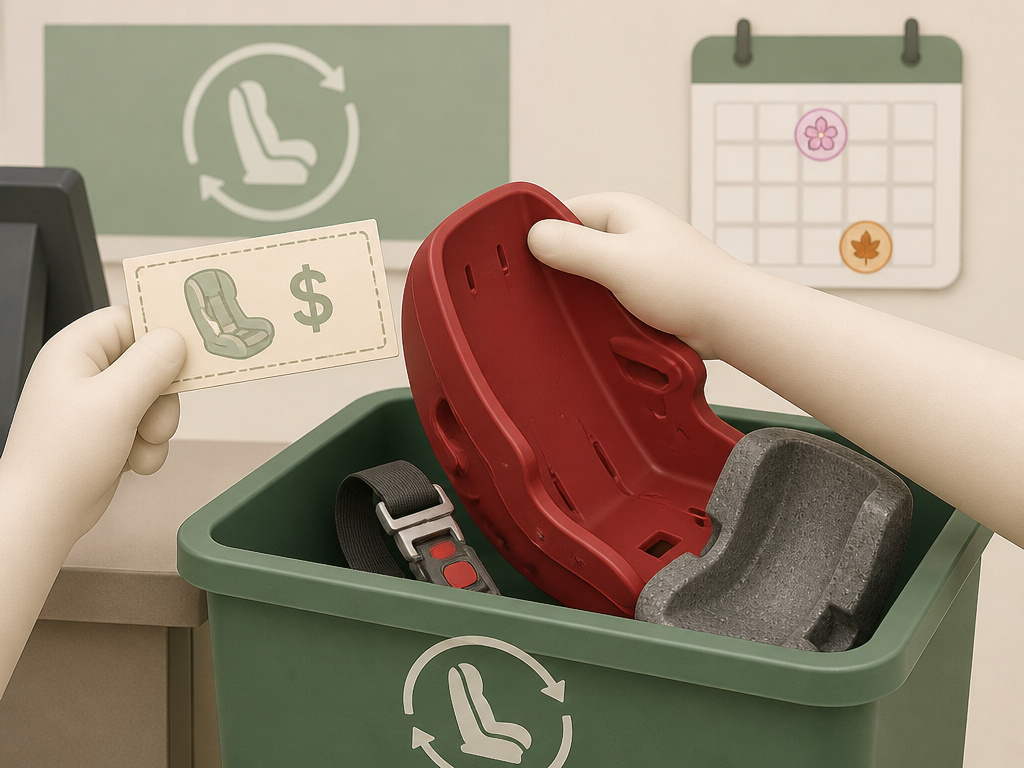
You have a bag of plastic parts, metal bits, and foam. Throwing it all in the trash is the last resort. These are your real options, ranked by impact.
Retailer Take-Back Events
This is the easiest path when it’s available. Stores like Target and Buy Buy Baby host annual car seat trade-in events. You bring your old seat, they give you a coupon for a new one (usually 20% off), and they handle the recycling through a partner. The events are typically in April and September. Call your local store to confirm dates, they are not always advertised well.
Municipal Recycling or Special Collection
Your city or county waste department may have a program. This is where you need to make that phone call. Ask three questions: * Do you accept #5 polypropylene plastic (the hard shell)? * Do you accept polyurethane foam (the padding)? * Do I need to separate the materials, or can I bring the disassembled seat as-is?
Some cities, like Los Angeles, have permanent drop-off locations. Others have specific “hard to recycle” collection days. The CHLA car seat recycling guide notes their hospital runs a monthly program, check if a children’s hospital near you does the same.
Mail-Back or Manufacturer Programs
This is the least common but worth a search. A few manufacturers have pilot take-back programs. You pay for shipping, and they direct the seat to a proper recycling facility. It’s more expensive and less convenient, but it guarantees the materials are processed correctly. Start by checking the “sustainability” or “customer service” section of the brand’s website.
| Disposal Method | Best For | Effort Required | Key Limitation |
|---|---|---|---|
| Retailer Trade-In Event | Convenience; getting a discount on a new seat. | Low (one trip during event window). | Only available during specific weeks; may not be local. |
| Municipal Recycling | Those with a confirmed local program. | Medium (disassembly + phone call + drop-off). | Foam padding often rejected; requires separation. |
| Manufacturer Mail-Back | Ensuring certified recycling; no local options. | High (disassembly, boxing, paying for shipping). | Costly; not offered by most brands. |
What Never Goes in Another Car (The Destroy-It List)
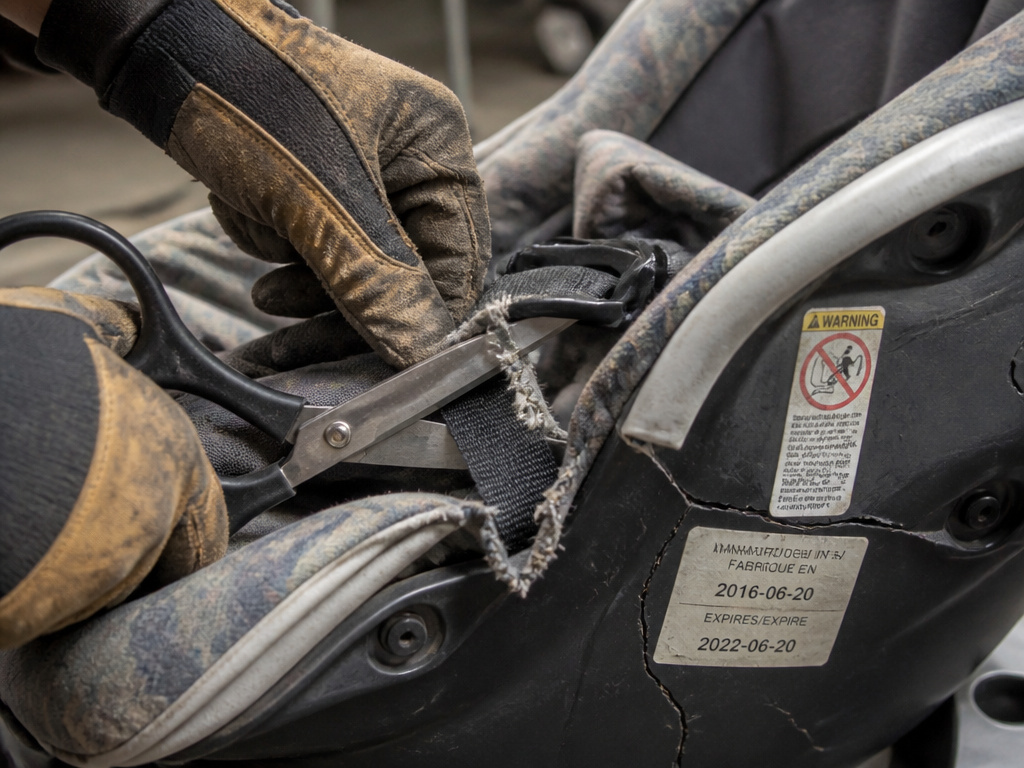
Some conditions mean the seat isn’t just expired, it’s hazardous. Recycling is secondary. Your first job is to ensure it never gets used again.
Expired Seats
The date is stamped on the label. Six years is the typical life. The plastic gets brittle. In a crash, it can shatter instead of bending. An expired seat is a liability, not an heirloom. Destroy it.
Seats With Unknown History
This is the car seat you got from a friend of a friend, bought at a garage sale, or inherited. If you cannot verify its full history, no crashes, proper storage, not checked on an airplane, you must assume the worst. The proper car seat disposal methods for these seats are the same as for a crashed one.
Visibly Damaged or Recalled Seats
Cracked plastic, frayed harness straps, a missing buckle cover. Any of these is an automatic fail. The same goes for recalled seats where the remedy period has passed or the fix is not possible. Check the model number against the NHTSA recall list.
Common mistake: Passing a seat down to a younger sibling after your first child has outgrown infant seat size. If the seat is near its expiration date or has been in daily use for years, it’s worn out. The harness webbing stretches microscopically, the buckle mechanism wears. It’s not about being cheap. It’s about the car seat after infant needing to be as reliable as the first.
The Bottom Line
Find the manufacture date and model number. If the seat is past six years, crashed, or mysterious, its job is done. Cut the straps, mark the shell, and take it apart. Call your local recycler to ask about plastic and foam, don’t guess.
The safest default is replacement. The hospital’s advice is stricter than the government’s for a reason. When you’re ready for a convertible car seat, treat the disposal of your old infant carrier with the same seriousness as installing the new one. It’s the last safety check you’ll perform for it.
Frequently Asked Questions
Can I just throw my old car seat in the trash?
You can, but you shouldn’t without preparing it first. An intact car seat in a dumpster can be retrieved and resold, putting another child at risk. Always cut all straps and write “DO NOT USE” on the shell before disposal to prevent reuse.
Will any recycling center take my car seat?
No. Many centers only accept certain types of plastic. The foam padding and fabric cover are frequently rejected. You must call your local recycling facility or municipal waste department to ask which components they accept. Some require the seat to be fully disassembled.
What is the most common mistake people make when disposing of a car seat?
The biggest error is failing to destroy the seat to prevent reuse. Simply tossing it out whole is a safety hazard. The second is not checking local recycling rules, leading to a rejected drop-off and frustration.
Are retailer trade-in events really recycling?
Yes, reputable retailers partner with specialized recycling companies that can process the mixed materials of a car seat. The seats are shredded, and plastics, metals, and foam are separated for recycling into new products like park benches or insulation.
How do I find the manufacture date on my infant car seat?
Look for a white label stamped onto the plastic shell of the seat, usually on the back or bottom. It will list the model number and a manufacture date in a format like “MM/DD/YYYY” or a code. The infant car seat expiration date is calculated from this date.
