
Is It Child Endangerment to Skip a Car Seat? Legal Facts
This post contains affiliate links. As an Amazon Associate, we earn from qualifying purchases.
Driving without a car seat is a traffic infraction punishable by a fine in every state, not a felony child endangerment charge for a first offense. The legal distinction hinges on intent and circumstance: a simple violation of the car seat statute is a ticket, while a prosecutor would need to prove willful or reckless disregard for the child’s safety to elevate it to criminal endangerment.
That legal line, ticket versus charge, is where most of the fear and confusion lives. Parents hear “endangerment” and picture handcuffs, but the actual paperwork is a civil citation.
The rest walks through the specific penalties, the “not negligence” clauses written into state laws, and what a prosecutor would actually need to prove for a criminal case. You’ll see the exact statutes, the fine print that protects you from civil liability, and where the real legal danger actually starts.
Key Takeaways
- Every state issues a traffic ticket, not a felony arrest, for a first-time car seat violation.
- Multiple states, including Washington and Florida, have laws stating that a car seat violation “shall not constitute negligence” in a civil lawsuit.
- A child endangerment charge requires proof of willful or reckless conduct beyond just forgetting a seat.
- Law enforcement’s primary tool is a visual inspection to check for proper fit and use per the manufacturer’s labels.
- The legal focus is on getting you into compliance, often with a dismissed ticket if you prove you acquired a proper seat within a week.
The Legal Answer: It’s a Traffic Infraction, Not a Felony
You get pulled over. Your toddler is in the back, but not in a seat. The officer writes a ticket.
That’s the standard outcome. In legal terms, violating your state’s child passenger restraint law is a traffic infraction or a misdemeanor, depending on the jurisdiction. It carries a fine, often around $25 to $50, and sometimes points on your license. It is not, by itself, a criminal charge of child endangerment.
The Washington State Legislature (RCW 46.61.687) explicitly classifies a violation as a “notice of traffic infraction” under state traffic law. The statute outlines a process for dismissal if you acquire a proper restraint within seven days and have no prior dismissals for the same offense.
The enforcement mechanism is built for correction, not punishment. An officer performs a visual inspection to see if the restraint is appropriate for the child’s height, weight, and age, and if it’s being used according to the vehicle and seat manufacturer’s instructions. Their goal is compliance.
Where could it become child endangerment? If the circumstances show a willful, knowing, or reckless disregard for the child’s safety. Think driving severely intoxicated with an unrestrained child, or repeatedly refusing to use a seat after multiple warnings and tickets while driving in dangerous conditions. In those scenarios, a prosecutor might layer a child endangerment charge on top of the traffic ticket. But the ticket is the baseline; the criminal charge is the exception that requires extra proof.
How States Frame the “Negligence” Question
Here’s the part that surprises most parents. Several states have written specific protections into their car seat laws. These clauses say that a violation of the car seat statute cannot be used as automatic evidence of negligence in a civil lawsuit.
Why does this matter? If you’re in an accident and your child was improperly restrained, the other driver’s insurance company might try to argue you were negligent and thus share fault. These laws block that move.
| State | Statute | Key “Not Negligence” Clause |
|---|---|---|
| Washington | RCW 46.61.687 | “Failure to comply with the requirements of this section shall not constitute negligence by a parent or legal guardian. Failure to use a child restraint system shall not be admissible as evidence of negligence in any civil action.” |
| Florida | F.S. 316.613 | Failure to comply “shall not be considered comparative negligence, nor shall such failure be admissible as evidence in the trial of any civil action with regard to negligence.” |
| North Carolina | § 20‑137.1 | “The violation shall not constitute negligence per se or contributory negligence per se. The violation shall not be evidence of negligence or contributory negligence.” |
Common mistake: Assuming a car seat ticket makes you legally liable in a crash. These state-level clauses exist specifically to prevent that. Your insurance claim is separate from your traffic fine.
The policy intent is clear. Legislatures want to encourage seat use without creating a perverse incentive to avoid taking a child in the car for fear of litigation. They remove the civil liability threat, leaving only the regulatory penalty.
This doesn’t mean there are no consequences. The Washington state car seat law still results in a fine and possible license points. But it walls off that violation from being a trump card in a lawsuit about who caused the crash.
The Specific Penalties You Actually Face
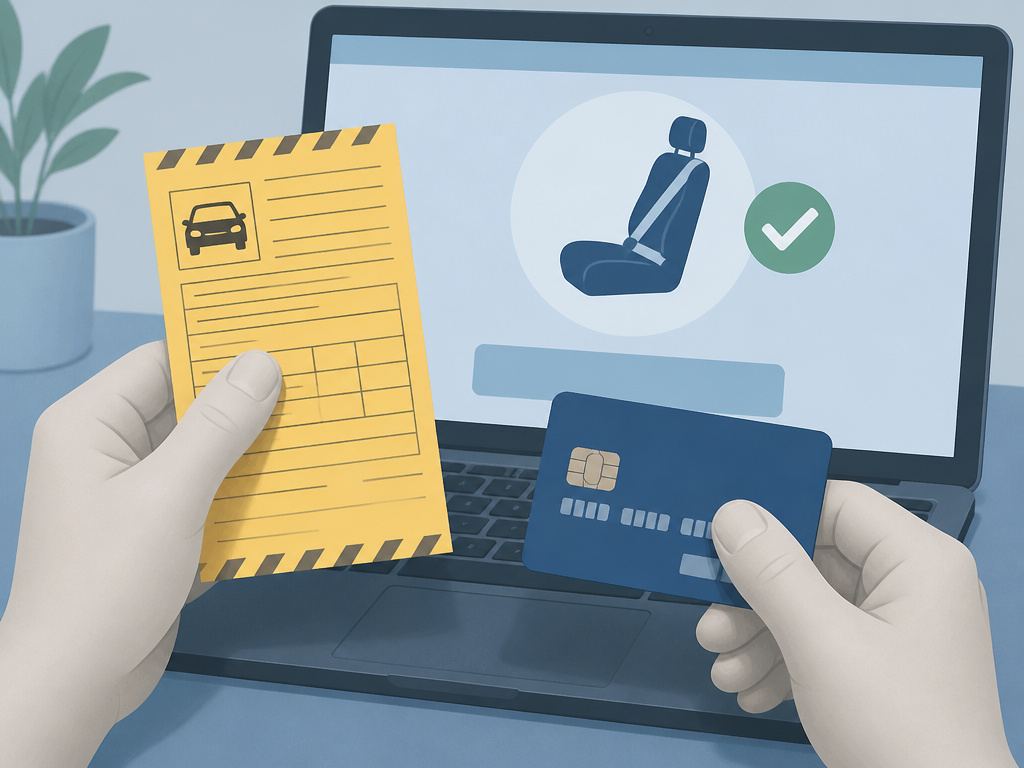 Forget dramatic arrest scenarios. The real consequences are bureaucratic and financial. Let’s break down what happens.
First, the fine. Amounts vary, but they are consistently in the range of a parking ticket. North Carolina’s law caps the penalty at $25.00. Washington’s infraction is typically a $136 base fine before court costs. It’s a financial sting, not a life-altering sum.
Second, the points. Some states, like North Carolina, assess two driver’s license points for a violation. Accumulate enough points and you face higher insurance premiums or license suspension, but a single car seat ticket won’t get you there.
Third, the dismissal path. This is the clearest sign the system wants compliance over punishment. Washington’s statute is a prime example: if you get a ticket, you can have it dismissed if you show proof you bought an approved seat within seven days and you haven’t used this dismissal before. The court’s job is to get the child into a proper seat, not to fill municipal coffers.
What about court? You’ll likely have the option to pay the fine by mail or online. If you contest it, you’ll go to traffic court, not criminal court. The evidence is the officer’s testimony and their visual inspection notes. Your defense might hinge on proving the seat was, in fact, appropriate, which is why knowing your seat’s proper car seat installation and labels is critical.
What Law Enforcement Is Trained to Look For
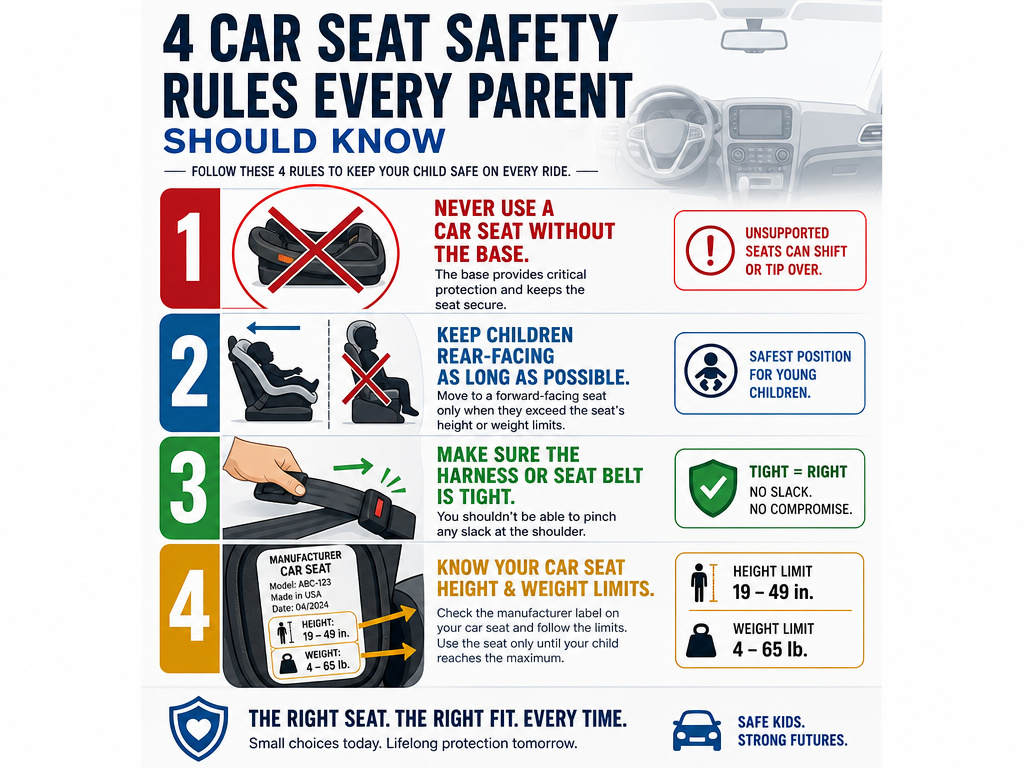 An officer conducts a rapid visual assessment against a specific legal standard when checking a seat. The Massachusetts car seat FAQ underscores this, stating enforcement is about whether the seat is “properly fastened and secured” and appropriate for the child’s age and size.
Their checklist is straightforward: 1. Is there a seat? No seat is an automatic violation. 2. Is the child in the correct type of seat? A 6-month-old must be rear-facing. A 3-year-old under 40 pounds likely still needs a harness. A 7-year-old who is 4’2″ probably needs a booster. 3. Is the seat installed correctly? Is it tightly secured? Is the harness at the right height and snug? 4. Is the child within the seat’s limits? They will look for the manufacturer’s label on the side of the seat listing the height and weight limits.
Where this goes sideways: Using a seat that’s visibly outgrown. A 50-pound child in a 40-pound-limit harnessed seat is a violation an officer can see from the driver’s window. The labels are the law.
This is why understanding when to switch to a booster seat or [when to face forward in a car seat](https://cruisecradle.The advice at com/when-can-babies-face-forward-in-car-seat/ helps avoid a ticket by providing safety guidance. The officer’s visual inspection compares your child to the manufacturer’s rules printed on the seat itself.
When It Crosses Into Criminal Endangerment
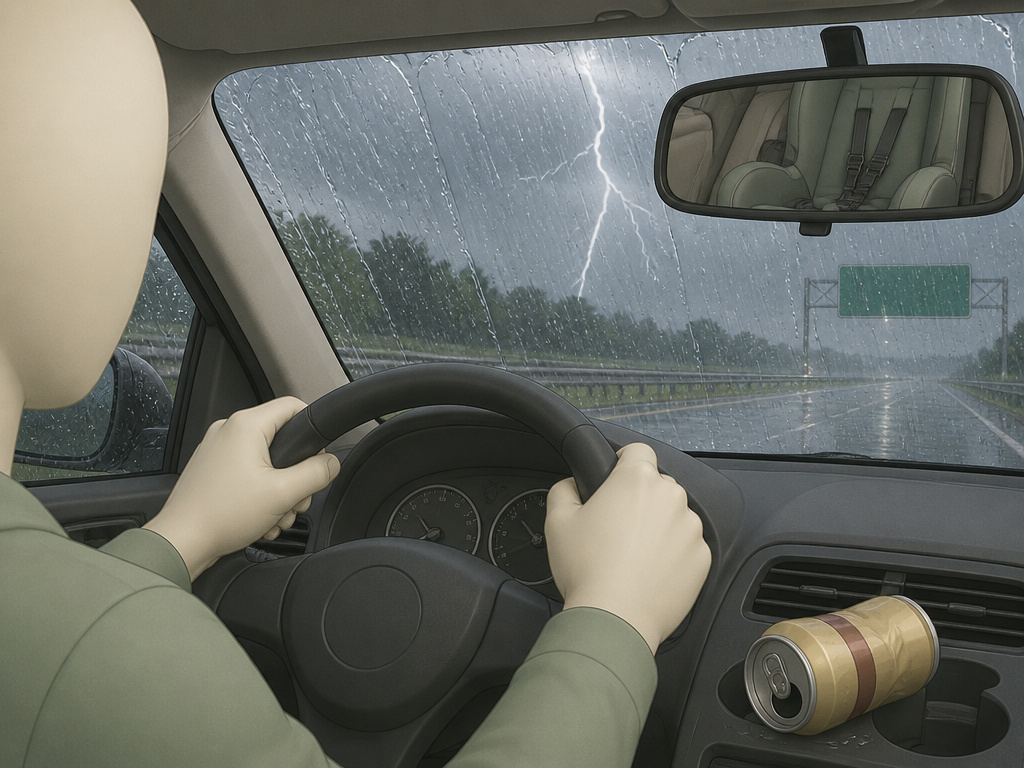 A traffic ticket is one thing. A child endangerment charge is another universe. The difference is in the mindset and the action.
A prosecutor must prove mens rea, a guilty mind. For endangerment, this usually means acting with “criminal negligence” or “recklessness.” This is a higher standard than the simple “violation” of a traffic code. It means you knew the risk and disregarded it.
Scenario A (Ticket): You’re running late, frazzled, and forget to buckle your preschooler into their booster seat for the five-minute drive to school. An officer sees it.
Scenario B (Potential Endangerment): You’ve had two prior tickets for no car seat. You post on social media that you think seats are a scam. Tonight, you pack four unbuckled kids into your car to drive 20 miles on the highway during a storm while drinking a beer.
The second scenario gives a prosecutor the evidence of willful, repeated, and reckless disregard. The car seat violation is now part of a pattern of dangerous conduct, which could support a criminal charge.
The legal system treats these differently because the intent and the scale of risk are different. One is a regulatory slip-up; the other is a demonstrated indifference to a child’s safety.
Your Immediate Steps If You’re Cited
You got the ticket. Now what? Don’t panic. Follow a process.
- Read the citation carefully. Note the court date, the fine amount, and any instructions for contesting or paying.
- Verify your seat’s status. Is it expired? Was it in a crash? Does your child actually fit within its height and weight limits? Check the label.
- Explore the dismissal option. If your state allows dismissal upon proof of acquisition (like Washington), go buy a proper seat that fits your child today. Keep the receipt.
- Consider a certified inspection. Before your court date, have your seat checked by a Child Passenger Safety Technician (CPST). They can provide a document stating your seat is now correctly installed and appropriate. This is powerful evidence if you’re contesting the ticket’s premise.
- Do not ignore it. A failure to appear or pay will lead to a bench warrant and license suspension. That turns a $50 problem into a thousands-of-dollars problem.
If you need a new seat, our guides on how to install a child’s car seat and the safety differences between booster and car seats can help you choose correctly. The goal is to get into compliance as swiftly as possible.
Frequently Asked Questions
Could I go to jail for not using a car seat?
For a first-time, standalone violation, jail time is extraordinarily rare. You face a fine and possible license points. Jail becomes a possibility only if the violation is part of a more serious criminal charge, like DUI with a child in the car, or if you have a long history of ignoring such citations.
Does a car seat ticket affect my insurance?
It can, but not directly. The ticket itself may not be reported to insurance. However, the license points that come with it in some states can trigger a premium increase at your next renewal. A single ticket might not move the needle, but multiple violations will.
What if I can’t afford a car seat?
Every state has programs that provide free or low-cost seats to qualified families. Local health departments, hospitals, and fire stations often run these programs. A judge may also direct you to such a resource if you plead financial hardship. Telling the court you couldn’t afford a seat is a reason to seek help, not a valid legal defense for the ticket.
Are taxis or Ubers exempt?
Laws vary widely, but many states have exemptions for “for-hire” vehicles. This is a major gray area. However, the safety risk doesn’t vanish. Our article on the legal risks for Uber without a car seat dives into this complex issue. The short answer: the driver might not be liable, but you are still responsible for your child’s safety.
How do I report someone else for not using a car seat?
You can call your local non-emergency police line if you witness an ongoing violation. Be prepared to provide a vehicle description, license plate, and location. However, understand that reporting a child not in a car seat is a serious action. Law enforcement may treat it as a lower priority unless the driving is also reckless.
The Bottom Line
The legal system treats a missing car seat as a correctable mistake, not an instant felony. You’ll get a ticket, not handcuffs. Pay the fine, get the right seat, and move on.
The real stakes are not in the courtroom; they’re on the road. A proper seat, used correctly, yields a 71% reduction in fatal injury risk, which is the primary concern beyond the minimal legal requirement of avoiding a $25 penalty.Your job is to go beyond it.
So use the seat. Follow the manufacturer’s limits for rear-facing and forward-facing. Get it checked. The paperwork from a traffic stop is annoying. The paperwork from a hospital is a nightmare.
