
The Safest Side for an Infant Car Seat: Where to Place It
This post contains affiliate links. As an Amazon Associate, we earn from qualifying purchases.
Place an infant car seat in the back seat of your vehicle, rear-facing. The absolute safest position is the center of the back seat, if your car seat and vehicle allow a secure installation there. If the center doesn’t work, choose either the passenger-side or driver-side rear seat. Never install a rear-facing seat in front of an active airbag.
That answer covers the federal guideline and the ideal. Your vehicle’s specific shape, your car seat’s manual, and real-world logistics like street parking turn that rule into a decision.
What follows: the physics behind the center-seat advantage, a checklist to test your own car’s center spot, and the two scenarios where picking a side seat isn’t just acceptable, it’s smarter.
Key Takeaways
- The center rear seat offers the most distance from a potential side-impact collision, but it must allow for a tight, level installation per your car seat and vehicle manuals.
- Never place a rear-facing infant seat in the front passenger seat with an active airbag. The force of deployment can cause fatal injury.
- If you park regularly on a busy street, the passenger-side rear seat lets you load and unload your child curbside, away from traffic.
- Your vehicle owner’s manual is the final authority on which seating positions are approved for car seat installation, especially for using the LATCH system in the center.
- A proper installation does not allow the car seat to move more than 1 inch (2.5 cm) side-to-side or front-to-back at the belt path.
The Golden Rule: Back Seat, Rear-Facing
The NHTSA car seat safety guidelines are unambiguous: your child under age 1 should always ride in a rear-facing car seat. The back seat is non-negotiable because of front airbags.
An airbag inflates at roughly 200 mph. That force is designed to restrain a full-sized adult wearing a seat belt. For a rear-facing infant, whose head is inches from the dashboard, that explosion is catastrophic. The California Highway Patrol safety seat rules reinforce this, stating children under 8 must be secured in the back seat.
Before you start: A front-passenger airbag remains a lethal risk even when the car is off. Never guess if it’s deactivated. If you have no back seat, you must consult your vehicle manual and possibly petition NHTSA to legally disable the airbag before installing a rear-facing seat.
This rule isn’t just about avoiding the front. It sets the stage for choosing the best spot within the back seat itself.
The Center vs. Side Decision
If the back seat is the safe zone, the center is the safe zone’s fortress. Statistics consistently show it’s the most protected spot in the vehicle.
The reason is geometry. In a side-impact crash, a T-bone at an intersection, the point of collision is the door. The center seat has the most distance from either door, creating a crucial buffer zone. It also benefits from being the least likely to experience direct intrusion.
According to the Graco SnugRide 35 LX manual, “The center of the back seat can be the safest during a possible side impact.”
But “can be” is the operative phrase. The center is only safest if you can achieve a proper installation there. Your car seat’s manual and your vehicle’s manual form a contract you must read.
| Consideration | Center Seat | Outboard Side Seat (Driver or Passenger) |
|---|---|---|
| Safety Buffer | Maximum distance from side impacts. | Closer to a potential point of impact. |
| Installation Difficulty | Often harder. Seat belts may be awkward; LATCH may not be approved. | Usually easier. Dedicated LATCH anchors and flat seat contours. |
| Vehicle Compatibility | Check both car seat and vehicle manuals. Many forbid center LATCH use. | Almost universally compatible. |
| Access & Convenience | Can be harder to reach, especially in smaller cars. | Easier to load/unload from the curb side. |
| Best For | Families with one child, where a secure, level fit is possible. | Families with multiple car seats, or when the center install is loose. |
Your first task is to attempt a center installation. Pull the manuals. For LATCH, most vehicles only have dedicated lower anchors for the two outboard seats. Using the inner anchors from each side to secure a center seat, called “borrowing”, is only allowed if both your vehicle manual and car seat manual explicitly permit it. The Graco manual states that for center LATCH use, the anchor spacing must be 11 inches (28 cm) or greater, if the vehicle allows it.
If the center seat is humped, unusually narrow, or doesn’t allow a rock-solid installation, move to a side seat. A perfectly installed outboard seat is safer than a poorly installed center seat.
How Your Vehicle Dictates the “Side”
You don’t choose the side in a vacuum. Your car’s design makes the choice for you. This is where the best seat for car seat becomes a practical, not theoretical, answer.
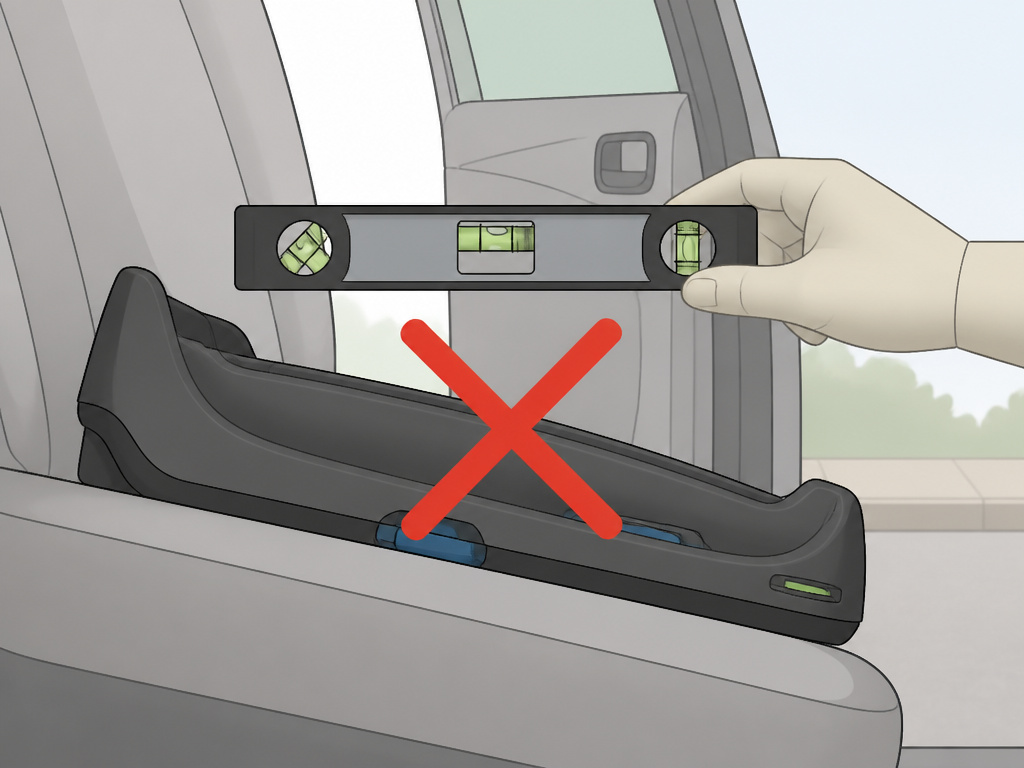
First, diagnose your back seat. Can you get the car seat level? A seat that’s too reclined risks ejection; too upright can compromise an infant’s airway. Many centers have a pronounced hump. If you can’t level the base with the manufacturer-approved methods (like a rolled towel under the foot), that position fails.
Second, check access. In a tight parking spot, can you open the door wide enough to maneuver the carrier? A parent in a Reddit thread described a scenario where a poorly parked neighbor made it “impossible for me to get my son in his car seat” on the driver’s side, forcing a scramble across the car.
Where this goes sideways: Assuming any back seat position is fine. Vehicle seats that face sideways, like in some limousines or third-row benches, are banned by manufacturers like Joie. Their manuals state seats must “face forward” with respect to the vehicle’s direction of travel.
This is why the passenger-side rear seat is the default pick for many families. It combines relative safety with everyday logic: you load and unload from the curb, away from traffic flow. It’s the compromise that works.
When to Choose the Passenger-Side or Driver-Side
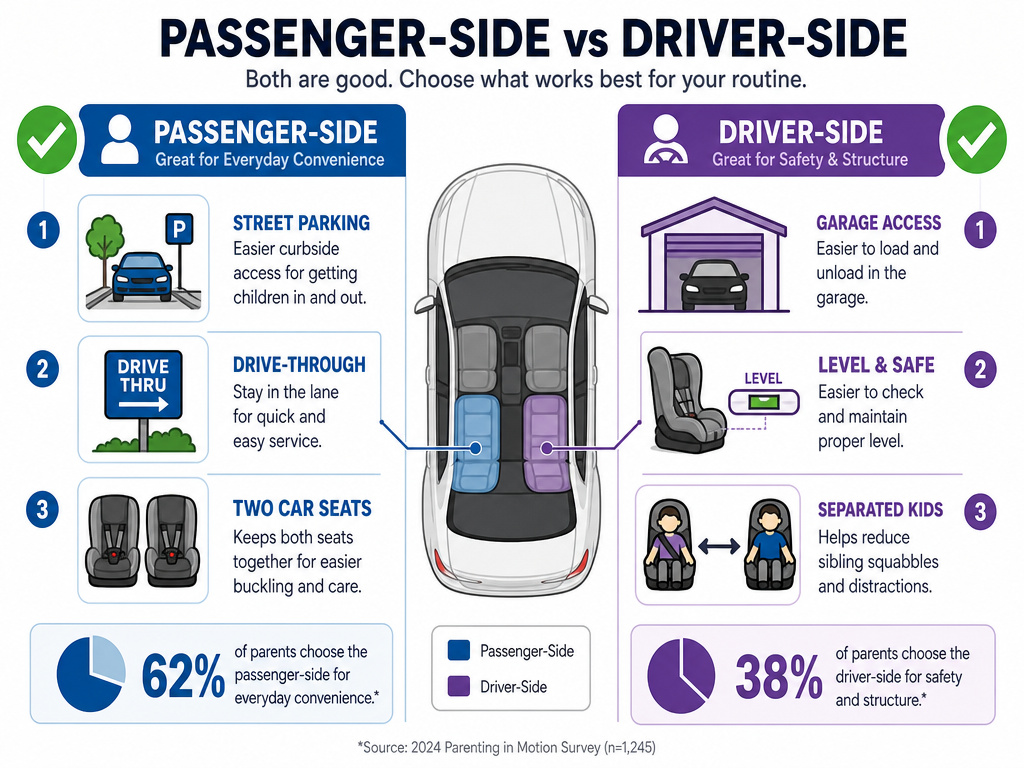
The choice between the two side seats isn’t a safety tie. It’s a logistics call.
Choose the Passenger-Side (Curbside) Rear Seat if:
- You frequently park on streets with traffic.
- You use drive-throughs or curbside pickup often.
- You have two car seats and the center is occupied or unusable. The passenger side keeps the driver’s mirror view less obstructed.
Choose the Driver-Side Rear Seat if:
- You primarily park in garages or driveways where you exit onto a safe, private area.
- It’s the only position in your vehicle that allows a tight, level install.
- You have a convertible seat for an older sibling behind the passenger, and need to separate children.
The act of installing the seat is the same on either side. The proper car seat installation steps don’t change. You’re just anchoring to a different set of LATCH points or threading a different seat belt.
The Installation Is What Makes the Side Safe
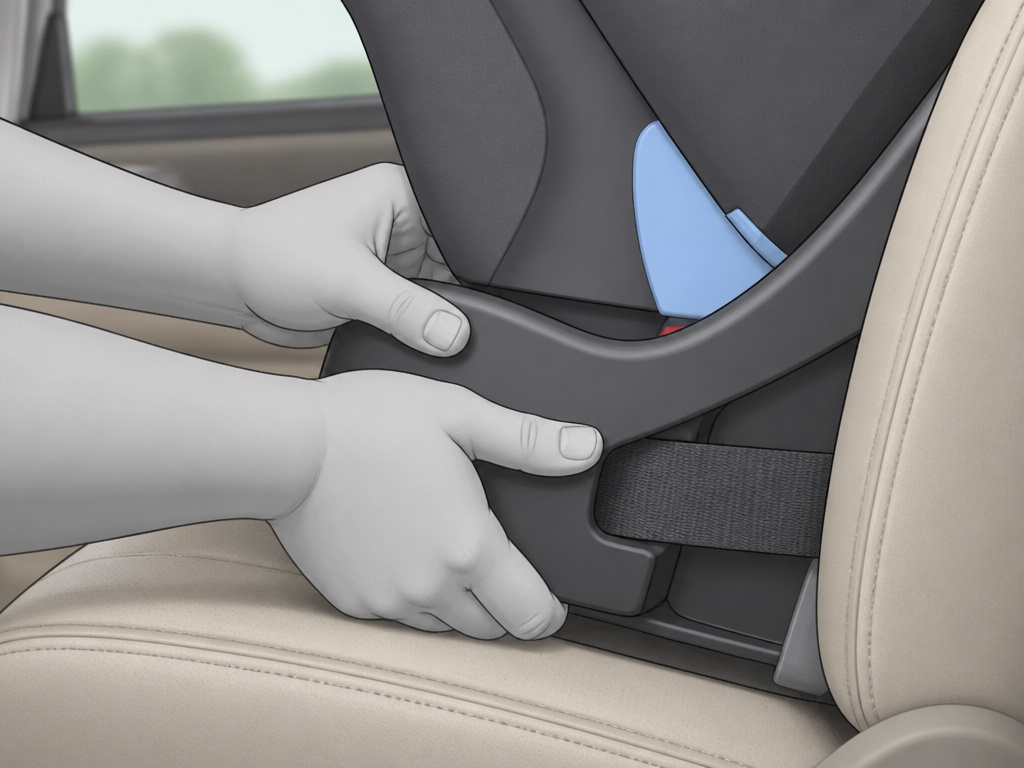
A car seat in the perfect spot is useless if it’s loose. Safety comes from the install, not the address.
The universal test is the one-inch rule. Once the seat is installed per the manual. LATCH or seat belt, base leveled, grab it at the belt path (where the seat belt or LATCH strap goes through the base). Push and pull firmly. If it moves more than an inch side-to-side or front-to-back, it’s not tight enough. That movement amplifies crash forces.
A secure rear-facing installation transfers crash forces through the seat’s shell and into the vehicle seat, which is designed to absorb them. A loose seat rotates and pitches, increasing the risk of head injury.
Harness fit is the second half. The car seat harness fit must be snug. The straps should be at or just below the infant’s shoulders. The chest clip sits at armpit level. If you can pinch a vertical fold in the harness strap at the shoulder, it’s too loose.
These specs turn a chosen side into a safe side. Skip them, and the best position in the world won’t matter.
Frequently Asked Questions
Can I put the infant seat in the middle if I have a hatchback or small SUV?
Yes, if you can achieve a proper installation. The rule is about the seat, not the vehicle type. Many small SUVs have flatter, more accessible center seats than sedans. Always check the manuals first.
My car only has a lap belt in the center. Is that safe?
Yes, a lap belt is perfectly safe for installing a rear-facing infant seat base, provided it locks. All modern seat belts lock in some way (either at the retractor or with a locking clip). Your car seat manual will have specific instructions for lap-belt installation. It’s often simpler than a lap-shoulder belt.
Does it matter which side I use with the LATCH system?
No. The LATCH anchors in the outboard seats are identical in strength. Choose the side that makes the most sense for your daily life and allows the best install. The passenger-side is the common recommendation for the curb-side advantage.
When should I move my child out of the infant seat?
You’ll move to a convertible car seat when your baby exceeds the infant seat’s height or weight limit, usually when the top of their head is within an inch of the shell top, or they hit the weight max (often 30-35 lbs). Don’t rush this. The infant seat’s portability is a convenience; the rear-facing position is the safety essential.
How do I know if my installed car seat is safe enough?
Beyond the one-inch test, get a free inspection. Local fire stations, police stations, or hospitals often have certified Child Passenger Safety Technicians (CPSTs). They can verify your install and your choosing a car seat decision in minutes. It’s the best reassurance you can get.
Before You Go
The safest side for an infant car seat is the one that lets you execute a flawless, rear-facing installation in the back seat. Aim for the center, settle for a side, and never consider the front.
Your vehicle’s manual and your car seat’s manual are the final authorities. They override any online advice, including this. Once the seat is in, test it with force. That inch of movement is the difference between a safe assumption and a safe child.
Then check the harness. Then drive.
