
Infant Car Seat Insert Guide: Why Brand-Specific Matters
This post contains affiliate links. As an Amazon Associate, we earn from qualifying purchases.
No, you cannot safely use just any infant insert in any car seat. Federal safety standard FMVSS 213 and every major car seat manufacturer explicitly prohibit using accessories, padding, or inserts not approved for that specific seat model. An insert is a crash-tested component, not generic padding. Using a non-approved insert alters the harness fit, changes how the child’s body interacts with the seat shell during a crash, and voids the seat’s safety certification.
That prohibition is printed in the manual, often in all caps. The Cybex Aton 2 manual states, “NEVER USE accessories or parts with this child restraint other than those approved by CYBEX.”The Infant Insert is the only approved padding.” The Axkid ONE 3 manual is just as clear: “ONLY use this infant insert with the AXKID ONE 3 car seat.” These are legal documents, not advice columns.
What follows is a breakdown of the three reasons this rule exists, the specific physical risks a wrong insert creates, and how to correctly use the insert that came with your seat. By the end, you’ll be able to read your own manual and know exactly what is, and isn’t, allowed.
Key Takeaways
- Using a non-approved infant insert violates Federal Motor Vehicle Safety Standard (FMVSS) 213 and instantly voids the seat’s safety certification.
- An insert is a structural safety component designed to position a small infant’s airway and spine; generic padding can cause dangerous slouching and harness looseness.
- Manufacturer manuals like those for Cybex Aton 2 and Axkid ONE 3 contain explicit, legally-binding prohibitions against aftermarket inserts.
- The safe path is to use only the insert approved for your exact seat model and to remove it the moment your child meets the manufacturer’s stated size criteria.
- If your seat didn’t come with an insert, contact the manufacturer, never buy a generic one.
The Hard Rule: OEM Approval Only
This is not a gray area. Your car seat earned its certification from the National Highway Traffic Safety Administration (NHTSA) as a complete system. That system includes the shell, the harness, the cover, and any approved padding or inserts listed in the manual. Swapping in a part from another brand, or adding a cute aftermarket head pillow, breaks that certified system.
The Cybex Aton 2 manual states: “NEVER USE accessories or parts with this child restraint other than those approved by CYBEX. The Infant Insert is the only approved padding to be used with the Aton 2.”
That blockquote is a direct primary-source citation. It’s not hedging. The legal and mechanical reason is that crash testing is done with the seat exactly as sold. Engineers design the insert to work with the seat’s specific geometry and harness angles. A different insert changes the variables in the crash equation.
Why Generic “One-Size-Fits-All” Inserts Fail
Aftermarket companies sell inserts claiming universal fit. They are selling a dangerous fantasy. A real infant insert does two jobs: it provides comfort and it acts as a positioning device. It cradles a newborn’s curved spine and keeps the head from flopping forward, which can close the airway. A fluffy, non-structured pillow from a big-box store does the first job poorly and fails at the second entirely. It compresses under force, creating space between the child and the harness. In a crash, that space allows for violent, unchecked movement.
The safety of car seat inserts from unknown manufacturers is unverifiable. They have not been crash-tested with your seat. Their materials may be flammable or may off-gas chemicals. This is why the conversation about the need an insert always circles back to the OEM part.
| Car Seat Model | Insert Rule (From Manual) | Maximum Weight/Height for Insert Use |
|---|---|---|
| Axkid ONE 3 | “ONLY use this infant insert with the AXKID ONE 3 car seat.” | 9 kg (20 lbs) or 61 cm (24 in) |
| Nuna REVV | “DO NOT use the insert for a child who weighs more than 11 lb.” | 11 lb (5 kg) |
| UPPAbaby MESA V2 | “The Infant Insert is designed for children who weigh: 4–11 lbs.” | 11 lb, but may continue if fit criteria not met |
| Evenflo LiteMax NXT | Required for 3-6 lbs, optional over 6 lbs. | Use until a proper fit is achieved without it |
| Cybex Aton 2 | “The Infant Insert is the only approved padding.” | Recommended until 22 lb (10 kg) |
What Actually Happens With a Wrong Insert?
The risk is a sequence of physical failures that happen in milliseconds during a collision. Let’s trace the mechanics.
First, a non-approved insert is usually thicker and made of compressible foam or fiberfill. When you tighten the harness over it, it feels snug. But as you drive, the child settles, and the material compresses. Now you have a loose harness. You can’t re-tighten it while driving. In a crash, that slack allows the child’s body to travel farther before the harness engages, increasing the forces on their neck and spine.
Second, it mispositions the child. A proper newborn insert has a contoured shape that supports the back and buttocks, keeping the pelvis tucked and the airway open. A generic pad can create a “hammock” effect, making the child slouch. This pushes the head forward, chin to chest. For a small infant with weak neck muscles, this position can restrict breathing even during a normal car ride, a known risk factor for preterm infants.
Where this goes sideways: Adding a bundled aftermarket head support pillow. These often attach with Velcro around the harness straps. In a crash, that Velcro can tear, the pillow can shift, and the harness straps can be routed incorrectly over the child’s shoulders instead of sitting flush. The result is a partial ejection path.
The safety risks are documented. This is why the pursuit of the best infant insert or the best newborn insert must begin and end with the manufacturer’s own part. Their insert has been tested to stay in place, not compress unpredictably, and not interfere with the buckle or harness webbing.
How to Use Your Approved Insert Correctly
You have the right insert. Now you have to use it right. This means installing it per the manual, checking the fit on your child every single time, and knowing the exact moment to remove the insert.
Installation is More Than Just Placing It In
Most inserts attach with snaps or have specific channels for the harness straps. The Nuna EXEC manual details routing the harness through the insert and snapping it in place to keep the straps positioned. If you just lay the insert on top of the seat and put the child on it, the harness will not be routed correctly. The straps must go through the designated slots in the insert so they lie flat against the child’s body.
Follow this checklist: 1. Consult your manual. Find the page on the infant insert. 2. Snap it in. Secure all attachment points. 3. Thread the harness. Route the shoulder straps through the insert’s slots. 4. Position the child. Ensure the child’s bottom is all the way back in the seat. 5. Buckle and tighten. Pull the harness adjuster strap until you cannot pinch any slack at the shoulder. 6. Recline check. Many seats, like the Axkid ONE 3, require the seat to be in the most reclined position when using the insert.
The “Fit Test” – When to Remove the Insert
The insert has an expiration date based on your child’s size. The rule is not just weight. You take the insert out when your child no longer needs it to achieve a proper harness fit.
Here’s how to run the fit test: * Harness Height: The shoulder straps should be at or just below the child’s shoulders. If the insert is pushing the child up so the straps are above the shoulders, remove it. * Body Positioning: Without the insert, is there a gap between the child’s hips and the seat bottom? Does the child slouch? If yes, the insert is still needed. * Head Support: Does the child’s head still flop to the side? Some inserts provide lateral support. If it’s needed for alignment, keep it. * Manual Limits: Never exceed the hard limits. The Nuna REVV insert must come out at 11 lbs, period.
The UPPAbaby MESA V2 manual provides the clearest guidance: “When you can achieve all fit criteria without the insert, it can be removed. NOTE: You may continue use beyond 11 lbs until all criteria are being met.” This is the model to follow, let the fit, not just the scale, guide you.
What If Your Seat Didn’t Come With an Insert?
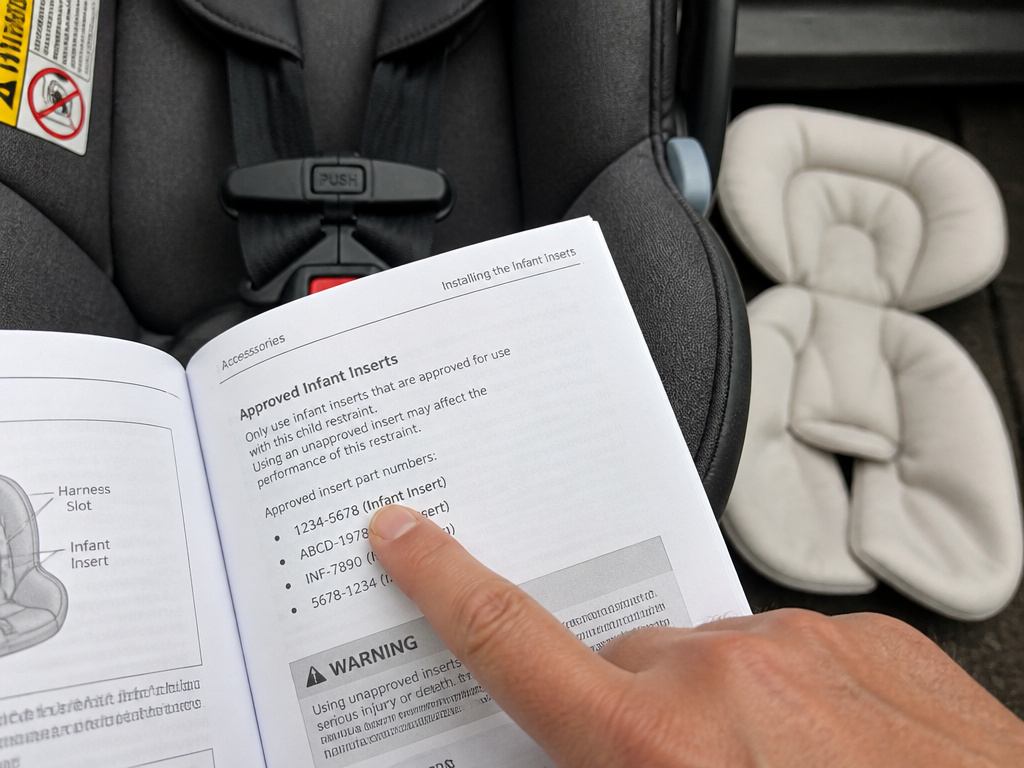
Some car seats are designed for larger newborns and may not include an insert. The first step is not to buy one. The first step is to check the manual. Does it mention an optional insert? If so, only that specific part number from the manufacturer is safe to use.
If the manual says nothing about an insert, the seat was certified without one. Adding any padding changes its performance. Your child might seem small in it. In that case, your options are: 1. Contact the manufacturer. Ask if they have an approved insert for your model. 2. Use the seat as-is, ensuring a proper harness fit. For very small infants, consult your pediatrician about travel duration. 3. Consider a different seat that is designed and sold with an insert for smaller infants, like the Evenflo LiteMax NXT.
The dangerous choice is to buy a car seat inserts bundle from an online retailer. Those products are comfort items that compromise safety. The same strict logic applies to head support products.If your child needs head support, you need to determine if you need a head support that is OEM-approved, not a generic one.
Frequently Asked Questions
Can I use a Chicco insert in a Graco seat?
No. Never use an insert from one brand in a seat from another. They are not interchangeable parts. The Chicco insert was crash-tested with Chicco seat geometry. Using it in a Graco seat creates untested gaps and pressure points.
Are aftermarket head supports like the Bundlebee safe?
Aftermarket head supports, neck pillows, or body pillows like those from Bundlebee or other brands are not approved by car seat manufacturers. Unless the product is sold by your car seat’s maker specifically for your model, it is considered an aftermarket accessory and its use is prohibited by the manual. It can affect harness routing and add compressible material.
My baby seems too small without the insert. What now?
If your child has outgrown the insert by weight but still seems to slouch, first ensure you are using the correct harness slot height and the seat is fully reclined. If proper fit is impossible, the seat itself may be too large for your infant. You may need a seat designed for smaller newborns, often called a “preemie seat” or one with a lower minimum weight limit.
Where can I buy a replacement OEM insert?
Contact the car seat manufacturer directly or check their official website for parts stores. Do not buy from general marketplaces like Amazon unless the seller is the official brand store, as counterfeit safety parts exist. Have your seat’s model number and manufacture date ready.
Do all infant car seats come with an insert?
No. Many convertible car seats designed for birth do not include an insert, as they rely on harness adjustment and recline to fit smaller children. Infant bucket seats are more likely to include one. Always check your product’s contents list and manual.
Before You Go
The rule is simple, even if it feels restrictive. The only safe infant insert is the one that came in the box with your specific car seat model. Its design, its materials, and its very presence were part of the violent crash tests that earned the seat its certification. Adding anything else, a different brand’s insert, a cozy-looking head pillow, a rolled-up blanket, breaks that system.
Your manual is the final authority. It holds the exact weight limits, the installation steps, and the warnings written in the starkest language the lawyers could draft. Trust it over any well-meaning online hack. When the fit test says it’s time, remove the infant insert. Until then, use it exactly as the engineers intended. That’s how you keep the system intact.
