
Can You Take an Uber With a Baby Without a Car Seat Legally?
This post contains affiliate links. As an Amazon Associate, we earn from qualifying purchases.
You cannot legally Uber with a baby under one year old without a car seat in most jurisdictions. For children over one, the law varies wildly by location—some places allow taxis but not rideshares, others mandate seats until age 7. Uber’s own services, like Uber Car Seat with the Nuna RAVA, have strict age and weight limits, and drivers can refuse any ride they deem unsafe.
The gap between “is it legal” and “will an Uber driver take you” is where parents get stranded. A law might offer a taxi exemption, but a rideshare driver operates a private vehicle bound by private vehicle rules in many regions. That distinction turns a short trip into a canceled ride.
What follows: the specific age and location rules pulled from government PDFs, the exact specs of Uber’s car seat services, and the three backup plans that actually work when the app says no.
Key Takeaways
- Under 1 year is a universal no. Laws in places like New South Wales, Australia explicitly forbid hire vehicle trips for infants under one without a proper restraint.
- Location dictates everything. A 3-year-old might ride legally in a London taxi but be refused by an Uber driver in Sydney or Houston under different rules.
- Uber Car Seat uses one Nuna RAVA. This seat fits children 5–65 lbs, but only one is provided per vehicle. You cannot book this service for a newborn under 5 lbs.
- The driver has the final say. Uber’s policy states drivers can decline a ride if they are uncomfortable with your car seat or its installation.
- Your safest path is bringing your own. A lightweight, seat-belt-only travel car seat like the Cosco Scenera Next is the most reliable solution.
The Short Answer: It Depends on Age & Location
Forget a single rule. The legality of riding without a car seat fractures along two lines: the child’s exact age and the local government’s classification of a rideshare vehicle.
In New South Wales, Australia, the rules for hire and rideshare vehicles are the same as for private vehicles. All children under the age of 7 must be secured in a suitable approved child restraint. A taxi driver cannot refuse a 13-month-old without a seat, but an Uber driver must.
This quote from the official NSW government PDF illustrates the critical split. Taxis often have legal exemptions for children over one year old. Rideshares like Uber and Lyft, classified as “hire vehicles” or “private vehicles for hire,” frequently do not get that pass. Your local law is the first check.
The second check is the child’s size. In the United States, all car seats must meet the federal child restraint standard, known as FMVSS 213. This standard defines the testing and performance requirements for every seat sold. It’s the baseline, but states and cities layer their own age, weight, and height requirements on top.
| Child’s Age | Typical Legal Minimum (Rideshare) | Uber Driver’s Likely Response |
|---|---|---|
| Under 6 months | Rear-facing seat required everywhere. | Will almost certainly refuse the trip. |
| 6–12 months | Rear-facing seat required in most regions. | High chance of refusal; major liability. |
| 1–4 years | Forward-facing seat or booster required in many areas; taxi exemptions may apply. | Mixed; many will refuse to avoid risk. |
| 4–7 years | Booster seat often required until height/weight thresholds met. | May accept if child can use seatbelt alone, but it’s a gamble. |
The driver’s personal risk calculation always overrides the legal minimum. A crash with an unrestrained child means catastrophic injury, a voided insurance claim, and potential liability for the driver. Most will cancel the ride.
Understanding Uber’s Official Car Seat Services
Uber offers two specific services to address this problem: Uber Car Seat (in select U.S. Cities) and the legacy uberFAMILY program. These are not universal solutions, and their specs are tighter than most parents realize.
Uber Car Seat is the current service. When you select it, a vehicle arrives with a Nuna RAVA convertible car seat installed.
- The seat can be used rear-facing for children 5–50 lbs and forward-facing for children 25–65 lbs.
- The driver is trained on its seat-belt installation.
- Only one seat is provided per vehicle. If you have two children, you must supply the second seat yourself.
- The service is only available in specific cities and typically comes as an Uber XL vehicle, increasing cost.
The RAVA is a quality seat, but the 5-pound minimum means it’s not for newborns. It also requires the parent to properly secure the child in the harness. The driver provides the seat; you provide the correct buckling.
uberFAMILY is an older, more limited program. According to Uber’s 2014 terms, seats provided under this program were only for children at least 12 months old, weighing 22–48 lbs, and standing 31–52 inches tall. This service is largely phased out in favor of Uber Car Seat.
Common mistake: Assuming Uber Car Seat is available everywhere. It’s not. In most of the world, including the entire UK, Uber explicitly states child seats are not commonly available in vehicles on the app, and you must bring your own.
Booking these services requires planning. You must select “Uber Car Seat” in the app before requesting the ride. Availability is sparse, and wait times are longer. For a reliable Uber car seat request, you need to be in a supported city and allow extra time.
The Practical Reality & Safer Alternatives
The forum stories are consistent: a parent, late and stressed, tries to board an Uber with a toddler on their hip. Many drivers, fearing liability, drive off. Others reluctantly agree. This inconsistency is the core problem—you cannot plan around luck.
Your three practical alternatives are bringing your own seat, using a certified travel vest, or in specific cases, utilizing a taxi under its legal exemption.
1. Bring Your Own Travel-Friendly Car Seat
This is the gold standard. It guarantees compliance and safety. The key is choosing a seat designed for portability.
- Lightweight Convertible Seats: The Cosco Scenera Next is the classic example. It weighs about 8 pounds, fits children 5–40 lbs rear-facing, and installs quickly with a vehicle seat belt. It’s a bare-bones, effective solution.
- All-in-One Travel Systems: Products like the Wayb Pico are designed for travel. They fold into a backpack, meet FMVSS 213, and work for children 22–50 lbs. The convenience comes with a significant investment.
- Infant Carrier with Base: For babies, an infant seat like the Chicco KeyFit 30 can be used with or without its base. You can secure a car seat without base using the seat belt path, which many parents do for taxi travel.
The process is straightforward but requires practice. Before your trip, master the seat belt installation method. When the car arrives, you quickly install your seat, buckle in your child, and go. It adds two minutes and eliminates all uncertainty.
Where this goes sideways: Trying to install a bulky, complex seat you’ve never practiced with. You’ll fumble at the curb, the driver will get impatient, and the installation will likely be unsafe. Practice at home first.
2. Use a Certified Travel Vest (For Older Toddlers)
For children who have outgrown a five-point harness but are too small for a seat belt alone, a travel vest like the Ride Safer Travel Vest is a viable option. It is FMVSS 213 certified and functions like a wearable booster seat, positioning the vehicle’s lap and shoulder belt correctly.
- Pros: Packs into a small pouch, incredibly portable, usable on airplanes.
- Cons: Only for children approximately 30–80 lbs, requires careful fitting, and some drivers may not recognize it as a safety device.
3. Understand the Taxi Exemption (A Last Resort)
In some jurisdictions, like parts of the UK and Australia, taxis have a legal exemption for children over a certain age (often 1 or 3 years old). This is not a safety recommendation—it’s a legal loophole. The official NSW guide “strongly recommends” using a restraint anyway.
If you must use this exemption, call a traditional taxi company, not a rideshare app. Be prepared for the driver to still refuse. This should be a last-resort option for essential, unplanned travel, not a routine plan.
What Happens If You Try to Ride Without a Seat?
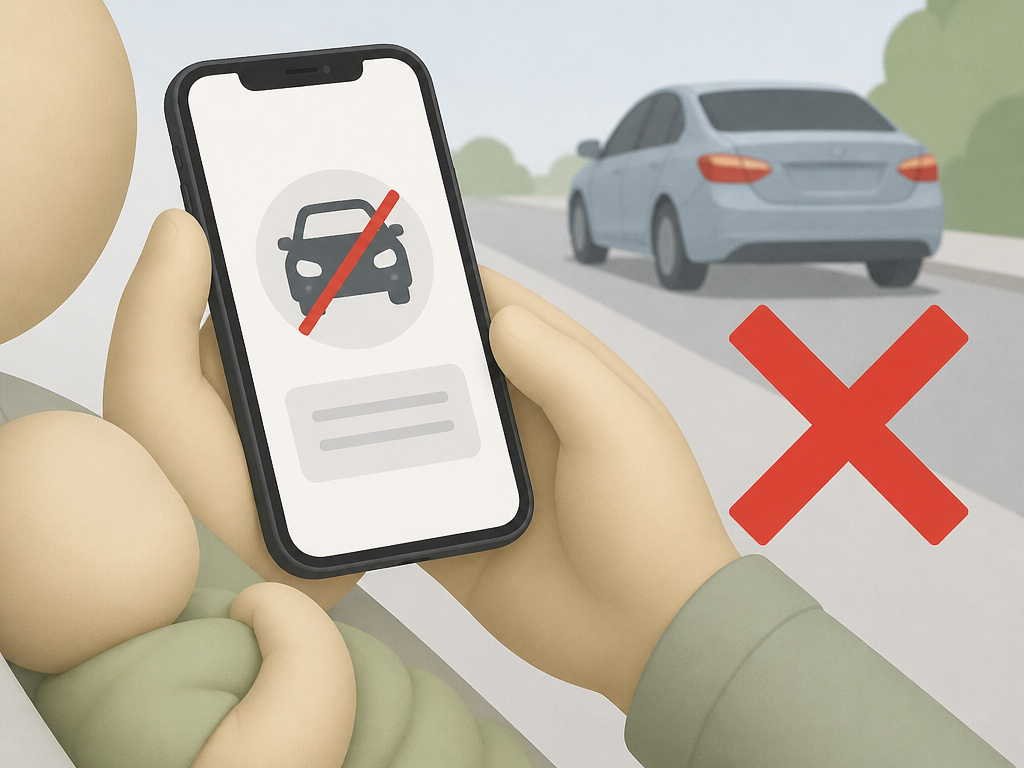
The consequences stack up quickly, from immediate rejection to severe legal and safety outcomes.
- The Ride is Canceled. This is the most common result. The driver arrives, sees the child, explains the Uber car seat policy, and cancels the trip. You’re charged a cancellation fee and left looking for another option.
- You Assume All Liability. If a driver does agree to take you, you have likely voided any protection from Uber’s insurance in the event of a crash. You could be held personally liable for your child’s injuries. In many areas, you are also breaking the law, which could lead to fines for the driver and a citation for you.
- The Safety Risk is Extreme. An unrestrained child becomes a projectile in a sudden stop or crash. At 30 mph, a 20-pound child exerts 600 pounds of force. They will be thrown into the front seat, the dashboard, or out of the vehicle.
Choosing to ride without a proper restraint is a decision with permanent consequences. It’s not just about breaking a theme park bag rule; it’s about child endangerment with a human life.
Frequently Asked Questions
Can an Uber driver provide a car seat?
In select U.S. Cities, yes, through the Uber Car Seat service which provides a Nuna RAVA. In most of the world, no. Uber’s UK guidelines explicitly state car seats are not common, and you should bring your own. Never assume a driver will have one.
Is it legal to hold a baby in an Uber?
No. There is no jurisdiction where it is legal to hold an infant or toddler on your lap in a moving vehicle, including rideshares and taxis. This is extremely dangerous and violates child passenger safety laws.
What is the best car seat for Uber travel?
The best seat is one you can install correctly every time. For most families, a lightweight, seat-belt-only convertible seat like the Cosco Scenera Next is the most reliable and affordable option. For older toddlers, a certified travel vest offers maximum portability.
Can I install my own car seat in an Uber?
Yes, and it is the most reliable method. You have the right to install your own car seat in an Uber, but the driver also has the right to refuse the ride if they are uncomfortable with the installation process or the seat itself. Be proficient and quick.
Does Uber require a car seat for a 5 year old?
Uber requires compliance with local law. In many places, a 5-year-old still requires a booster seat. Even if the law allows a seat belt, the vehicle’s belt may not fit the child correctly (the lap belt rides on the stomach, the shoulder belt cuts across the neck). A booster is the safe choice.
Before You Go
Navigating Uber with a young child boils down to preparation over hope. The law is a patchwork, and driver discretion is a wild card. Your single most powerful move is owning a portable, easy-install car seat and being competent with it.
Skip the stress of wondering if this driver will say yes. Master a seat belt installation, know your local regulations, and never compromise on that five-point harness for infants and toddlers. The car seat isn’t an accessory for the ride; it’s the only thing that makes the ride possible.
