
Can You Take an Infant Car Seat on a Plane? How-To Guide
This post contains affiliate links. As an Amazon Associate, we earn from qualifying purchases.
You can bring an infant car seat on a plane if it is explicitly certified for aircraft use. The seat must have the label “This restraint is certified for use in motor vehicles and aircraft” printed on it, often in red letters. This is an FAA, Transport Canada, and EASA requirement. You install it rear-facing using the aircraft’s lap belt, and you cannot use the car seat’s convenience base on board.
The label is the whole game. A car seat that meets crash standards for your car is not automatically approved for an airplane. The certification is separate, and flight attendants are trained to check for it. Without that exact wording, the airline can refuse its use in the cabin.
What follows: how to find the label, the specific installation steps from manufacturer manuals, what to do with your stroller and base, and the one mistake that gets parents turned away at the gate.
Key Takeaways
- The FAA, Transport Canada, and EASA all require the specific “certified for aircraft” label on the seat itself or in its manual.
- Never use the car seat’s convenience base on an airplane. Install the carrier directly onto the aircraft seat using the lap belt.
- The seat must be installed in a window seat, rear-facing, with the foot of the carrier pressed firmly against the aircraft seatback.
- Booster seats, backless car seats, infant carriers (like baby-wearing wraps), and “belly belts” are never approved for any phase of flight.
- Airlines are required to accommodate a properly labeled, approved car seat in your ticketed seat. If it doesn’t fit, they must find you a seat in the same class where it does.
The FAA’s “Yes, But” Rule (Check the Label)
The Federal Aviation Administration gives a clear yes, but with a non-negotiable condition. You can use a Child Restraint System (CRS) on board, but it must be certified for use in aircraft.
The FAA states a CRS must have “This restraint is certified for use in motor vehicles and aircraft” printed on it or be approved by a foreign government with the required marking. You must confirm this in the user’s manual.
This is not a suggestion. Flight crews can and will ask to see this label. A car seat that is only FMVSS 213 certified for vehicle use does not automatically qualify. The difference is in the dynamic forces an aircraft seat belt must manage during turbulence versus a car crash. The certification verifies the seat’s design can be secured properly with a single lap belt.
The FAA’s FAA child passenger rules strongly urge securing all children, even those under two, in their own approved seat. They cite a 2019 NIH study on injuries to unrestrained lap children during turbulence. The recommendation is based on physics, not opinion.
Common mistake: Assuming your car seat is approved because it’s new, expensive, or has a five-star crash rating. The only thing that matters is the label. Check the side of the seat shell or the manual’s compliance page.
What Seats Are Not Allowed on a Plane?
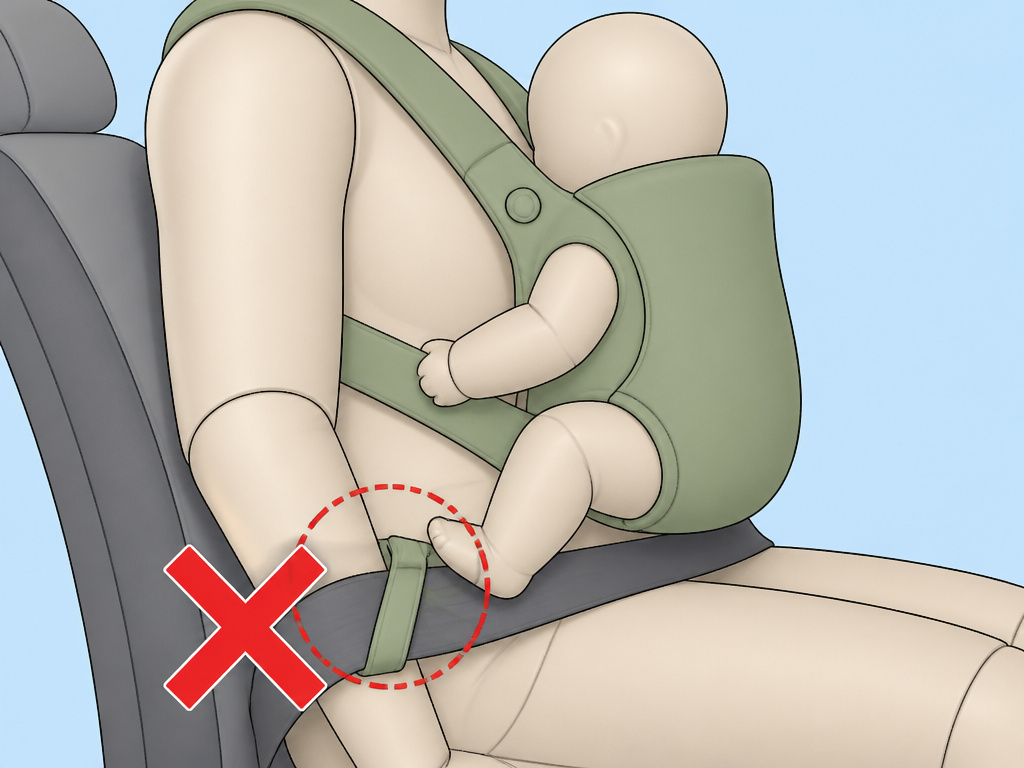
The list of prohibited devices is consistent across U.S., Canadian, and European aviation authorities. Knowing what you can’t use is as important as knowing what you can.
| Device | Why It’s Not Approved | Consequence If Used |
|---|---|---|
| Booster Seats (high-back or backless) | Designed for a vehicle’s lap-and-shoulder belt system, which aircraft lack. | Flight crew will require it to be stowed for takeoff/landing. Child must use the aircraft seat belt alone. |
| Infant Carriers & “Belly Belts” | These loop-style belts attach to an adult’s lap belt. In turbulence, the adult’s body can crush the infant. | Explicitly banned by Transport Canada for causing injury. Will be confiscated for the flight’s critical phases. |
| Baby-Wearing Wraps/ Slings | Considered a “lap-held restraining device.” Not engineered to withstand sudden deceleration or turbulence forces. | May be allowed during cruise at crew’s discretion, but never during taxi, takeoff, landing, or when the seat belt sign is on. |
| Car Seat Convenience Base | Bases are not certified for aircraft use. They prevent a secure, direct connection between the carrier and the aircraft seat. | Prevents proper installation. You will be told to remove the base and install the carrier directly or check the base. |
Transport Canada notes that belly belts “could injure the infant in case of an accident.” The rule isn’t about convenience; it’s about a specific, documented failure mode. These devices create a dangerous hinge point during sudden deceleration.
Finding an Approved Seat: The Label Hunt
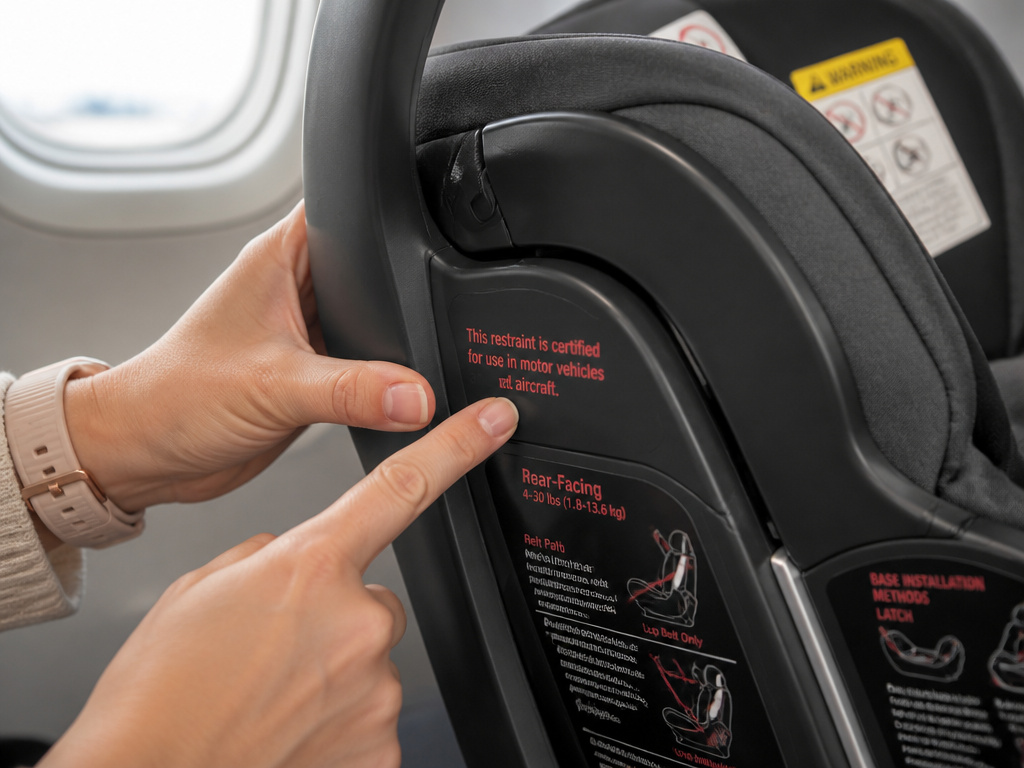
Start with the seat you own. Look on the plastic shell of the carrier, usually on the side or back. You’re searching for the exact phrase: “This restraint is certified for use in motor vehicles and aircraft.” On seats certified to U.S. Standards, this is often in red lettering.
If it’s not on the shell, grab the owner’s manual. The compliance statements or “Use in Aircraft” section will have it. For example, the Cybex CLOUD T manual states on page 68: “THIS RESTRAINT IS CERTIFIED FOR USE IN AIRCRAFT.”
Where this goes sideways: Relying on an online product description or a salesperson’s word. Marketing copy saying “great for travel” is meaningless. The legal certification is on the physical product or in its manual. No label, no fly.
Some models, like the Cybex CLOUD G Pro, have a conditional approval. Its manual states it is “certified for use in aircraft if used without the base.” This is a critical detail. Always verify the specific conditions for your model.
What if your seat isn’t approved? You have two paths. Buy an FAA-approved alternative like the AmSafe CARES harness for toddlers (22-44 lbs), or plan to check your infant seat and hold your child on your lap. The CARES device is for aircraft use only and is a recognized alternative to a hard-backed seat.
Step-by-Step Installation (The Cybex Example)
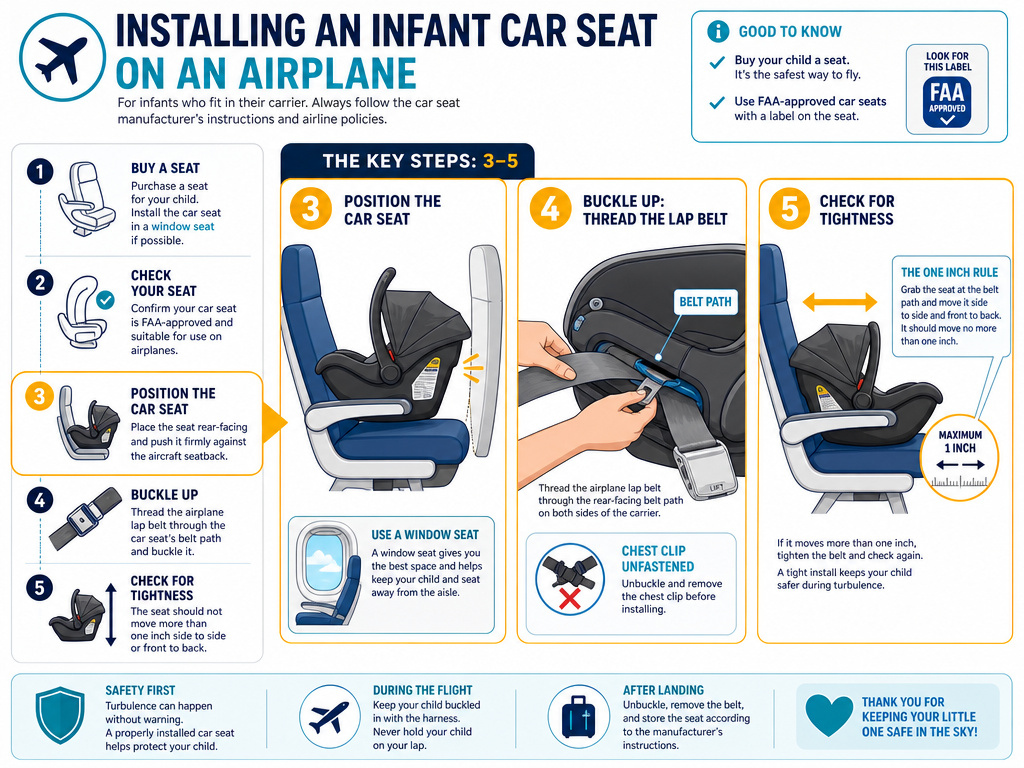
The principles are universal, but the specifics matter. Here’s the exact installation sequence from the Cybex CLOUD T manual, which reflects the standard method for any approved infant carrier.
- Remove the Base. Leave the convenience base with your checked luggage or gate-check it. It cannot be used on the aircraft.
- Choose a Window Seat. This is not a preference. It’s a safety mandate in the manual to avoid blocking the aisle for other passengers and crew during an evacuation.
- Position the Seat. Place the carrier rear-facing on the aircraft seat. Push the foot end firmly against the back of the aircraft seat in front of you. Ensure the aircraft seatback is fully upright.
- Route the Lap Belt. Thread the aircraft’s lap belt through the seat’s CARRIER-ONLY BELT PATH openings. This path is different from the one used with the base in the car. Buckle the belt.
- Tighten. Put your full weight into the carrier, pushing it down and back, while you pull the lap belt strap tight. The seat should not move more than one inch (2.5 cm) in any direction when you tug at the belt path.
- Check the Angle. Adjust the carrier’s recline until the built-in blue level line is parallel to the aircraft floor. The manual advises using a tightly rolled airline blanket under the seat near the seatback if you need to adjust the angle.
- Unfasten the Chest Clip for Takeoff/Landing. To comply with FAA portable electronic device rules, the chest clip must be unfastened. Re-fasten it once you are at cruising altitude.
Skipping the step of tightening with your body weight is the most common installation error. A loosely installed seat is worse than no seat at all—it becomes a projectile. The one-inch movement rule is the benchmark.
Airline Policies & Gate Logistics
Your approved seat still has to clear the airline’s operational rules. Familiarize yourself with these policies before you head to the airport.
- You Need a Ticket. An approved car seat must be secured in a purchased aircraft seat. You cannot place it in an empty seat next to you unless you’ve bought a ticket for it. The FAA rule requiring airlines to accommodate an approved CRS applies to a ticketed seat.
- It Must Fit. The seat must fit within the aircraft seat’s width (typically 17-20 inches in economy) without obstructing the aisle or the recline of the seat in front. If it doesn’t fit in your assigned seat, the airline is obligated to find you another seat in the same service class where it does.
- Gate-Checking is the Backup. If you don’t purchase a seat for your infant, you can usually gate-check the car seat (and your stroller) for free. Use a durable car seat travel bag for protection. Always inspect for damage upon arrival.
- Communicate Early. Notify your airline when you book that you plan to use an FAA-approved car seat. Confirm their specific airline policies at check-in.
The logistics of traveling with car seat and stroller are a major part of the trip. Most parents find a travel system that allows the car seat to click onto the stroller frame is the most efficient method for navigating the airport. You can then gate-check the entire system.
The Lap Infant vs. Purchased Seat Decision
This is the cost-versus-safety calculation every parent flying with an infant faces. The FAA allows children under two to fly as a “lap infant” at a reduced fare (often just taxes and fees).
However, the FAA, Transport Canada, and EASA all recommend buying a seat and using an approved CRS. Their joint stance is based on simple physics: in severe turbulence or an emergency, your arms cannot hold onto a child. The safest infant car seat models secured to the aircraft structure provide a level of protection equivalent to an adult seat belt.
The part nobody mentions: Turbulence serious enough to injure unbuckled passengers happens without warning. Clear-air turbulence gives no time for the seat belt sign. That’s the risk you accept with a lap infant.
If you choose the lap infant route, understand the limitations. You will hold your child during taxi, takeoff, and landing, secured only by a loop-style infant belt provided by the flight attendant. This belt is not a restraint system; it merely attaches the child to your lap belt. For the rest of the flight, you cannot use any other restraining device unless it is approved for aircraft use.
Frequently Asked Questions
Can I use my infant car seat base on the plane?
No. No convenience base is certified for aircraft use. You must install the infant carrier directly onto the aircraft seat using the lap belt through the carrier’s designated belt path. Plan on gate-checking or checking your base.
What if my car seat is FAA-approved but the flight attendant says no?
Politely show them the “certified for aircraft” label on the seat or in the manual. Cite the FAA rule that airlines must allow properly labeled, approved CRSs. If it’s a fit issue (e.g., it’s too wide), ask to be reseated. The airline is required to accommodate you in the same class of service.
Are there any infant car seats that are NOT approved for planes?
Yes. Many infant seats are certified only for motor vehicle use. The key is the label. Also, any seat that has expired, been in an accident, or is missing its labels should not be used anywhere. Always check the infant car seat expiration guidelines before you travel.
Can I bring my car seat and stroller through security?
Yes. You will go through the standard security screening. The car seat and stroller will need to be X-rayed or hand-inspected. It’s often easier to collapse the stroller and send everything through on the belt. Allow extra time.
Is it safer to check my car seat or use it on the plane?
It is infinitely safer to use it on the plane. A checked car seat is handled as luggage, which can cause hidden damage that compromises its integrity in a crash. If you must check it, use a protective bag and inspect it thoroughly at your destination. The best protection is to buy your child a seat and use the car seat on board.
Before You Go
Your infant car seat can and should fly with you, but only if it wears the right badge. Ignore the marketing and find the “certified for aircraft” label. Leave the base at home or check it. Install the carrier rear-facing in a window seat, tighten the belt until the seat doesn’t budge, and breathe easier knowing your child has the best protection available in the cabin.
The extra ticket costs money. The seat is heavy to carry. It’s worth it. The alternative is hoping nothing ever goes wrong while your child is the only person in the cabin not properly secured to the structure of the aircraft. Get the label, buy the seat, and follow the manual. That’s the only checklist that matters.
