
Where to Install Infant Car Seat: Middle or Side Placement
This post contains affiliate links. As an Amazon Associate, we earn from qualifying purchases.
Install an infant car seat in the center seat if you can get a tight, secure fit there. It offers the best crash protection. If the seat installs loosely in the center or a key safety feature like a load leg doesn’t fit, move it to a side seat. A tight installation on the side is safer than a loose one in the middle.
The 2.5 cm, or 1-inch, movement rule decides this. You grab the car seat at its belt path and push. If it shifts more than an inch side-to-side or front-to-back, it’s not safe. That test overrules any theoretical safety advantage of the center position.
What follows is the mechanic’s view: three vehicle specs, two safety-system conflicts, and the one fit check that reframes the entire middle-versus-side debate.
Key Takeaways
- The center seat is statistically safest in a side-impact crash, but only if the car seat installs tightly there.
- Most vehicles made after 2002 have lower LATCH anchors only on the side seats, not the center. You must use the seat belt for a middle seat installation.
- A load leg or rigid LATCH system on your car seat base may only function on a side seat, making that the safer choice for your specific model.
- The final decision is mechanical: a seat that moves less than 1 inch at the belt path is in the right spot.
The Center vs. Side Safety Data
Crash statistics show a clear pattern. The center of the back seat is farthest from any point of impact. In a broadside collision, a center-placed seat has more crumple zone between the child and the door. This isn’t a small margin, it’s a significant reduction in risk.
The center seat lowers the risk of injury during a crash, which is why organizations like the Mayo Clinic recommend it when only one car seat is in the vehicle.
But that data assumes a perfectly installed seat. A loose center installation erases the advantage instantly. The force of a crash will magnify that slack, allowing the seat to rotate or slam into interior components. The real question isn’t which spot is theoretically safest. It’s which spot lets you achieve a practically secure proper installation.
Your vehicle’s design is the first hurdle. The LATCH system (Lower Anchors and Tethers for Children) was designed for easier, more secure installations. However, federal NHTSA child passenger safety standards only require two sets of lower anchors in the rear. Most automakers place these on the outboard (side) seats.
| Vehicle Spec | Typical Center Seat Reality | Impact on Installation |
|---|---|---|
| LATCH Anchors | Usually not present. | Must use the vehicle seat belt. |
| Seat Bight (Crack) | Often narrow and curved. | Base may not sit flat, creating rock. |
| Floor Hump | Common in all-wheel-drive models. | Can block a load leg from extending. |
If your car has center LATCH, use it. If it doesn’t, the seat belt is your only tool for a middle seat installation. That’s fine. Every car seat on the market is certified for seat-belt installation. The belt can achieve a rock-solid fit if you know how to lock it.
When Your Car Seat’s Design Chooses the Side
Some car seats have engineered safety features that physically will not work in the center. Ignoring them for a center placement negates their benefit. You’re choosing a generic location over a specific, tested protection system.
The load leg is the prime example. It’s a metal pole that extends from the front of the infant seat base down to the vehicle floor. In a frontal crash, it transfers energy directly into the vehicle’s frame, drastically reducing the forces on the baby’s head and neck. If the vehicle’s center floor has a hump, the leg cannot sit flush.
Where this goes sideways: Installing a base with a load leg in the center when the leg doesn’t touch the floor. The leg can buckle or slip on impact, failing to do its job and potentially causing the base to pivot.
The engineers who design these seats are unanimous. If the load leg fits only on a side seat, install it on the side. The added crash protection from the leg outweighs the statistical benefit of the center.
Rigid LATCH systems, like those on Clek or Nuna seats, present a similar constraint. These systems have solid metal bars instead of flexible straps, reducing installation errors and holding the seat tighter. They must attach to dedicated lower anchors. If your center seat lacks those anchors, you cannot use the rigid LATCH there. For these seats, a side placement with rigid LATCH is the manufacturer’s intended, and safest, configuration.
The 4-Step Fit Check (The 1-Inch Rule)

Forget theory. Your hands decide. This check applies whether you use LATCH or a seat belt, in the center or on the side.
Step 1: Install to the seat’s instructions. Thread the belt or LATCH strap through the correct path on the base. For seat belts, you must lock it. On most belts, you pull the shoulder strap all the way out until it retracts with a clicking sound. That engages the locking mechanism.
Step 2: Apply your weight. Put a knee in the center of the car seat base and press down with your full body weight. This compresses the vehicle seat cushion. While holding that pressure, tighten the strap or belt as much as you possibly can. You should not be able to pinch any slack in the LATCH strap.
Step 3: The 1-inch test. Grab the car seat with both hands at the belt path, the spot where the seat belt or LATCH strap passes through the base. Try to move it side-to-side and front-to-back.
- If it moves more than 1 inch (2.5 cm), it’s not tight enough. Re-tighten.
- If it still moves too much, try a different seating position. Some vehicle seats are just too contoured for certain bases.
Step 4: Final angle and harness check. Ensure the base’s angle indicator shows the correct recline. For a newborn, this is usually the most reclined line. Then, buckle your child in. The harness straps should be at or just below shoulder level. The chest clip sits at armpit level. Perform the “pinch test” on the strap at the child’s collarbone, if you can pinch a horizontal fold of webbing, it’s too loose.
A seat that passes this check in the center wins. If it only passes on the side, that’s your safest position.
Passenger Side vs. Driver Side: Does It Matter?
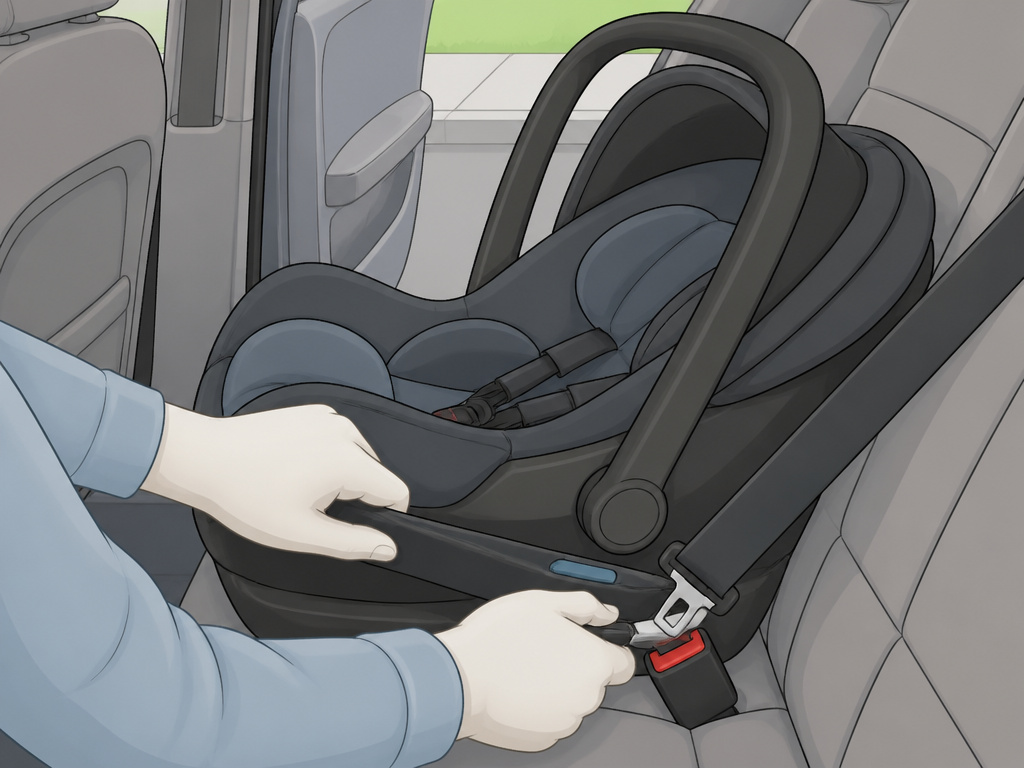
When the center isn’t an option, you face two side seats. There is no statistical safety difference between the driver’s side and the passenger’s side in modern vehicles. The choice is about convenience and scenario.
The curb side (passenger side in North America) is popular for a reason. You can load and unload your child directly onto the sidewalk, away from traffic. It feels safer at a busy curb.
The driver’s side has a different logic. In a multi-lane parking lot, you are naturally between your child and moving cars as you walk to the driver’s door. You also have a direct sightline to your child in the rearview mirror.
Pick the side where you get the tightest installation. Then, pick the side that matches your most common routine. If you always parallel park on busy streets, the curb side may reduce your anxiety. If you mostly use parking lots, the choice is neutral.
What If You Have Two Car Seats?
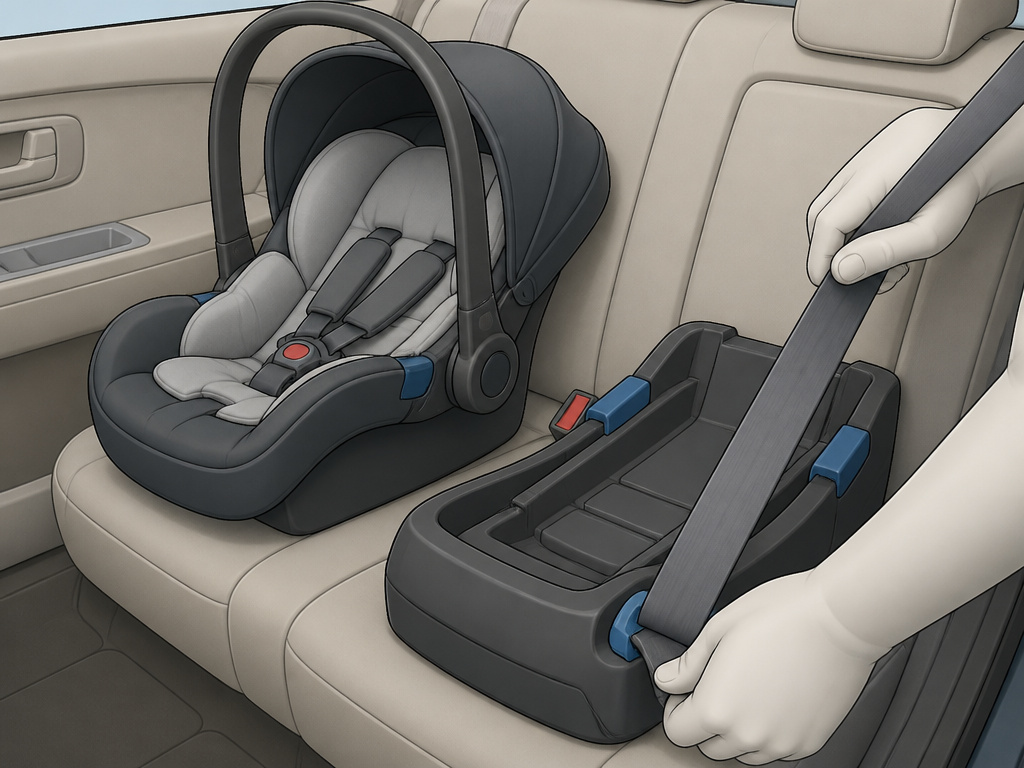
The calculus changes when you need to install a second car seat, like for a sibling. You cannot put two seats in the center. The goal is to achieve secure fits for both while maximizing the space between them.
Install the infant seat first, following the fit check, in whichever position gives the best install, center or side. Then install the second seat (a convertible or another infant seat) on the opposite side. This spreads the occupants out, which can be beneficial in a side impact. The key, again, is that both must pass the 1-inch movement test. A tight car seat base on the driver’s side and a tight convertible behind the passenger is a perfectly safe configuration.
Frequently Asked Questions
Is the middle seat the absolute safest?
Yes, based on crash data, the center rear seat is the safest position in the vehicle. This safety advantage is only realized if the car seat is installed tightly and correctly there. A loose middle seat installation is unsafe.
My car doesn’t have LATCH in the middle. Can I still put the seat there?
Absolutely. You must use the vehicle’s seat belt to secure the base. All car seats are federally approved for seat-belt installation. The challenge is often getting a tight fit with the belt, which is why checking for less than 1 inch of movement is non-negotiable.
Why do so many people put the car seat behind the passenger seat?
It’s primarily for curb-side convenience and the ability to easily see the child from the front passenger seat. From a pure crash protection standpoint, there is no difference between the driver and passenger side rear seats.
How do I know if my installation is tight enough?
Perform the 1-inch test. After installing the base, grab it at the belt path and try to move it forcefully. If it shifts more than 1 inch (2.5 cm) in any direction, you need to tighten it more or try a different seating position.
Should I use both LATCH and the seat belt together?
No. Never use both systems simultaneously unless your car seat and vehicle manuals explicitly allow it. Using both can create conflicting forces in a crash and damage the seat’s structure. Choose one method. LATCH or seat belt, and use it correctly.
The Bottom Line
The safest spot for your infant car seat is the one where it doesn’t move. Start by trying the center with a seat-belt installation. If you can muscle it into a rock-solid fit that passes the 1-inch test, you’ve secured the best possible location.
If the center seat is too contoured, the base has a load leg that won’t reach the floor, or your seat uses a rigid LATCH system that requires side anchors, move to a side seat without a second thought. A correct installation on the side, verified by your own hands, is what keeps your child safe. The data on the center seat is a guideline, not a commandment. Your vehicle’s reality and your seat’s design write the final rule.
