
When to Stop Using Newborn Insert Car Seat | Safety Rules
This post contains affiliate links. As an Amazon Associate, we earn from qualifying purchases.
Stop using the newborn insert in your car seat once your infant reaches the manufacturer’s specified weight limit, which is almost universally 11 pounds (5 kg). For most seats, like the Chicco Fit3x, UPPAbaby Mesa Max, and Nuna REVV, this is a mandatory removal point. The insert’s job is to position a tiny infant safely within the shell; beyond 11 lbs, it pushes the child out, angling the crotch buckle forward and creating dangerous harness slack.
That 11-pound mark is your first signal. The real test is a four-point fit check: harness straps at or below shoulders, headrest positioned correctly, chest clip at armpit level, and the crotch buckle resting flush against the body with no gap. If your baby meets the weight limit or passes this fit check without the insert, you must take it out.
What follows is the breakdown of the rule, the physical signs your baby has outgrown the padding, and the model-specific quirks that change the decision. By the end, you’ll be able to look at your child in their seat and know, with certainty, whether that insert stays or goes.
Key Takeaways
- The universal hard-stop weight for removing a newborn insert is 11 pounds (5 kg). Check your manual for your specific model.
- The insert isn’t just padding; it’s a safety positioning device. Leaving it in too long pushes the infant out of the shell, compromising the harness system.
- Perform the 4-point fit check: straps at/below shoulders, correct headrest position, chest clip at armpits, and a flush crotch buckle. If you pass without the insert, remove it.
- Some models, like the Axkid One 3, allow optional use up to 20 lbs, but only if it improves the fit and the seat is in its most reclined position.
- Never use aftermarket or non-approved inserts. They haven’t been crash-tested with your specific seat and can cause harness failure.
The 11-Pound Rule Is Your Starting Line
Every manufacturer manual sets a clear boundary. For the Chicco Fit3x, the newborn insert is only for infants between 5 and 11 lbs. The Nuna REVV manual states the insert is for infants 5–11 lb and must not be used for a child over 11 lb. UPPAbaby designs its Infant Insert for children 1.8 – 5 kg (4 – 11 lbs).
The newborn insert is only for infants who weigh between 5 and 11 lbs (2.3 and 5 kg). Refer to page 52 for more information. Chicco Fit3x ClearTex Ultra-Slim All-in-One Car Seat Manual
This isn’t a suggestion. Crash testing certifies the seat’s performance with the insert within that specific weight range. Beyond it, the geometry is wrong. The insert becomes a spacer, lifting the baby away from the seat’s protective shell.
Think of it like a shoe insert for a child. A small insole helps a tiny foot fill a big shoe. Once the foot grows, that same insole cramps the toes and changes how the shoe fits and supports. In a crash, that wrong fit translates directly to increased force on the child’s body.
The 4-Point Fit Check (The Real Test)
Weight is your trigger, but fit is your final judge. The insert’s purpose is to help you achieve four specific criteria. When you can meet all four without it, the insert has finished its job.
Here is the checklist, drawn directly from the UPPAbaby Mesa Max manual’s guidance on when you can remove the insert.
| Fit Criteria | What to Look For | Consequence If Wrong |
|---|---|---|
| 1. Harness Strap Height | Straps at or slightly below the child’s shoulders. | Straps above shoulders can allow the child to ramp upward in a crash. |
| 2. Headrest Position | Bottom of the headrest is at or 2.5 cm (1″) above shoulders. | Incorrect height fails to contain the head, leading to whiplash. |
| 3. Chest Clip Position | Clip is at armpit level. | A clip too low can injure internal organs; too high risks neck injury. |
| 4. Crotch Buckle Fit | Buckle rests securely against child with no gaps. Child is not sitting on top of the buckle. | A forward-angled buckle creates harness slack and can fail under load. |
The fourth point is where the danger of an outgrown insert becomes visible. As the YouTube transcript from the certified technician noted, an outgrown insert “pushes her out of the car seat and it’s also angling the buckle forwards away from her body instead of against her body.” That gap is a direct failure point.
Remove the insert, and the child sits deeper. The buckle lays flat. The harness can be tightened properly. This is the single most important visual cue that it’s time for the infant insert removal.
Model-Specific Rules You Can’t Ignore
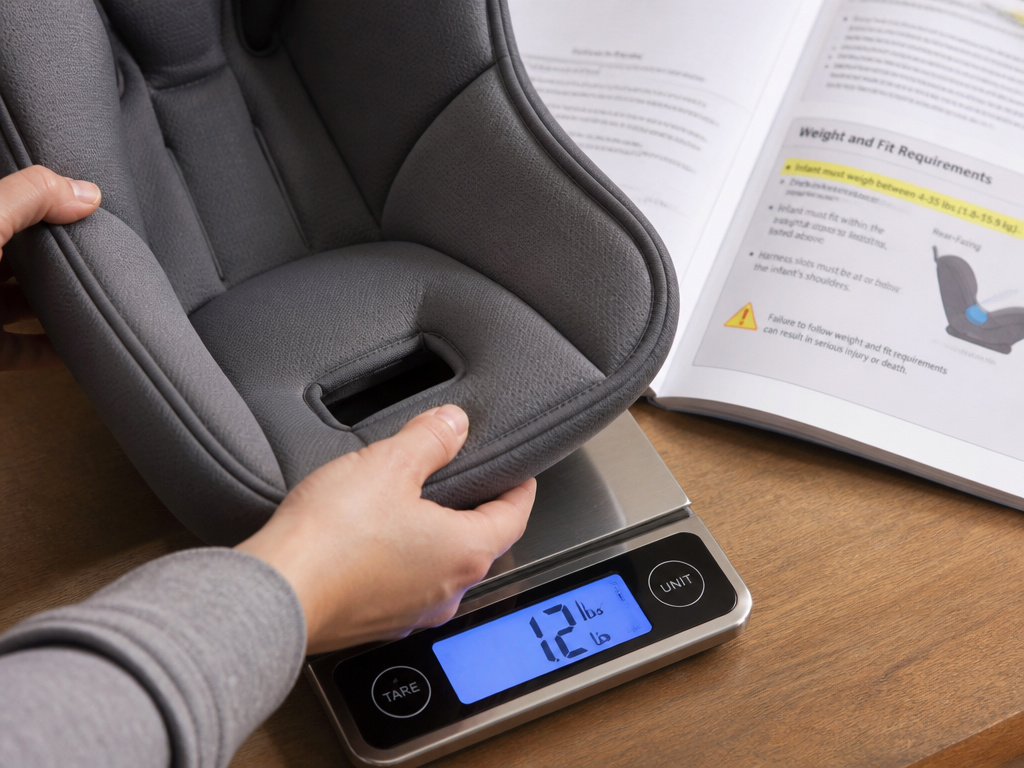
While the 11 lb rule is standard, a few seats have specific, non-negotiable. Missing these can void the seat’s safety certification.
The Axkid One 3: Mandatory Recline
For the Axkid One 3, the infant insert is mandatory for infants 5–11 lbs. However, its manual has a critical, non-commodity clause: it may be optionally used for children up to 9 kg (20 lbs) if a better fit is achieved.
When using the infant insert together with the AXKID ONE 3, the car seat must ALWAYS be adjusted to the most reclined position. Axkid One 3 Infant Insert Manual
This isn’t a comfort tip. It’s a safety mandate tied to the insert’s design. If you use the insert, even optionally, the seat must be in its most reclined position. Smaller infants can have difficulty breathing in an upright position; this rule ensures their airway stays open.
The UPPAbaby Mesa V2: The “Until Fit” Clause
The Mesa V2 manual adds nuance. It recommends the insert between 4 and 11 lbs but states it “can be continued beyond 5 kg (11 lbs) until all fit criteria are met without the insert.” This shifts the decision slightly from a hard weight stop to a fit-based timeline. Your 12-pound baby might still need it if they’re short-torsoed and swimming in the harness.
The Nuna REVV: A Straightforward Mandate
The Nuna REVV is blunt. The infant insert is for 5–11 lb. “DO NOT use the insert for a child who weighs more than 11 lb.” It also notes that if an infant’s head falls forward, you should use the insert to improve the recline angle. This ties the insert’s function directly to postural support for the smallest newborns.
When “Optional Use” Is Actually a Warning
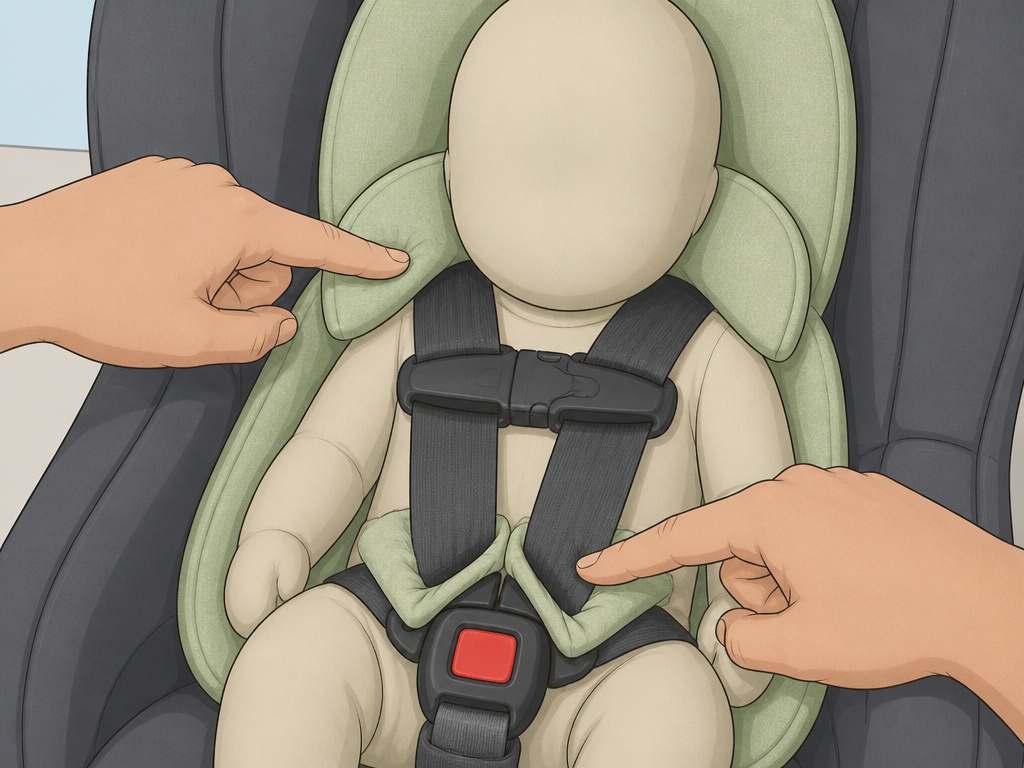
Some manuals mention optional use beyond the initial weight. This is not permission to get lazy. It’s an instruction to be more diligent.
Common mistake: Treating “optional use” as “indefinite use.” You must re-evaluate the fit every single time you buckle your child in.
If you choose to use the insert optionally (as with the Axkid One 3 between 11-20 lbs), you are signing up for stricter scrutiny. You must confirm the four fit criteria are still met with the insert in place. You must ensure the seat is in the mandated recline position. The moment the insert starts to squish the child or interfere with the buckle, its optional period is over.
This is also the moment to check if you need to adjust harness straps. As your baby grows, strap height is the first thing that changes. An insert that was helping with strap position last week might be causing a mismatch this week.
The Tools You Need (It’s Just Your Hands)
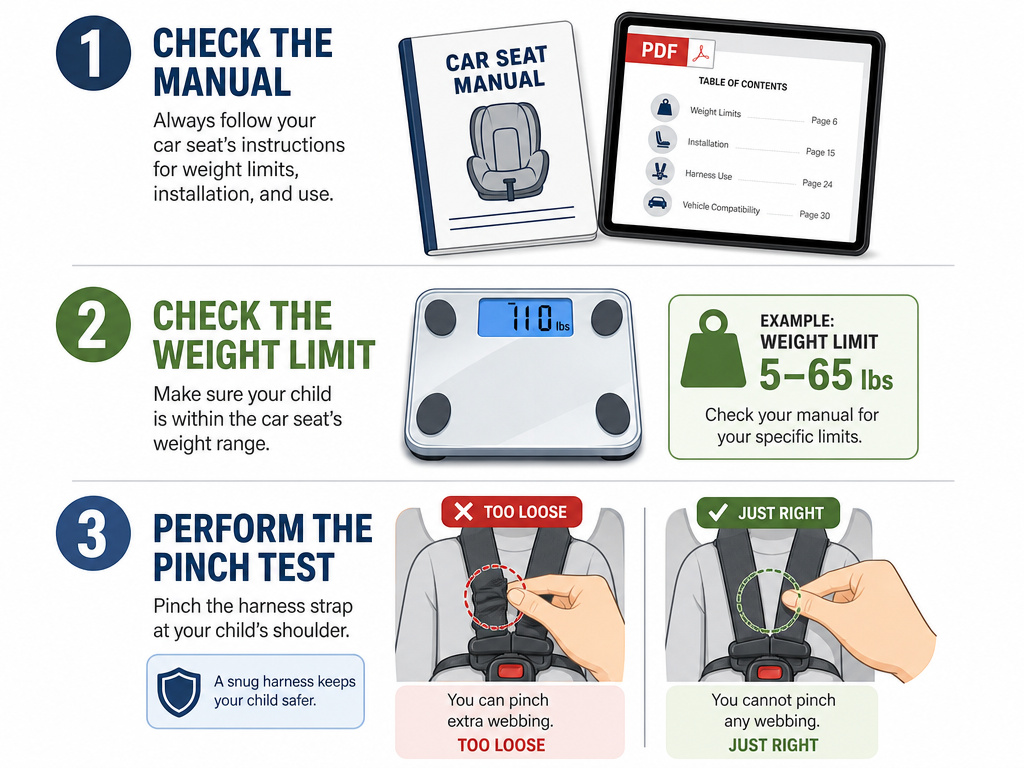
You don’t need special gear. You need attention. 1. Your car seat manual. Download it from the manufacturer’s website if you lost the paper copy. 2. A bathroom scale. Weigh your baby regularly to track the approach to 11 lbs. 3. Your eyes and hands. Perform the pinch test on the harness straps (you shouldn’t be able to pinch any slack at the shoulder) and visually inspect the four fit points.
The process of taking the insert out is usually simple: unfasten any snaps or Velcro, and lift the padding out. Store it immediately. Leaving it floating around the car is a distraction and a choking hazard for older siblings.
Never Use an Aftermarket Insert
This is non-negotiable. The insert that came with your seat is part of its crash-tested system. Its density, thickness, and placement are engineered.
Where this goes sideways: Adding a fluffy, non-approved head support or body insert. These aftermarket products compress in a crash, creating instant slack in the harness system. Your child can be thrown forward into the newly created space.
Stick with the manufacturer’s system. If you’ve lost your insert, contact the manufacturer to purchase an exact replacement. Do not substitute with a non-approved insert from a store. The risk isn’t worth it.
Frequently Asked Questions
My baby is 10 lbs but very long. Should I remove the insert early?
Maybe. Use the 4-point fit check. If the harness straps are above her shoulders with the insert, it’s already not working. The insert might be making her too tall in the seat. Try the fit check without it. If she passes, remove it early. Fit always trumps calendar age or even weight alone.
The insert seems to make my newborn more comfortable. Can I leave it longer?
No. Comfort is a secondary benefit. Safety is the primary function. An insert that seems to cradle a larger baby is actually displacing them from the safe zone of the seat shell. What looks like cozy support is actually a dangerous gap in the making. Follow the weight limit and fit check.
Can I wash the newborn insert?
Yes, but follow the manual exactly. Most allow machine washing on cold, gentle cycle with mild detergent. Do not bleach. Do not put harness straps or the chest clip in the washer. Air dry completely before reinstalling. A damp insert can mildew and lose its structural integrity.
What if my car seat didn’t come with an insert?
Some convertible seats designed for older babies don’t include one. If your seat is an infant-only carrier or an all-in-one that lists a 5 lb starting weight, it should have included an insert. Double-check the box and manual. If it’s truly missing, contact the manufacturer.
How do I know if the crotch buckle is “flush”?
With the child buckled in, run your finger between the buckle and your child’s body. You should feel firm contact with no space. If you can slide a finger behind the buckle easily, or if the plastic is angled forward toward the knees instead of lying flat against the body, the fit is wrong. This is a prime sign you need to get rid of the insert.
The Bottom Line
The rule is simple: 11 pounds is your bright line. The newborn insert has one job, to position a fragile infant safely within the hard shell of the seat. Once your baby grows, that same insert becomes a liability, pushing them out and compromising every critical point of the harness system.
Don’t guess. Weigh your baby. Pull out your manual. Perform the four-point check. When your child hits the limit or passes the test without the padding, take it out and store it away. That precise action is how you move from simply having a car seat to actively using a child restraint system. It’s the difference between hoping for safety and ensuring it.
