When Can Babies Sit Forward in Car Seat? The Essential Guide
This post contains affiliate links. As an Amazon Associate, we earn from qualifying purchases.
A baby can safely sit forward in a car seat only after reaching the seat’s maximum rear-facing height or weight limit, which for most convertible seats is 40-50 pounds. Critically, a new federal rule prohibits manufacturers from recommending forward-facing use for children under 12 kg (26.5 lb) in seats made on or after June 30, 2025. This replaces the old 20-pound minimum and aligns with expert safety advice to keep children rear-facing as long as possible.
That 26.5-pound threshold is not a suggestion. It’s a hard floor written into federal motor vehicle safety standard 49 CFR § 571.213. The rule change, published in December 2023, is a direct response to data showing caregivers were turning seats forward at the old 20-pound mark, putting one-year-olds at severe risk of spinal injury. The regulation now catches up to what pediatricians have said for a decade.
What follows is a breakdown of that new rule, the physical reasons it exists, and how to read your specific seat’s labels. We’ll cover the exact signs your child has outgrown the rear-facing position, the non-negotiable step of using the top tether, and why the “age 2” guideline is a dangerous oversimplification.
Key Takeaways
- The safe time to turn a car seat forward is when your child exceeds the seat’s rear-facing height OR weight limit, whichever comes first. Never before.
- For car seats manufactured after June 30, 2025, it is illegal for the label to recommend forward-facing for any child under 26.5 pounds.
- Always use the top tether strap when the seat is forward-facing, provided both your car and car seat manuals allow it. This cut head excursion in crash tests by up to 6 inches.
- You must stop using the lower LATCH anchors and switch to the seat belt installation once the combined weight of your child and the car seat exceeds 65 pounds.
- “Age 2” is a outdated, risky benchmark. A child’s skeletal development, not their birthday, determines when they can safely face forward.
The Official Answer: Age, Weight, and the New 2025 Rule
The official federal answer has two layers: the manufacturer’s limits printed on your specific seat, and a new regulatory floor that overrides outdated labels.
First, find the sticker on the side of your car seat shell. It lists the maximum height and weight for rear-facing use. Your child must exceed one of those limits before you consider turning the seat. For most modern convertible seats like the Graco Extend2Fit or Britax One4Life, that rear-facing weight limit is 40, 45, or even 50 pounds.
The Federal Motor Vehicle Safety Standard (FMVSS) 213 states that for child restraint systems manufactured on or after June 30, 2025, “manufacturers shall not recommend forward-facing use for child restraint systems with internal harnesses for children of masses less than 12 kg (26.5 lb).” This updates the previous 20-pound minimum.
Second, understand the new rule. If your car seat was made before June 2025, its label might still say “forward-facing from 20 lbs.” That label is now scientifically and legally outdated. The National Highway Traffic Safety Administration (NHTSA) pushed for this change because a 20-pound threshold corresponds to a 50th percentile 9-month-old. Their neck vertebrae are not ossified, and their spinal ligaments are too lax to handle crash forces facing forward.
The data was clear. In the National Child Restraint Use Special Study, 93% of children under 20 pounds were correctly rear-facing. But for kids 20 to 29 pounds, that number plummeted to 22%. Caregivers were following the label, not the biomechanics. The new 26.5-pound minimum aligns with a 95th percentile one-year-old’s weight, ensuring no child under age 1 is directed forward by the manufacturer.
Bottom line: Your child is ready for a forward-facing car seat only after they surpass their seat’s rear-facing limits, and they should weigh at least 26.5 pounds regardless of an older label’s advice.
Why Rear-Facing Is Non-Negotiable (The Biomechanics)
This isn’t about opinion. It’s about physics and pediatric anatomy. In a frontal crash, the most common and severe type, a forward-facing child’s body is thrown forward against the harness. The head, which is proportionally large and heavy in a small child, continues forward until the neck and spine absorb the force.
Where this goes sideways: Turning a seat forward at 20 pounds because an old label says you can. In a crash, the neck of a child under two is not developed enough to withstand the whiplash forces, leading to internal decapitation or spinal cord injury. This risk drops dramatically after age 2, but the longer you wait, the better.
A rear-facing seat cradles the child’s head, neck, and back. The shell of the seat absorbs the crash energy and distributes it along the child’s strongest parts, their back and shoulders. The head moves in line with the spine, not away from it. This is why the importance of rear-facing is the single most repeated directive from safety organizations.
Think of it like an egg in a carton. The carton supports the egg evenly from all sides. Turn the carton around, and the egg has nothing restraining it from flying out. Your child’s spine is that egg. The rear-facing protection is the carton.
The 3-Step Checklist Before You Rotate the Seat
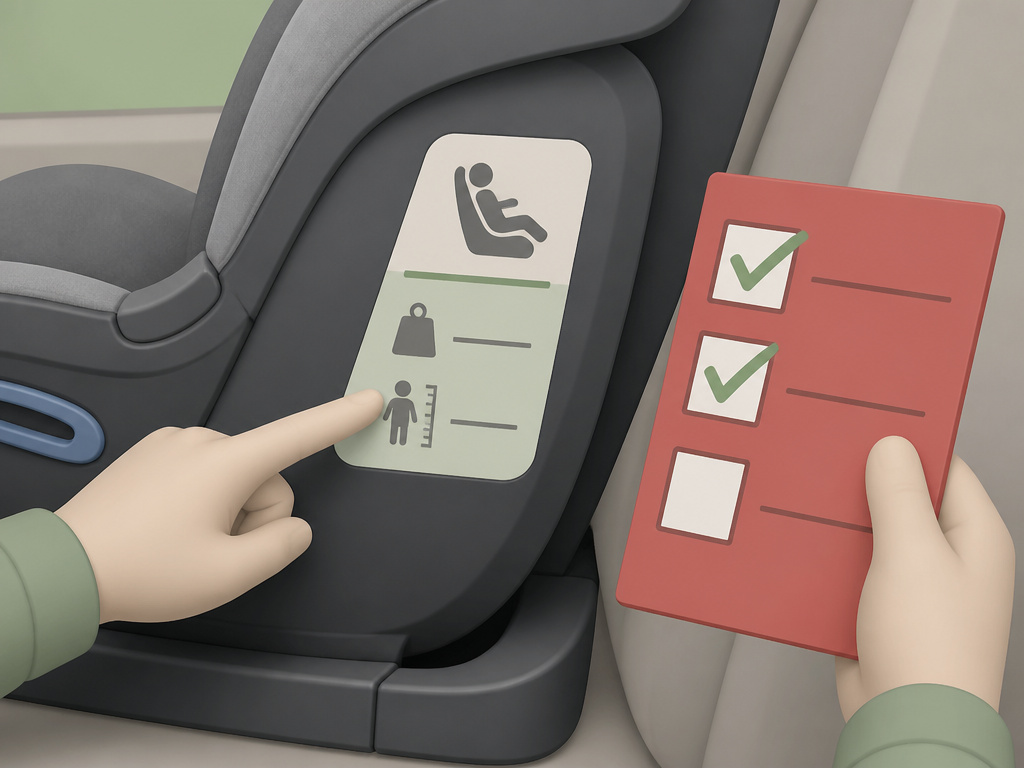
Turning the seat is a milestone, not a race. Use this checklist. All three boxes must be checked.
- Check the Height Limit. The top of your child’s head must be more than one inch below the top of the car seat shell. More importantly, their shoulders must be at or below the seat’s top shoulder harness slots for rear-facing mode. If their shoulders are above those slots, they have outgrown it by height.
- Check the Weight Limit. Your child must weigh more than the maximum rear-facing weight printed on the seat’s label. If your seat is new (mid-2025 or later), that number cannot be lower than 26.5 pounds. Use a reliable scale.
- Check Their Age. While not a limit in itself, age indicates skeletal maturity. Most children do not have the necessary spinal strength until at least age 2, and many benefit from remaining rear-facing until age 3 or 4. Age is the last factor you consult, not the first.
If you check all three, it’s time to turn the car seat around. If not, keep them rear-facing. It’s the single most effective safety decision you can make.
Forward-Facing Installation: The Tether is Everything
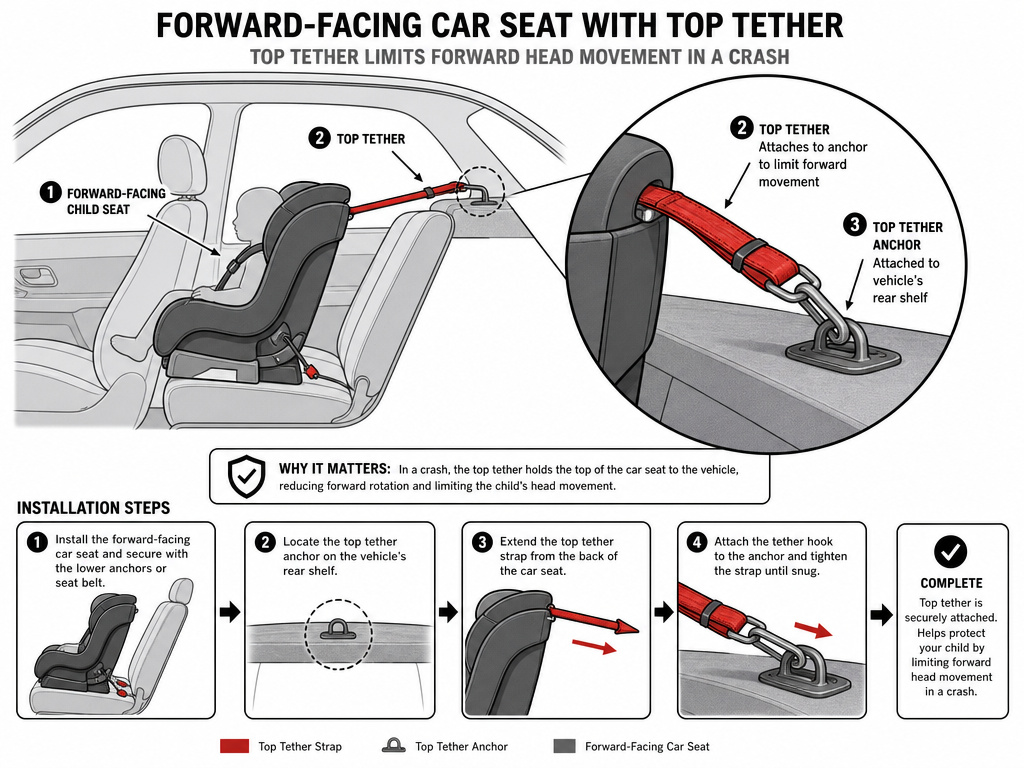
A forward-facing seat installed without its top tether is only half-effective. The tether strap, which connects from the top of the seat back to an anchor in your vehicle’s rear shelf, floor, or seatback, limits how far the child’s head moves forward in a crash. This “head excursion” is a critical measurement in safety testing.
| Installation Component | Its Job | Critical Rule |
|---|---|---|
| Lower LATCH Anchors | Secures the base of the seat to the vehicle. | Stop using when child + seat weight > 65 lbs. Then switch to seat belt. |
| Vehicle Seat Belt | An alternative to LATCH for securing the base. | Must be locked according to your vehicle manual. |
| Top Tether Strap | Limits forward head movement in a crash. | Always use it if the car seat and vehicle manuals permit it. |
The NHTSA child passenger safety guide is explicit: “NHTSA recommends always using a tether with a forward-facing car seat… As long as it is permitted by both the car seat and vehicle manufacturers.” Find your vehicle’s tether anchor locations in the owner’s manual. Not using it when you can is a major, common mistake.
I’ve seen seats where the tether was neatly coiled and stowed behind the seat for years. The parent thought the LATCH anchors were enough. In a 35-mph crash test simulation, that child’s head would have struck the front seatback. The tether prevents that.
Also, note the lower anchor weight limit. The 65-pound rule is a vehicle strength limit. You calculate it by subtracting the weight of your car seat (found in its manual) from 65. For a 20-pound seat, the lower anchors are only approved until your child weighs 45 pounds. After that, you must unclip the LATCH straps and reinstall the seat using the vehicle’s seat belt, while still using the tether.
Convertible vs. Infant-Only: Which Seat Are You Using?
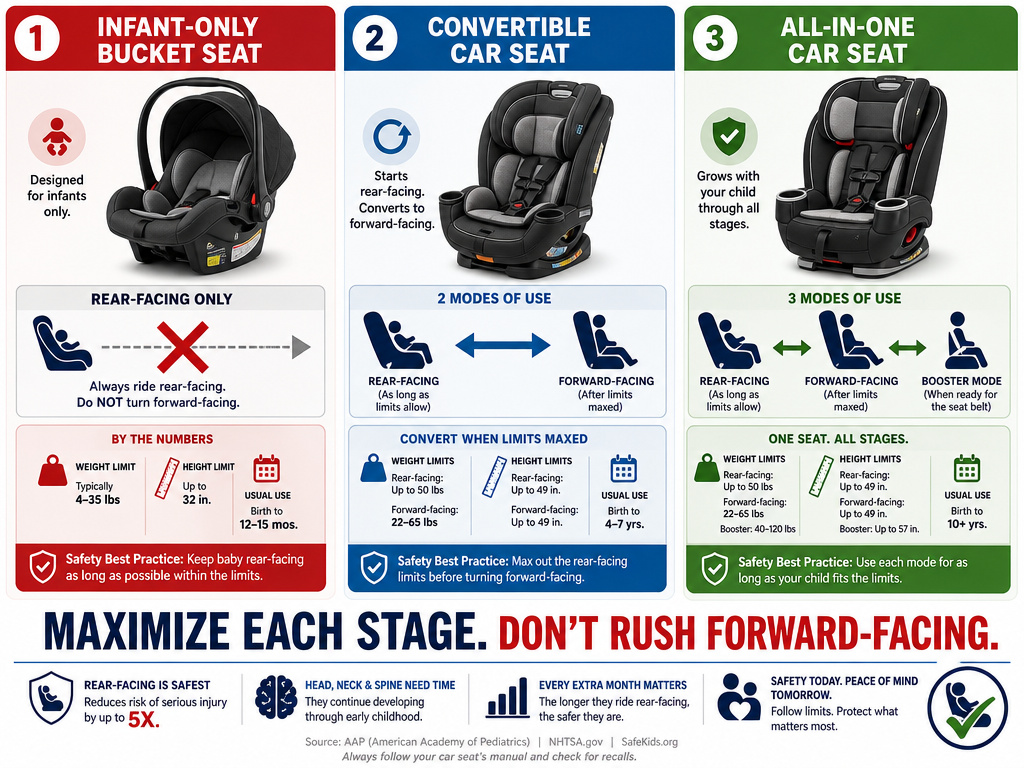
Your path forward depends on the type of seat you own.
Infant-Only Car Seats (The “Bucket”): These are designed to be used only rear-facing, typically until 30-35 pounds. You never “turn them forward.” When your child outgrows it by height or weight, you transition from infant seat to a rear-facing convertible seat. You don’t skip straight to forward-facing.
Convertible Car Seats: These switch from rear-facing to forward-facing mode. Most parents move to a convertible car seat when their infant seat gets too small, keeping it rear-facing for another year or more. Only when the child maxes out the convertible’s rear-facing limits do you convert it to forward-facing mode.
All-in-One/3-in-1 Seats: These function as a rear-facing, forward-facing, and later a booster seat. The same rules apply: maximize the rear-facing stage, then use the harness forward-facing until its limits are reached, often 65 pounds. The booster mode comes much later.
The goal is to use each stage to its maximum. Rushing to face forward forfeits the best available protection.
What About Booster Seats and Beyond?
A forward-facing car seat with a 5-point harness is not the final stage. After that comes a belt-positioning booster seat. This transition has its own strict rules.
Your child is ready for a booster seat only after they outgrow the forward-facing harness by height or weight (often 65 pounds). More importantly, they must be mature enough to sit correctly 100% of the time, no slouching, no leaning, no playing with the seat belt. This maturity usually arrives around age 5-7, not age 4.
The FMVSS 213 legal text also changed the rules for boosters. For seats made after June 2025, manufacturers cannot recommend a booster for a child under 40 pounds. This prevents the dangerous move of putting a 30-pound three-year-old in a backless booster.
Frequently Asked Questions
What is the absolute earliest a baby can face forward?
Legally, for seats made before June 2025, a label may say 20 pounds and 1 year. Safely, the absolute earliest is after age 2, and only if the child has also exceeded their seat’s rear-facing height or weight limit. The new 26.5-pound/12 kg rule for post-2025 seats makes this even clearer.
My 18-month-old is 30 pounds and tall. Can I turn them?
They meet the weight threshold. But you must check the height limit on your specific seat. Are their shoulders above the top rear-facing harness slots? Is their head within one inch of the shell top? If yes by height, you can, but you should ask if you should. An 18-month-old’s spine is still very vulnerable. If the seat still fits them rear-facing, leave them that way. It’s safer.
Why does my pediatrician say age 2?
The “age 2” guideline from the American Academy of Pediatrics is a minimum based on the lowest common denominator of development and older seat limits. It’s a defensive line against turning at 1 year. Their full recommendation is “as long as possible, until the child reaches the highest weight or height allowed by the manufacturer.” Age 2 is the floor, not the ceiling.
How do I know if my child has outgrown the seat rear-facing?
You need to look for two signs your baby has outgrown the car seat. First, their shoulders are above the seat’s top set of rear-facing harness slots. Second, the top of their head is less than one inch from the top of the hard plastic shell. Weight is the third check. If they are over the rear-facing weight limit, they have outgrown it, even if they still fit by height.
Is it illegal to forward-face before the label says?
It is not illegal for a caregiver to do so, but it is a severe violation of safety best practices and the manufacturer’s instructions. Using a seat in a manner not specified by its label voids its safety certification. More importantly, it puts your child at a demonstrably higher risk of injury.
Before You Go
The decision to turn your child’s car seat forward is a major one. It should be driven by the hard numbers on the seat’s label, height and weight, not by convenience, curiosity, or an outdated milestone. The new federal rule raising the minimum weight to 26.5 pounds is a game-changer, finally aligning regulations with medical reality.
Your action plan is simple. Find your seat’s manual and sticker. Measure your child’s height against the shell. Weigh them. If they haven’t maxed out the rear-facing limits, leave them be. The safety of rear-facing car seats is proven. When the day comes that they do outgrow it, install the forward-facing seat meticulously, with the top tether secured every single time. That’s how you move them forward without moving backwards on safety.
