
Where to Have Your Car Seat Installed & Checked for Safety
This post contains affiliate links. As an Amazon Associate, we earn from qualifying purchases.
The safest place to have your car seat installed is at a free inspection station staffed by a Certified Child Passenger Safety Technician (CPST). These experts, often found at fire stations, hospitals, or health departments, use your car seat’s manual and your vehicle’s manual to ensure a correct fit that passes the one-inch movement test at the belt path. You can find a local station through the NHTSA website or your state’s highway safety office.
That one-inch rule is the physical threshold that separates a seat that will hold during a crash from one that won’t. A technician isn’t just tightening straps; they’re matching two complex systems, your car’s seat geometry and belt hardware with your seat’s specific belt path and LATCH connectors.
What follows: how to find a certified technician, exactly what they’ll do during the 30-minute check, the critical limits of the LATCH system that void a professional installation, and how to verify the work yourself with the same test they use.
Key Takeaways
- Free, certified inspections are the gold standard. Look for a Certified Child Passenger Safety Technician (CPST), not just a well-meaning salesperson or firefighter.
- The one-inch movement test is the benchmark. After installation, the car seat should not move more than one inch side-to-side or front-to-back at the belt path.
- LATCH has weight limits. Most seats prohibit using the lower anchors once the child plus the seat’s weight exceeds 65 lbs. Your technician will check this.
- You must bring both manuals. The car seat manual and your vehicle’s owner’s manual are non-negotiable for a correct installation.
- Not all “professionals” are equal. Big-box store installations are often performed by staff with minimal training and do not equal a CPST certification.
The Free Professional Inspection: What to Expect
You found a local car seat inspection location. Now what? A proper check is a 20 to 30 minute hands-on lesson, not a quick glance.
A Certified Child Passenger Safety Technician (CPST) will ask for your car seat manual and your vehicle’s owner’s manual first. They cross-reference these to resolve conflicts, like whether your car’s center seat position has dedicated lower anchors or if the seat belt must be used. They are installing to the letter of both documents.
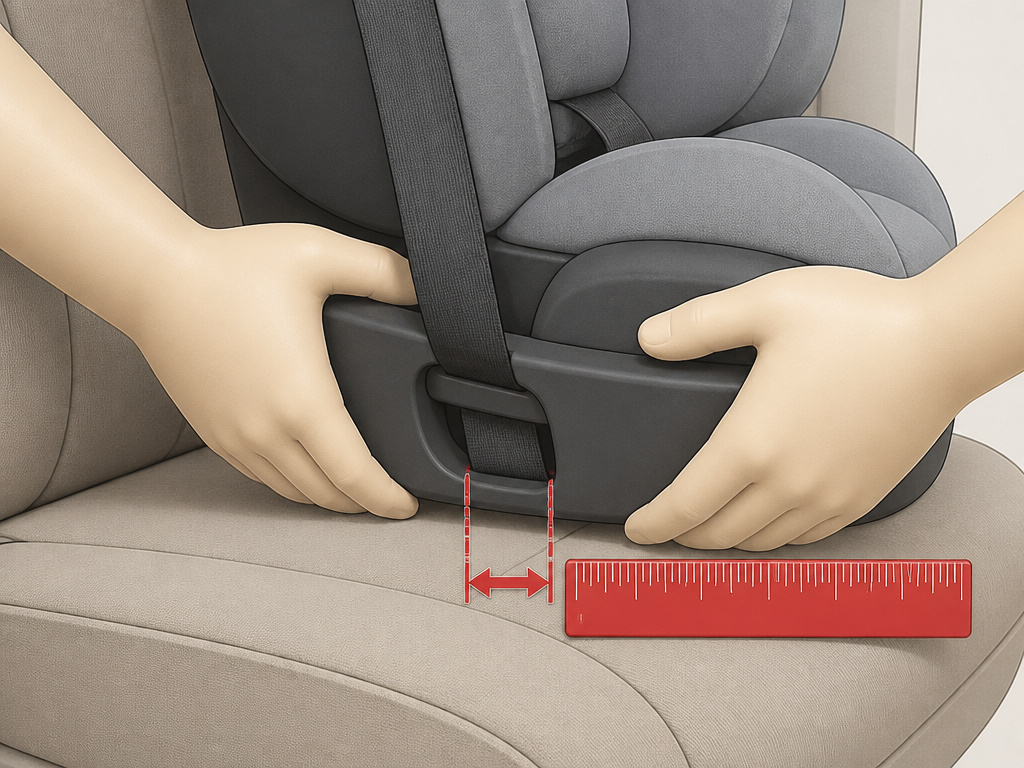
The technician will grasp the car seat at the belt path, the spot where the seat belt or LATCH strap routes through the seat’s shell, and push and pull firmly. The seat should not shift more than one inch (2.5 cm) in any direction. This test is specified in manuals like the Graco GoMax guide and is the universal standard for a secure fit.
The process covers five key areas they will adjust and explain: 1. Seat Placement: Confirming the safest position (usually rear-center) and checking for interference from front seats or airbags. 2. Installation Method: Choosing LATCH or seat belt, ensuring only one system is used, and locking the seat belt correctly if that’s the path taken. 3. Angle & Recline: Using the seat’s built-in level indicator to achieve the correct recline for your child’s age and size, critical for infant airway safety. 4. Harness Fit: Setting the harness straps at or just below the shoulders for rear-facing, at or above for forward-facing, and positioning the chest clip at armpit level. 5. Final Security Check: Performing the one-inch test and ensuring the seat is snug against the vehicle’s seat back.
This is not a drop-off service. You are expected to watch, ask questions, and often perform the final installation steps yourself under guidance. The goal is to educate you, not just to do it for you. If a technician rushes through in five minutes without your manuals, that’s a red flag.
How to Find a Certified Car Seat Inspection Station Near You
The network is national, but access is local. Your best starting point is the NHTSA car seat safety guide website, which hosts a search tool for inspection stations.
You enter your ZIP code. The results list locations, contact information, and often whether an appointment is required. These stations are typically hosted by: * Fire Departments: Many have CPSTs on staff and hold monthly check events. * Hospitals & Health Departments: Especially those with maternity wards, offering checks for new parents. * State Highway Safety Offices: They coordinate larger events and may list resources on sites like the Mass.gov car seat guidelines page. * Police Departments: Some have certified officers, though this is less common than fire stations.
Always call ahead. Schedules change, and certification statuses expire. Ask directly: “Do you have a Certified Child Passenger Safety Technician available on [day]?” If the answer is vague, try another location. Your local children’s hospital is often the most reliable bet for a scheduled professional car seat installation.
Where this goes sideways: Relying on a big-box store’s “free installation.” Employees there rarely hold CPST certification. Their training is store-specific, brief, and does not carry the same legal or technical weight. A mistake from them offers no liability protection.
What if you live hours from the nearest listed station? Virtual inspections have become a legitimate alternative since 2020. Organizations like Safe Kids Worldwide offer video-call appointments where a technician guides you through the process in real time. It’s not ideal, but it’s far better than guessing.
The DIY Pre-Check: What to Look For Before You Go
Walking into an inspection completely blind wastes everyone’s time. Do a basic self-check first. This helps you ask better questions and spot obvious errors a tired technician might miss.
Start with the steps to check installation yourself. Your goal is to identify the three most common failure points before an expert even touches it.
| Checkpoint | Correct State | If It’s Wrong |
|---|---|---|
| Belt Path Movement | Seat moves <1 inch at the belt path. | The entire installation is unsafe. The seat will rotate or slam forward in a crash. |
| Harness Tightness | The “pinch test” fails—you cannot pinch a vertical fold of the harness strap at the child’s collarbone. | A loose harness allows dangerous ejection or submarining. |
| Recline Angle | The seat’s level indicator (a bubble or line) shows correct alignment per the manual. | An incorrect angle compromises an infant’s airway or a toddler’s crash protection. |
First, kneel in the car seat and use your body weight to sink it into the vehicle cushion. Pull the seat belt or LATCH strap as tight as possible, then lock it. Now, perform the one-inch test yourself. Grasp the seat where the belt goes through it, not at the top or the foot. Push side-to-side, then front-to-back.
If it slides more than an inch, the installation is loose. This is the single most important signs of correct installation.
Next, check the harness. Buckle your child in and tighten the straps until they are snug. Try the pinch test at their shoulder. If you can pinch a fold of webbing, it’s too loose. Finally, verify the recline angle for rear-facing seats. That little bubble or line is there for a reason, it ensures your baby’s head won’t slump forward and restrict breathing.
Doing this pre-check turns you from a passive observer into an active participant. You’ll understand why the technician makes certain adjustments, and you’ll be able to confirming correct installation when you get home.
Understanding Your Installation Options: LATCH vs. Seat Belt

A technician will choose one method. Using both at the same time is dangerous and explicitly warned against in every manual. The choice is about which gives a better, tighter fit in your specific vehicle seat, as both are equally safe when done correctly.
The LATCH System (Lower Anchors and Tethers for Children)
This is the pair of metal bars hidden in your vehicle’s seat crease. The LATCH installation connectors on your car seat clip directly onto them. It’s often easier to get a tight fit because you’re dealing with a dedicated, short strap. * The Catch: LATCH has a combined weight limit. The federal standard is 65 lbs for the child plus the weight of the car seat. Many parents hit this limit around age 3 or 4 without realizing it. Your car seat manual states the limit. Exceed it, and you must switch to a seat belt installation.
The Vehicle Seat Belt
This is the fallback and, for older kids, the only compliant method. The seat belt must be locked. Most modern cars have a switchable retractor (pull the belt all the way out until it clicks) or a locking latchplate. A proper seat belt installation is often rock-solid. * The Catch: Not all seat belts lock easily. Some vintage cars or center positions have lap-only belts that require a locking clip, a tiny metal piece most parents lose. Your technician will have spares and show you how to use it.
The best car seat position is usually the rear center, if that seating position has the required equipment. But the vehicle manual is the final authority. Some cars don’t allow LATCH use in the center, forcing a seat belt install. A CPST knows how to navigate this manual-to-manual negotiation.
What Happens After the Inspection? Your Ongoing Responsibilities

The technician signs off. You drive away confident. That confidence expires the first time you uninstall the seat for cleaning or switch cars.
A correct installation is a snapshot in time. You are responsible for maintaining it. Every single time you reinstall the seat, you must re-do the one-inch test. The harness tightness needs a weekly check as kids grow and squirm. Winter coats add bulk that creates dangerous slack, always remove the coat before buckling, then place it over the secured harness.
You also become the recall manager. Register your seat with the manufacturer (the postcard in the box) to get direct safety notices. Check NHTSA’s recall site twice a year. A professional installer can’t protect you from a manufacturer’s defect.
Finally, know when the seat itself expires. Most have a 6-10 year life stamped on a label. The plastic degrades. If you’re handed down a seat, that date is the first thing you check. No amount of correct installation can compensate for brittle, aged materials.
The part nobody mentions: After a minor fender-bender, most car seat manufacturers and insurance companies require replacement. The seat’s energy-absorbing materials may be compromised, even if it looks fine. Your professional car seat inspection certificate won’t help here, you need a new seat.
Frequently Asked Questions
Is it illegal to install a car seat yourself?
It is a significant technical responsibility. The NHTSA estimates that 46% of car seats are installed with at least one critical error.A car seat safety check with a CPST is the most reliable way to ensure you’re not part of that statistic. The law requires a proper child restraint; it doesn’t specify who must install it.
How much does a professional car seat installation cost?
Proper installation by a Certified Child Passenger Safety Technician is almost always free. Fire departments, hospitals, and health department events do not charge. Be wary of any service or individual who demands payment for a basic safety inspection, they may not hold legitimate certification.
Can I get my car seat installed at a fire station?
Maybe. Many fire stations have CPSTs, but not all, and not at all times. You must call to confirm. Simply walking in and asking a firefighter on duty is risky, while well-intentioned, they may not be currently certified. Always ask for a “Certified Child Passenger Safety Technician” by title.
What’s the difference between LATCH and a seat belt installation?
Both are equally safe when performed correctly. LATCH uses dedicated lower anchors in your vehicle and connectors on the car seat. A seat belt installation uses your vehicle’s existing seat belt, which must be placed in a locked mode. The best method is the one that gives the tightest fit (less than one inch of movement) in your chosen best seat position. You should never use both systems simultaneously.
How often should I get my car seat installation checked?
You should get a professional check whenever you buy a new seat, a new vehicle, or if you ever have to reinstall the seat yourself. At a minimum, have it checked once. After that, you should be able to verify car seat installation yourself using the one-inch test each time you reinstall.
Before You Go
The safest car seat is the one that’s correctly installed. That means less than one inch of movement at the belt path, a harness you can’t pinch, and a recline angle that matches the manual. A Certified Child Passenger Safety Technician is trained to achieve that, using your car seat’s instructions and your vehicle’s manual as their blueprint.
Find a free inspection station through the NHTSA website. Bring both manuals and your child. Expect a 30-minute lesson, not a five-minute fix. Watch, learn, and ask questions until you can pass the one-inch test yourself. Then, check that fit every single time you put the seat back in. That’s how you move from hoping it’s safe to knowing it is.
